
What sets the price of a new well
The cost of drilling a well can vary significantly depending on various factors, including location, well depth, type of well, and local geological conditions. Drilling a well is a complex process that involves not only drilling but also casing, well development, and sometimes water treatment. Here are the factors that influence the cost of well drilling, roughly in the order they matter.
Well depth
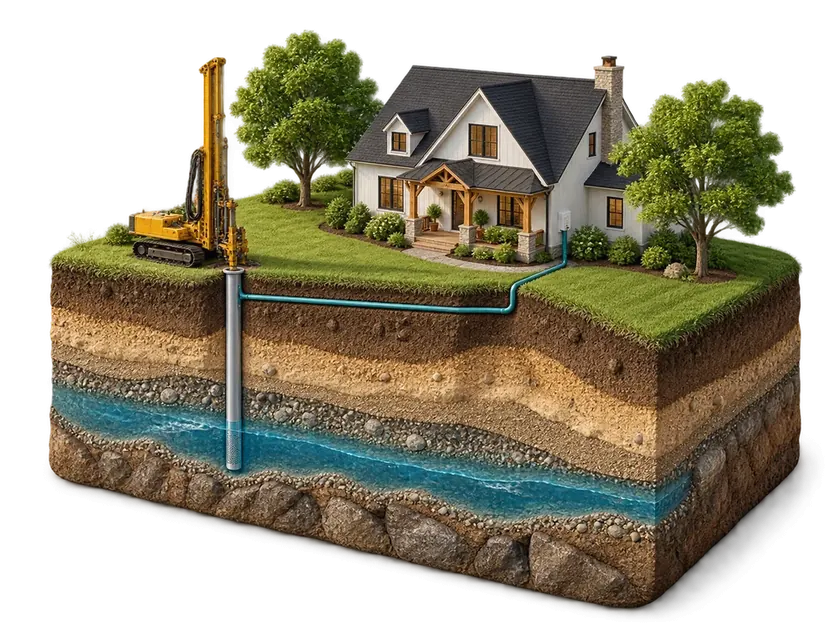
The depth to which the well needs to be drilled is the major cost factor. Deeper wells require more drilling time, labor, and materials, and every foot of depth is also a foot of casing or drop pipe. Depth is not a choice so much as a discovery: the well goes as deep as it takes to reach a reliable supply in the formation under your property, which is why the estimate comes from your site and the wells near it.
Geological conditions
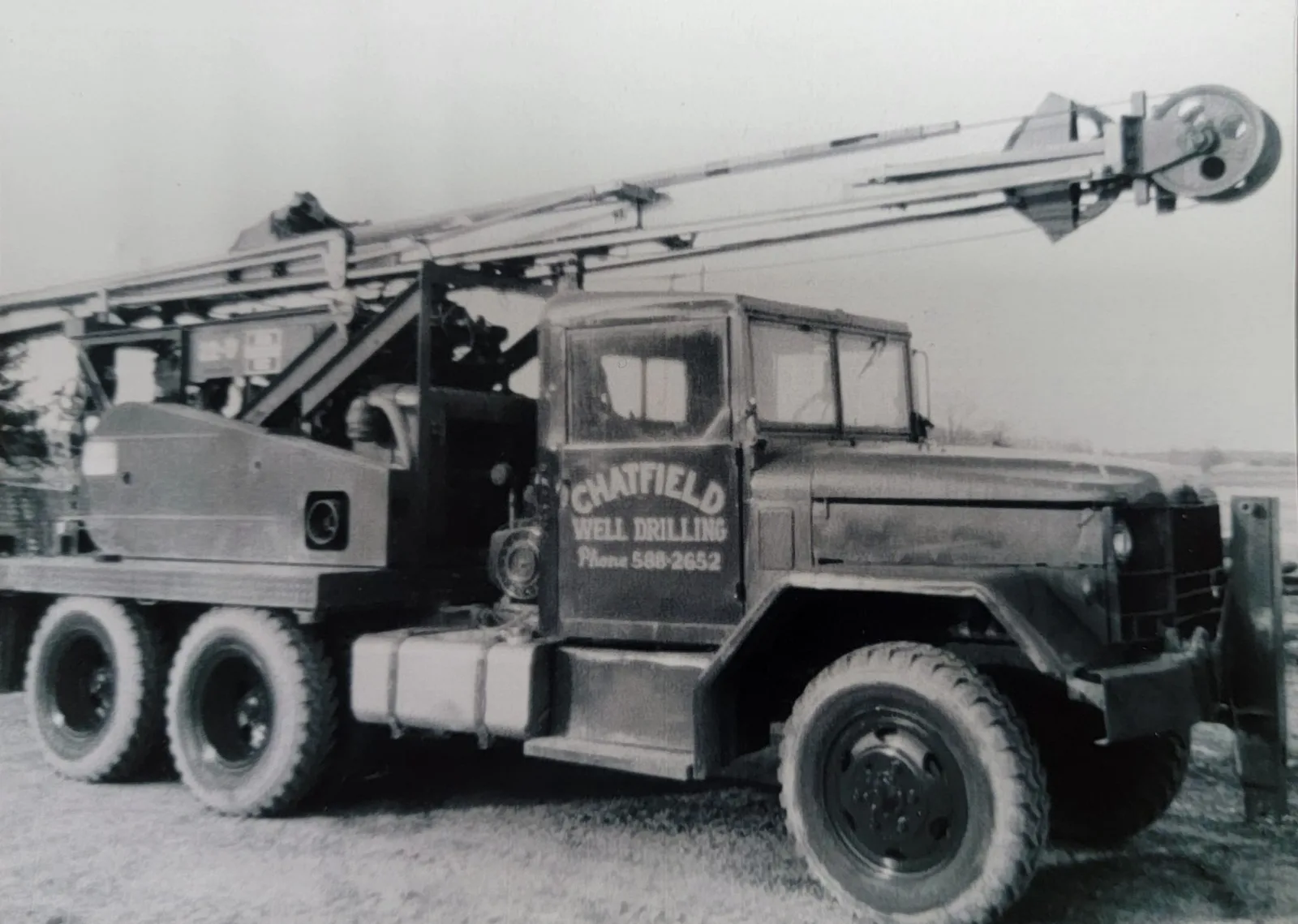
The composition of the ground and the geological formations in the area affect drilling costs. Hard rock or challenging subsurface conditions may require specialized equipment and techniques, increasing the cost. This is also why the drilling method matters: Chatfield uses both air rotary and cable tool methods and matches the method to the soil and water table conditions, because the wrong method for the ground costs more time than the right one saves.
Casing and well development
The type of casing material used to line the well affects the cost. PVC casing is typically less expensive than steel casing but may not be suitable for all situations. After drilling, the well may require development to improve water flow and quality, which can involve procedures like surging and airlifting and adds to the cost. A quote that includes development is a different quote from one that does not.
Everything else on the estimate
- Type of well. There are different types of wells, including dug wells, driven wells, and drilled wells. Drilled wells tend to be more expensive but are often necessary for accessing deeper aquifers with a more reliable water supply.
- Location and access. Drilling in remote or difficult-to-access areas may be more expensive due to transportation and equipment logistics. A rig needs a way in.
- Water quality testing. Testing the water to ensure it meets safety standards is an additional cost, and it is crucial for determining whether any water treatment or filtration is needed.
- Permitting and regulations. Costs related to permits, inspections, and compliance with local regulations vary by location and may add to the overall expense.
- Labor. Labor costs vary with the local labor market and the expertise the project requires.
- Equipment and maintenance. The cost of equipment, and its ongoing maintenance, is part of every well that gets drilled.
How deep will your well be?
Depth is the number everyone wants first, and it is the one nobody can promise. The county record at the top of this page comes from USGS groundwater site records for the Pennsylvania counties and Ohio DNR well logs for the Ohio counties. By those records, the median well sits between 60 and 135 feet depending on the county, and the middle half of wells in each county spread widely around that. Two properties on the same road can need very different wells because the formation under one is not the formation under the other.
What Chatfield does with that uncertainty is test rather than guess. The crew matches the drilling method to the ground, drills to water, and tests the flow, instead of drilling to a number and hoping. A well that yields what your household needs is the goal; the depth is whatever the ground makes it.
What a new well includes
A well is a system, not a hole. Chatfield’s residential and agricultural drilling covers the drilling itself with air rotary or cable tool methods, the casing, well development, pump system design and installation, and water flow testing, with permitting assistance handled as part of the job. Water quality testing comes next, because a new well tells you nothing about what is dissolved in the water until it is tested, and that is where treatment equipment may or may not enter the plan.
Geotechnical and environmental wells follow a different specification and are quoted separately; if you need monitoring wells or borings for a project, that work has its own page.
Questions to ask before you sign
Any drilling quote, from us or anyone else, should answer these without you having to ask twice.
- Is the price per foot or a firm figure, and what happens if the well runs deeper than expected?
- What casing is used, how deep is it set, and is it grouted? The answers decide how well the water supply is protected from surface water.
- Is well development included? A well that is drilled but not developed may yield less than it should.
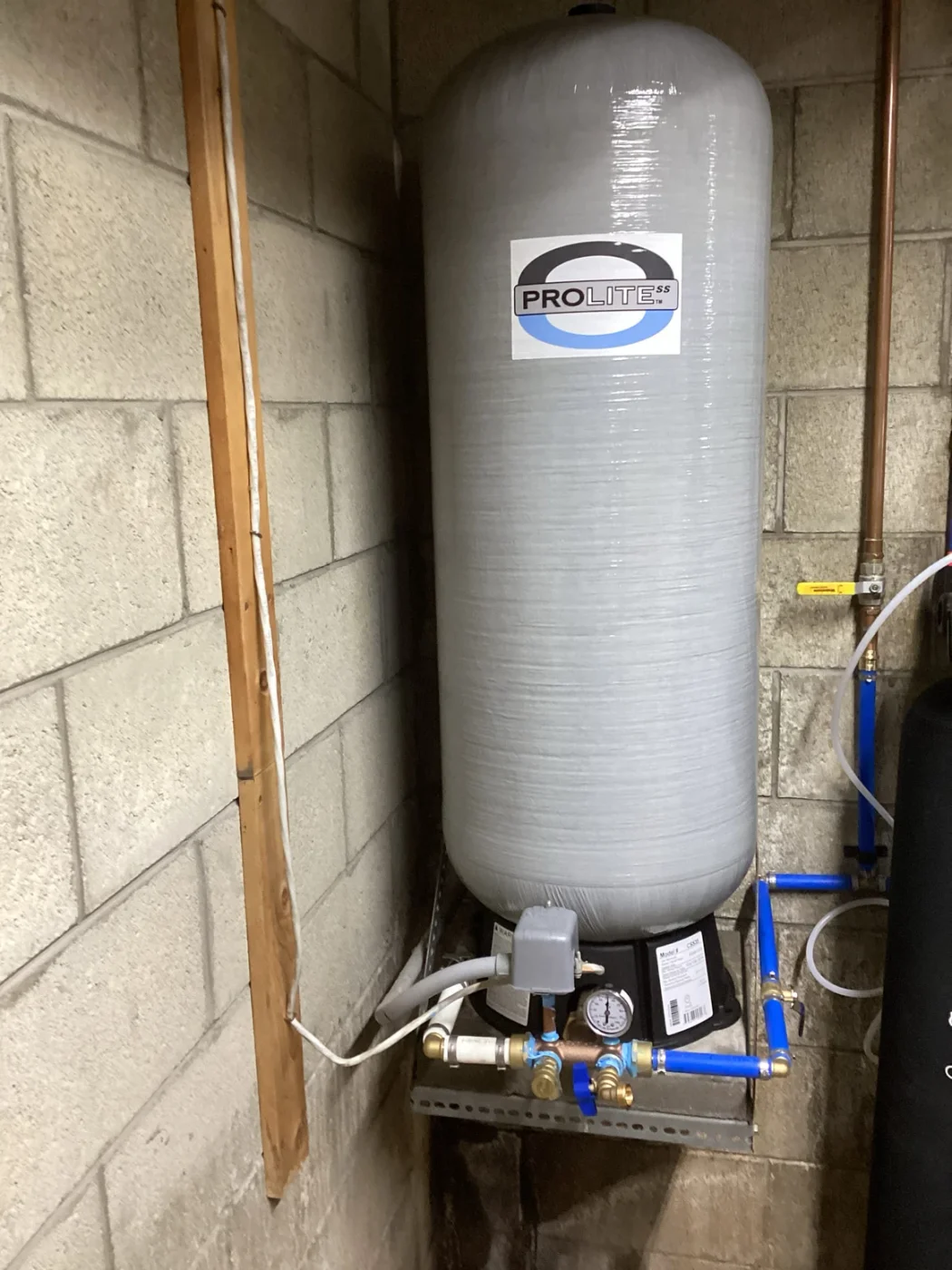
- Are the pump, the pressure tank, and the wiring included, or quoted separately? A “well” quote that stops at the casing is not a working water supply.
- Is a water flow test included, and a water quality test? One tells you how much water you have; the other tells you what is in it.
- Who pulls the permits?
- What does the warranty cover, on the well and on the pump, and for how long?
Getting a number for your property
This page does not publish a price, because a figure given without seeing the property is a guess, and a guess is worth exactly what it costs. What Chatfield can tell you on the phone is what nearby wells have looked like and what the site visit covers. The visit looks at the ground, the access for the rig, the wells around you, and what the water system needs to include, and the quote follows from that. If you already have a well and the question is whether to repair, deepen, or replace it, well maintenance and pump service are where that conversation usually starts.