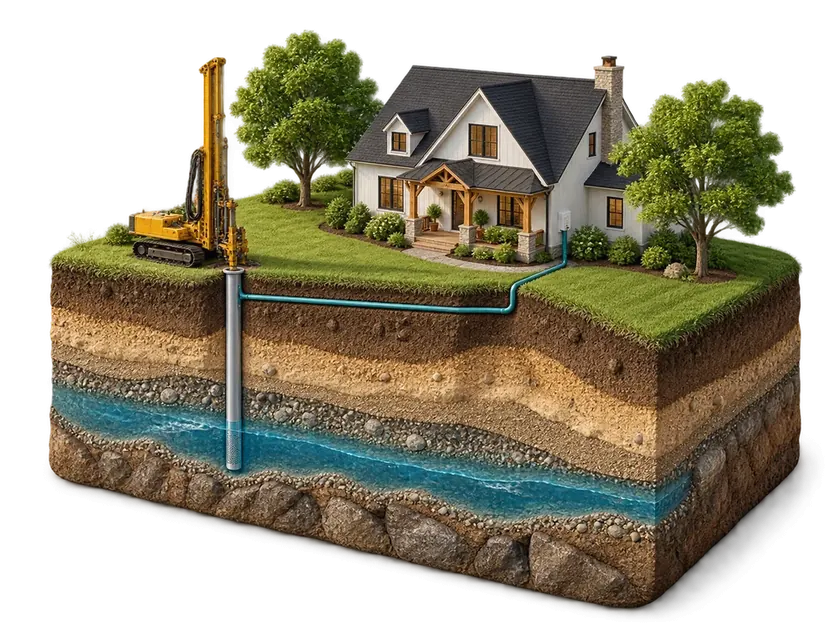
Residential, commercial, and geo-technical drilling since 1967, with the method matched to the ground: cable tool through the glacial till, air rotary into deep bedrock, a screened well where the ground is loose.
The screen used, where the ground called for a screened and sand-packed well.
Formations
The till, sand, gravel, and rock the bit passed through, by depth.
Test pumping
How long the well was pumped and the yield it held.
Depth & water level
Where water was found, and where it stands in the well.
MEDIAN WELL DEPTH ON RECORD
Columbiana, OH135 ft
Venango, PA130 ft
Mahoning, OH120 ft
Butler, PA111 ft
Trumbull, OH96 ft
Mercer, PA90 ft
Lawrence, PA88 ft
Crawford, PA80 ft
Erie, PA60 ft
Ashtabula, OH60 ft
USGS site records for the Pennsylvania counties and Ohio DNR well logs for Ohio, retrieved 2026-09-14. Each median describes the county as a whole, and your own well may differ.
THE DRILLING FAMILY
Wells for Homes, Farms, and the Engineers.
Residential and commercial water wells, and the geo-technical and environmental drilling that shares the same rigs and crews.
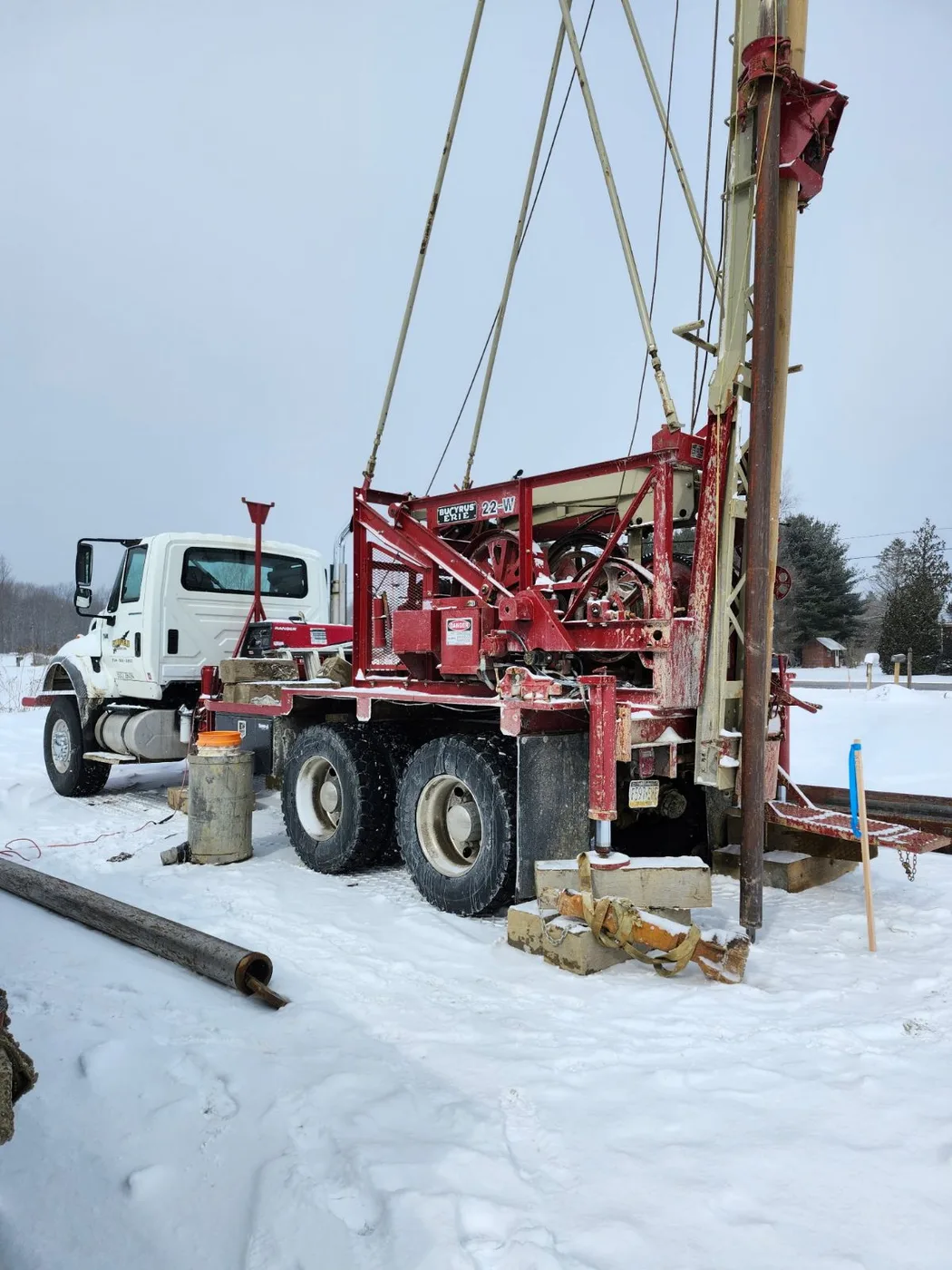
Cable tool for the cased wells the glaciated ground of Northwest Pennsylvania calls for, air rotary where the water sits in deep bedrock, and a screened and sand-packed well where the ground is loose or the yield is thin. We choose by what is under the property, then develop and test-pump the well before the pump goes in.
01
Cable tool
It is ideal for cased wells in the glaciated areas of Northwest Pennsylvania. The bit is raised and dropped to pound through till and gravel while the casing follows it down.
02
Air rotary
It is best for deep bedrock wells. A rotating bit cuts the rock and compressed air lifts the cuttings out of the hole.
03
Screened & sand-packed
It is designed for low-yield or unconsolidated ground. A screen and gravel pack let the water in and keep the sand out.
04
Develop, test, log
Every well is developed and test-pumped, and the depth, casing, formations, and yield go on the well log.
WELL DRILLING SERVICES
Drilling and Water Well Services for Western Pennsylvania and Northeast Ohio.
Whether you’re building a new home or upgrading your existing water source, a residential well gives you control over your water supply. Well water is a cost-effective, sustainable option, especially when paired with the right filtration and treatment. For farms, facilities, and industrial sites, Chatfield drills water supply wells and handles the geotechnical investigations and environmental site work around them, with certified drillers, flexible scheduling, and a professionally maintained fleet.
Specialized well services
Packer testing. For monitoring and evaluating well conditions.
Well rehabilitation. Mechanical and chemical treatments to restore a well’s output.
Camera investigations. Deep well inspections up to 1,000 feet with advanced imaging.
Permits and compliance. Help meeting PA DEP and ODNR requirements, in both states.
Environmental and geotechnical drilling. Environmental sampling, monitoring wells, and geotechnical investigations from the same fleet and crews.
“
FROM OUR CUSTOMERSReplacement well
“We bought a new home November 1st, 2024 and low and behold it had a collapsed well. After several quotes, we chose Chatfield drilling, and we’re glad we did! Matt & his team arrived quickly to assess the situation, and formulate a plan to get the H2O flowing again. Even through the holidays, they did not waiver. Eric their driller worked hard in the brutal NE Ohio cold to pound a well for us. We are beyond pleased, and have fantastic water!”
Cost-effective. After the drilling and some routine maintenance, there is no monthly water bill.
Reliable. A consistent private supply, with no boil alerts or shut-off notices to plan around.
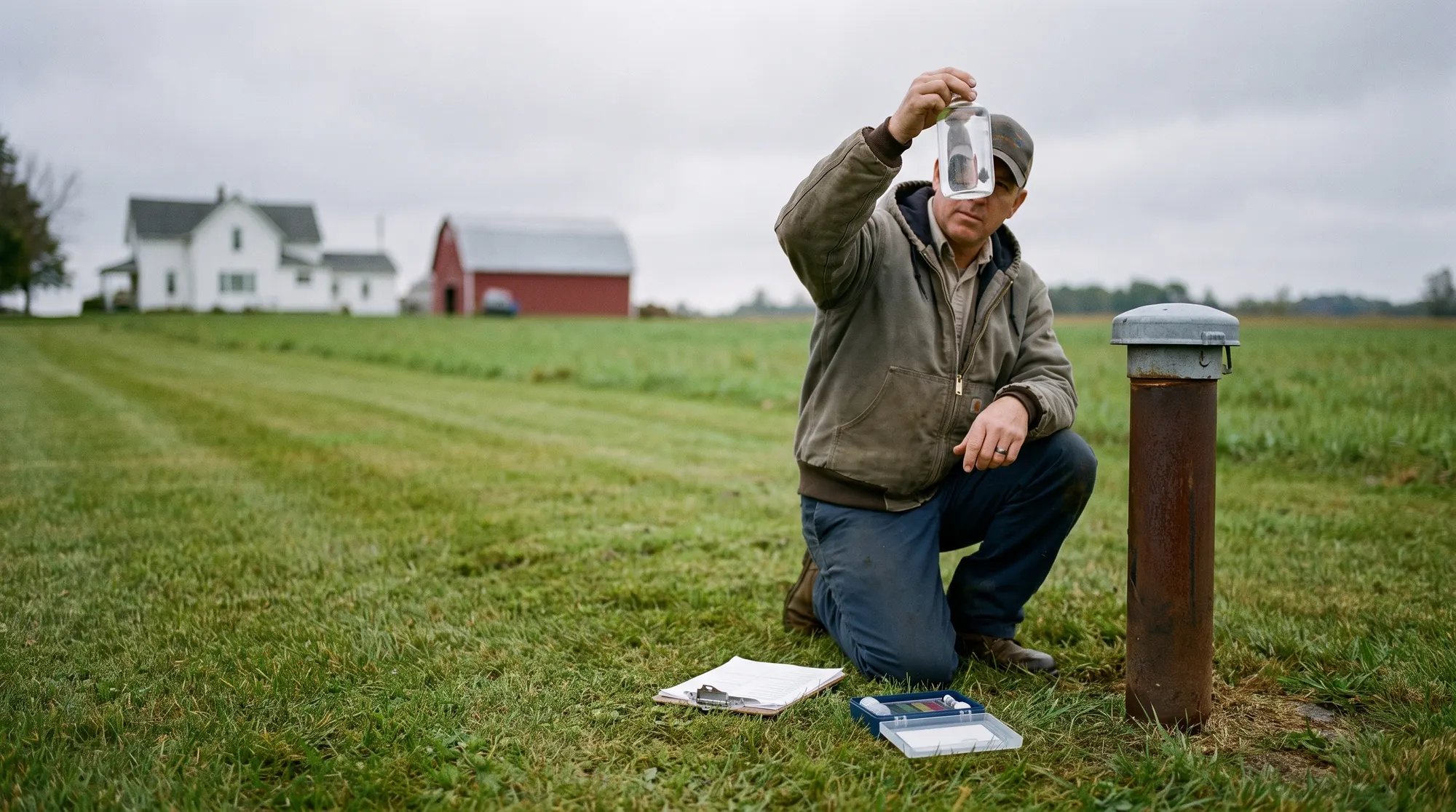
Yours to treat. No chlorine unless you add it, and treatment matched to what a test of your water finds.
Less bottled water. A well at home reduces the reliance on bottled and delivered water.
Drilling wells here since 1967
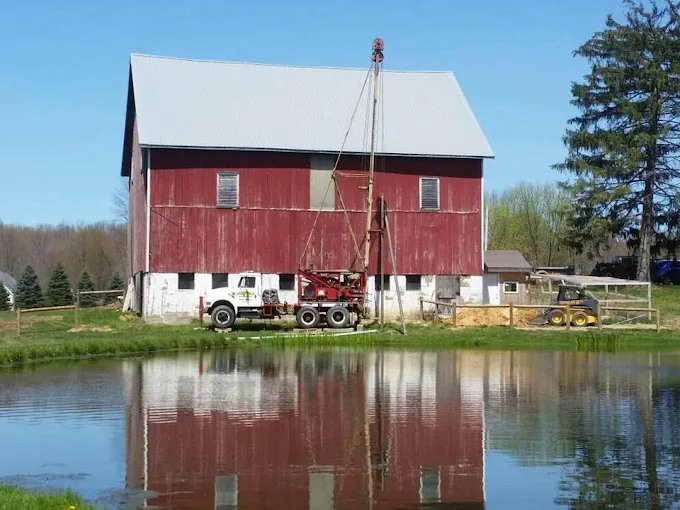
Chatfield has been drilling wells in Northeast Ohio and Western Pennsylvania since 1967, with 8 drilling rigs and 15 support trucks on the road today. Whether you’re drilling a new well or maintaining an existing one, the work is planned around the property, and the focus is safety, efficiency, and a well that performs for decades.
BEFORE YOU HIRE A DRILLER
Questions Worth Asking. Us Included.
This is the National Ground Water Association’s advice for anyone having a well drilled. We’re happy to be measured by it.
Establish your water needs
Everyday use plus seasonal use: watering lawns, washing cars.
Emergencies such as fire protection.
Most homes need a well that can produce about 7 gallons per minute. If that can’t be met, storage holding at least a day’s supply for the household is the alternative.
Check what the records say
Records of nearby wells and groundwater studies on file with local and state agencies show depths, rock types, water levels, and expected yields.
In some areas low-yielding or dry wells are not uncommon, so drill the well before building the house.
Ask every contractor
Registered or certified?
The proper equipment, in good condition?
Insurance that protects you?
A contract with the exact terms and conditions?
References you can check?
Get it in the contract
Every charge itemized, and any guarantee on workmanship in writing.
The diameter of the hole, the size and type of casing, the type of well screen.
How long the well will be test-pumped, and when the well log will be furnished.
Unexpected things happen when drilling wells. If you have chosen carefully, trust the contractor’s judgment when they do. Learn more at ngwa.org
HOW A WELL GETS DRILLED
From Site Visit to the Log.
The drilling is a matter of days. The project runs longer, and every step of it is planned before the rig arrives.
01
Site visit
Your property, access for the rig, what you need the water for, and what the records of nearby wells show about the ground.
02
Permits & plan
Permitting and compliance for Pennsylvania or Ohio, and a written plan that spells out diameter, casing, screen, test-pumping, and the log.
03
Drill, case & develop
The method suited to the ground, the casing set, and the well developed and test-pumped so the yield is known before the pump goes in.
04
Pump, test & log
The pump and pressure system installed and wired, disinfection and testing before the well goes into service, and the log recorded.
A LITTLE CLARITY
Good Questions. Straight Answers.
No one can promise depth, cost, or time in advance. Here is how each one gets decided.
Cost varies with the property and cannot be quoted from a description. The factors that drive it include location and site access, well depth, the type of well, geological conditions, casing material, well development, water quality testing, permitting and regulatory compliance, labor, and equipment. Chatfield evaluates the site before providing a quote. Call (724) 588-2652 to schedule a consultation.
How deep will my well need to be?+
Depth is found during drilling rather than chosen in advance. It depends on local geology and where a productive water-bearing zone is encountered on your property. Reviewing records of nearby wells and groundwater studies on file with local and state agencies can indicate what is typical for an area, but the actual depth is determined as the work proceeds.
How long does it take to drill a water well?+
The drilling itself is often a matter of days, but the full project runs longer than the rig time. Depth and geology determine how long drilling takes, and two properties on the same road can differ. Around that sit permitting, site access for equipment, setting the casing, installing the pump and pressure system, wiring, and disinfection and testing before the well is put into service. Chatfield assesses the site first and sets out the expected sequence and timing for that specific property rather than working from a general figure.
How much water does a household well need to produce?+
Most homes need a well that can produce about 7 gallons per minute, though the right figure depends on the household’s actual demand, including seasonal use such as watering and washing, and emergencies such as fire protection. If that quantity cannot be met, an alternate storage system may be appropriate, holding at least one day’s supply for everyone in the household.
Should I drill the well before building the house?+
In some areas low-yielding or even dry wells are not uncommon, so it is smart to drill the well before building the house. An expensive home with a poor water supply is not a good investment. Reviewing records of nearby wells and groundwater studies on file with local and state agencies shows whether a well is a viable option for the property and what depths, rock types, water levels, and yields to expect.
Can I drill a water well myself?+
Drilling a residential water well is a complex job that requires specialized equipment, experience, and compliance with local regulations. Chatfield’s licensed team handles the process from start to finish. If you are considering any contractor, ask whether they are registered or certified, whether they carry insurance that protects you, whether they will provide a written contract, and for multiple references you can check.
Tell us about the property and what the water is for. We’ll walk the site, check the records for the area, and set out what drilling there involves before anything is quoted.