

WATER TREATMENT · WESTERN PA & NORTHEAST OHIO
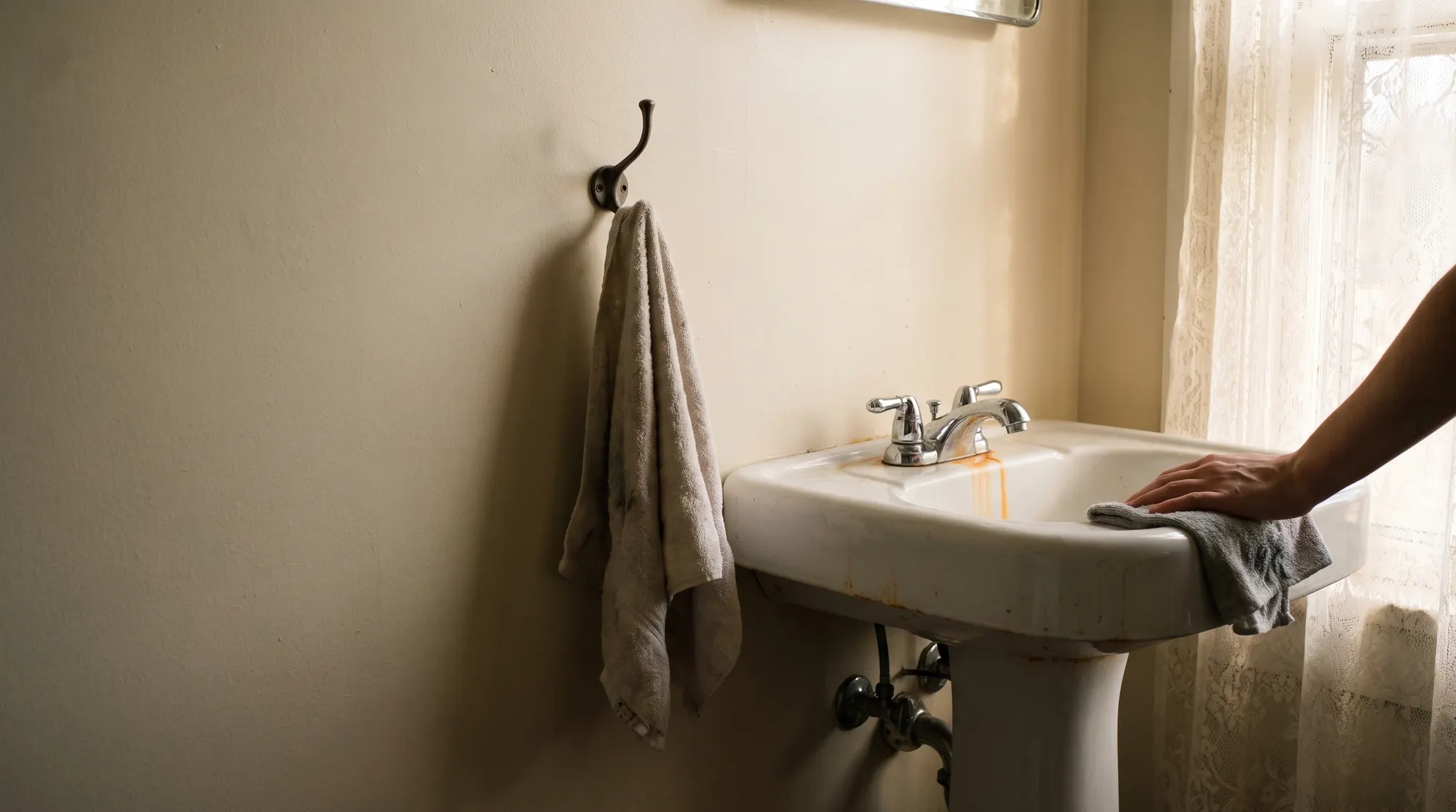
Reddish-brown stains no amount of scrubbing keeps away. Iron and dissolved metals are in the water supply, and the FerronX Iron System takes them out at the point of entry, so the staining stops for good.
Serving our communities since 1967
Iron arrives dissolved, already rusted, or as a biofilm, and usually brings manganese. The FerronX is configured to match the form and the level your report shows.
Schedule a water test- Dissolved ironClear when drawn, rust-colored an hour later in the toilet bowl or on the tub.Oxidized inside the system, then filtered out as rust
- Oxidized ironAlready tinted orange or red when it leaves the tap; particles settle in a glass.Filtered directly, first in the sequence
- Manganese with itBlack flecks, dark marks in the dishwasher, a bitter metallic taste.Treated by the same FerronX, sized to whichever is higher
- Iron bacteriaA rust-colored slime in the toilet tank, on aerators, in the softener.A well cleaning first, or the biofilm fouls the filterThe guide
- 0.3 mg/LIron. The EPA secondary standard; staining and a metallic taste begin here.
- 0.05 mg/LManganese. Black marks begin here; 0.3 mg/L is the EPA lifetime health advisory.
- WHAT THE FERRONX CHANGES
- The stains stop arriving at every fixture
- Laundry comes out its own color
- No metallic taste; no rust in the water heater
IS THIS YOUR WATER?
Why Is the Toilet Staining
Red, Orange, or Brown?
Iron is one of the most common water quality issues we see across Western Pennsylvania and Eastern Ohio, especially in homes on well water. The staining isn’t just cosmetic.
HOW AN IRON SYSTEM WORKS
Rust Made Inside the Tank,
Not on Your Fixtures.
An iron filter does the same thing your toilet bowl does, turning dissolved iron into rust, except it does it on purpose, in a tank, and keeps the rust.
- 01
Iron comes in dissolved
Water from the well enters carrying iron and manganese in solution: clear to the eye, and ready to turn to rust the moment it meets air.
- 02
Oxidation
Inside the system the metals are oxidized, so the dissolved iron becomes solid rust particles that can be caught instead of stains that cannot.
- 03
The media bed catches it
The particles are held in the filter bed. Clean water continues to the water heater and every fixture in the house.
- 04
Backwash
On schedule, the system reverses flow, flushes the trapped iron to drain, and returns to service on its own. Nothing to scrub, no cartridge to change.
IRON & OTHER METALS
Iron and Metal Water Treatment
in Western PA and Eastern OH.
If you’re finding reddish-brown stains in your toilets, showers, bathtubs, or sinks, and no amount of scrubbing keeps them away, iron and dissolved metals in your water are the cause. High iron levels can affect the taste of your drinking water, leave residue on laundry, and build up inside your pipes and water heater over time.
What causes iron in well water
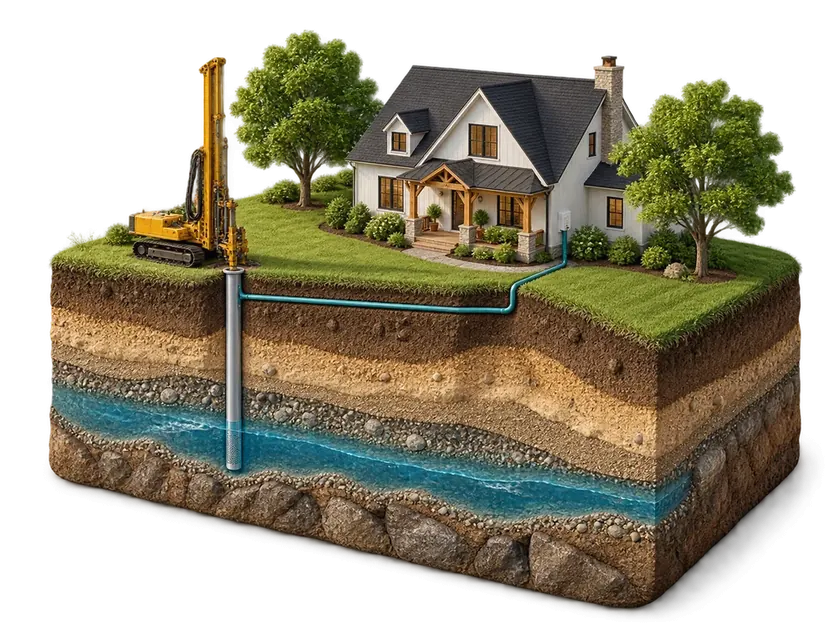
Iron occurs naturally in the rock and soil that surrounds your well. As groundwater moves through these formations, it picks up dissolved iron and other metals like manganese. The concentration varies by location, which is why your neighbor might have clear water while yours is staining everything in sight. The orange-stains page carries the county-by-county record.
The fix: the Chatfield Water Systems FerronX Iron System
After we test your water and confirm the type and concentration of iron and metals present, we typically install our FerronX Iron System. The FerronX is engineered specifically for the iron levels common in our region’s groundwater, and it treats your water at the point of entry, before it reaches any fixture in your home. That means every faucet, shower, toilet, and appliance gets clean, iron-free water.
Stop scrubbing; fix the source
Cleaning products only mask the problem temporarily. The stains keep coming back because the iron is in your water supply. The FerronX eliminates iron before it ever reaches your fixtures, so the staining stops for good, and the stains you have come off and stay off.
Serving Western PA and Eastern OH
We treat iron and metal contamination for homeowners across ten counties:
HOW WE SOLVE YOUR IRON PROBLEM
Test First.
Then Configure the System.
Think iron is causing your water problems? A water test tells us exactly what we’re dealing with.
- 01
Test your water
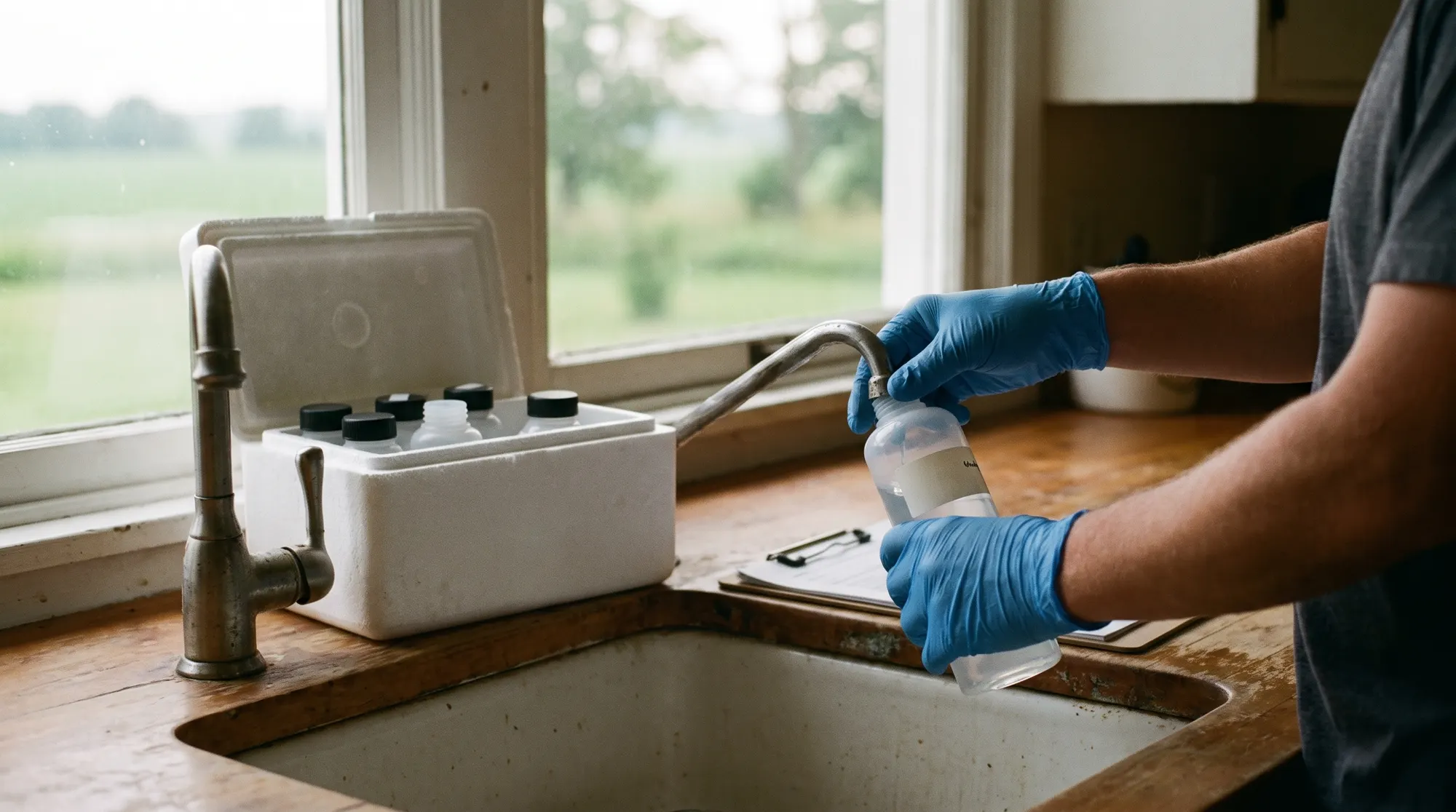
On site or through a certified lab, to identify the exact type and level of iron and other metals, and what else is in the water.
- 02
Assess your space
Your basement, crawl space, or utility room, so the installation is planned before anything is quoted.
- 03
Review results & quote
The FerronX configuration recommended from your test and your space, with a clear quote.
- 04
Install
In most cases the FerronX is stocked on the service vehicle and can be installed the same day.
A LITTLE CLARITY
Iron Removal Questions.
Straight Answers.
What are the symptoms of too much iron in well water?
Common signs include red, orange, or brown staining in toilets, showers, and sinks that returns after scrubbing, rust-colored residue on laundry, a metallic taste, discolored water when a tap is first turned on, and buildup inside pipes, water heaters, and appliances. These are indicators worth testing, not a diagnosis on their own, since staining can have more than one contributor.
Is it safe to drink well water that has iron in it?
Iron is a naturally occurring element, and the significance of any level in your water is a question for your test results and appropriate local guidance rather than a general article. The 0.3 mg/L line is an EPA secondary standard, an aesthetic limit; manganese carries a 0.05 mg/L secondary standard and a 0.3 mg/L lifetime health advisory. Testing establishes what is actually present and at what concentration.
What is the cheapest way to remove iron from well water?
The most economical approach is the one matched to your actual iron concentration and water chemistry, because equipment that is undersized or aimed at the wrong problem costs more over time. Chatfield tests on-site or through a certified lab to identify the type and level of iron and other metals, then recommends a FerronX Iron System configuration suited to those results.
How does the FerronX Iron System work?
The FerronX is engineered for the iron levels common in this region’s groundwater and treats water at the point of entry, before it reaches any fixture. That means every faucet, shower, toilet, and appliance receives treated water. Chatfield stocks the system on service vehicles, so same-day installation is often possible once testing and a space assessment are complete.
Does an iron filter also remove manganese?
Yes. Manganese travels with iron through the same rock and soil, stains black at a far lower level, and is treated by the same point-of-entry system, sized to whichever of the two is higher on the test. The test reports both, along with the form the iron takes, which is what decides the configuration.
Do I need a water softener as well?
Only if the test finds hardness. A softener exchanges calcium and magnesium and is not an iron filter; iron that reaches a softener fouls its resin, which is why the iron filter goes ahead of it in the sequence. Many wells in our counties have both, and the two systems are installed in that order.
Talk with the Chatfield team.
(724) 588-2652A LITTLE KNOWLEDGE GOES A LONG WAY
Know Your Water.
 WATER PROBLEMS
Orange stains from your well water.
Read the stain, the county iron record, and what to note before you call.
 WATER TREATMENT
Water filtration systems.
Iron, sulfur, sediment, and manganese: the whole-home lineup and the order it goes in.
 WATER TESTING
Water testing, explained.
What a test measures, what the results mean, and what happens next.
YOUR NEXT STEP
Iron-Free Water Starts
with a Test.
Call or fill out the form to schedule your water test. We’ll confirm what is in the water, and the FerronX is often on the truck the same day.