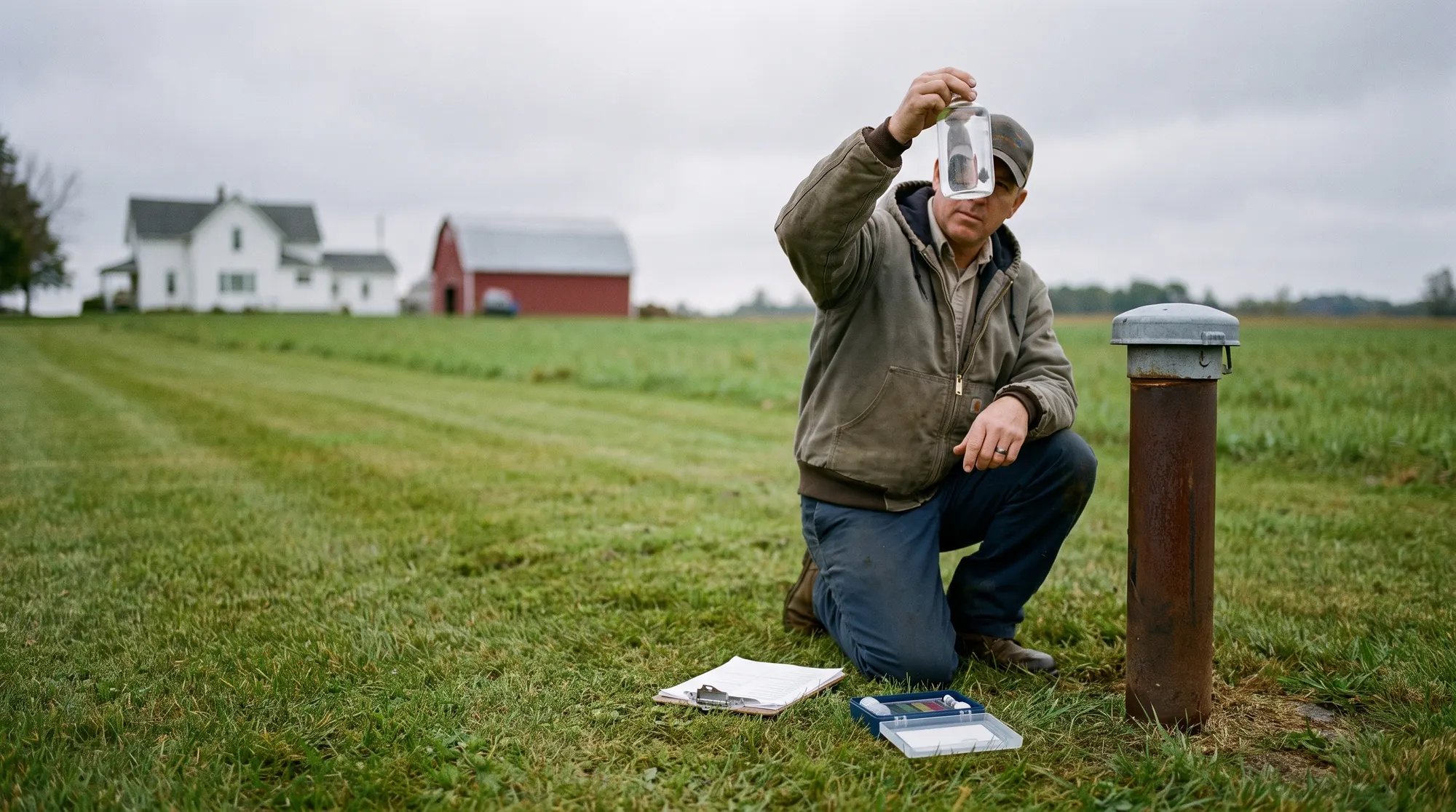
AI-generated illustration of farmhouses and a small town across rolling fields in Western Pennsylvania

GUIDE · WELL DRILLING · 2 MIN READ

A shared well looks like a bargain until the first dry August, the first pump failure, or the first neighbor who stops paying the power bill. Here is what the arrangement really involves, and why most people who can drill their own do.

4.7★ on Google · 104 reviewsWestern PA & Northeast Ohio

Serving our communities since 1967

THE SHORT ANSWER Cheaper up front. Harder every year after.
Whose well it is
The well sits on one property. Everyone else draws from it under an easement and an agreement, and both need to be in writing.
The agreement
Usage in a dry season, maintenance and upgrades, a pump replacement, the power bill, and what happens when someone sells or stops paying.
The power
One pump on one meter. A late bill or a dispute can shut off water for every house on the line.
The alternative
A well of your own: complete control over usage and maintenance, and water that does not depend on the neighbors.
Schedule a site visit

Updated · By the Chatfield team

The appeal, and the catch

W. H. Auden wrote, “Thousands have lived without love, not one without water.” While the idea of loving your neighbor is admirable, it doesn’t always translate smoothly into reality. Water is not merely a resource; it’s a fundamental necessity for life and progress. Access to safe and dependable water can determine the line between prosperity and adversity, health and desperation.

Although we’ve moved past the era of lawless disputes, questions about shared wells still arise, particularly in subdivisions where multiple homeowners rely on a single water source. While shared wells may initially seem like a cost-effective solution, caution is advised due to potential complications that can arise over time.

Where shared wells go wrong

Initially, shared wells may seem like a practical arrangement to reduce costs. However, discrepancies in water usage during droughts or dry seasons can strain relationships and lead to disagreements. Maintenance and upgrades become shared responsibilities, further complicating matters. Changes in agreements or the involvement of additional parties can exacerbate these issues, leaving homeowners vulnerable to unexpected costs.

Access to water can also pose challenges, especially when properties have limited space for infrastructure. Disputes may arise over easements or encroachments, affecting property values and development plans.

Power, access, and who pays

In some cases, differing residency statuses among homeowners can complicate matters further. Disputes over expenses, such as pump replacements or power bills, can escalate, leading to strained relationships and financial burdens.

Shared wells also require a reliable power supply, which can become a point of contention if one party fails to uphold their responsibilities. Delays or disputes over power bills can disrupt water access for all parties involved, leading to frustration and additional expenses.

The case for your own well

However, the benefits of having your own private water well outweigh any potential upfront savings from a shared well. With your own well, you have complete control over water usage and maintenance, eliminating the uncertainties and disputes that can arise with shared wells. Additionally, having a private well ensures uninterrupted access to water, regardless of external factors or disagreements among neighbors. In the long run, the peace of mind and independence provided by a private well justify the initial investment.

Interested in your own private water source? Start with a site visit, and read what sets the price of a new well before you compare it with the shared arrangement.
A LITTLE CLARITY

Good Questions.
Straight Answers.

If a shared well is on my property, is it mine?

The well, the casing, and the pump are part of the property they sit on, but the other households’ right to draw from it comes from the easement and the shared-well agreement recorded with the deeds. Whether such an agreement exists and what it says is a question for the deed and a real estate attorney; what the well can actually yield, and whether it can carry the homes on it, is a question Chatfield can answer with a yield test.

What should a shared well agreement cover?

Water usage, including what happens during droughts or dry seasons; who pays for maintenance and upgrades; how a pump replacement or a repair is decided and split; who holds the electric account for the pump and what happens when it goes unpaid; access to the wellhead and the lines across the properties; and what happens when a household sells, rents out, or stops participating. Most disputes trace back to one of those being left unwritten.

What are the pros and cons of a shared well?

The pro is the upfront cost: one well, one pump, and one set of lines split several ways. The cons arrive later. Discrepancies in usage strain relationships, maintenance and upgrades become shared responsibilities, changes in the agreement or in who owns the homes complicate matters, and a reliable power supply becomes a point of contention when one party fails to hold up their end. Access, easements, and encroachments can affect property values and development plans.

Can one well supply two homes?

It depends on the yield. Most homes need a well that can produce about 7 gallons per minute, so two homes need a well that can sustain more than that through seasonal use and a dry spell, or a storage system holding at least a day’s supply. A yield test measures what the well can deliver; the agreement decides how it is shared.

Do lenders accept shared wells?

Many lenders require a recorded shared-well agreement and a recent water test before they will lend on a home served by a shared well, and some limit how many households one well may serve. Ask the lender early, and have the agreement and the test in hand before an offer depends on them.

How do I get my own well instead?

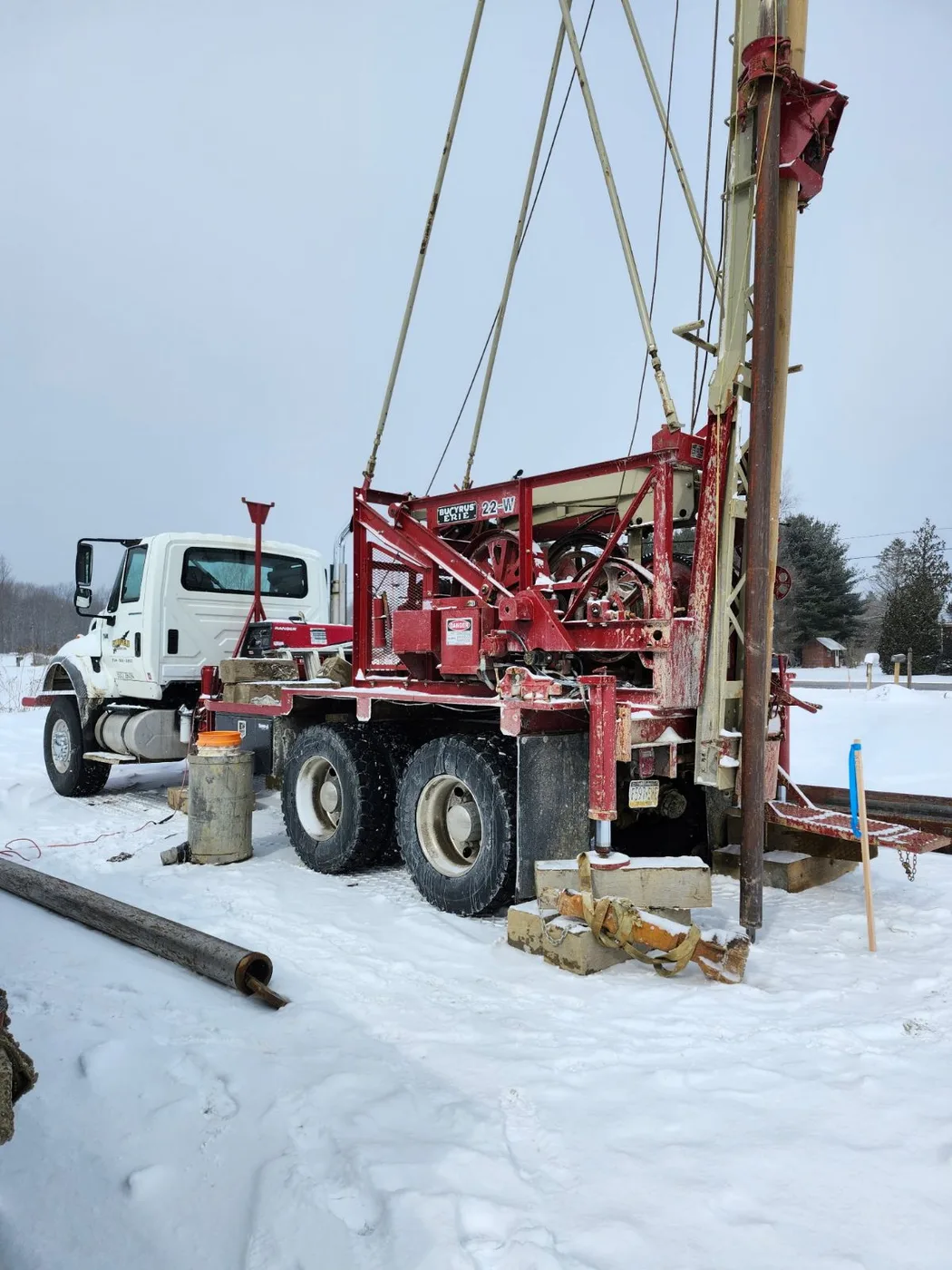
Start with a site visit. Chatfield looks at the property, the access for the rig, and what the records of nearby wells say about the ground, then sets out what drilling a well there involves and quotes from what the visit finds.

Let’s figure it out together.

Talk with the Chatfield team.

(724) 588-2652
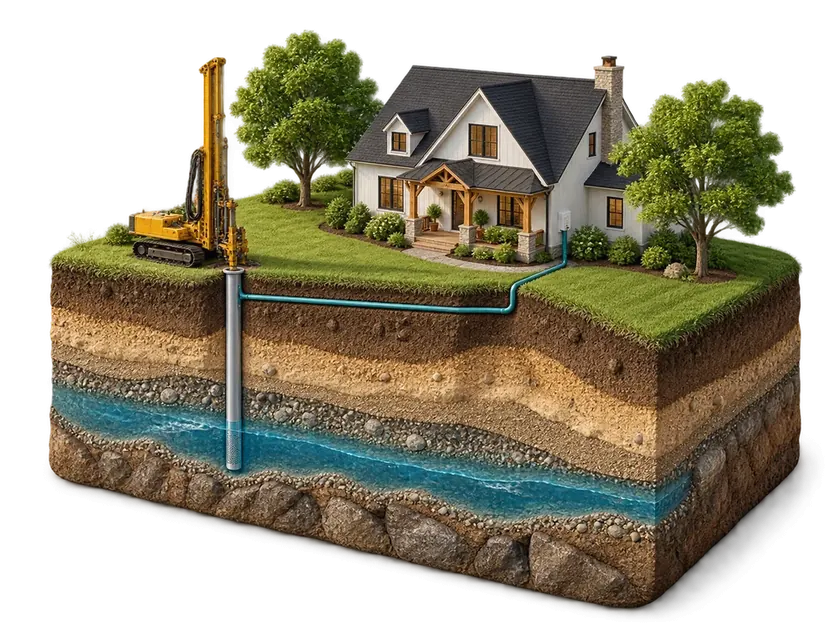
Illustrated home connected to a well and groundwater supply

YOUR NEXT STEP

Your Own Well.
Your Own Water.

Tell us about the property. We’ll look at the ground, the access, and the wells nearby, and tell you what a well of your own would involve.

Call ChatfieldRequest service
Good water starts here

Tell us what’s
on your mind.

A new well, better water, or a system that needs a little attention. Let’s find your next step.

We’ll call you back at the number you give.

Prefer to talk? (724) 588-2652
Book online

Pick a day and a time.

No water, or a pump that has stopped? Call (724) 588-2652