

WATER PROBLEMS · WESTERN PA & NORTHEAST OHIO
Rust-colored rings that come back no matter how you scrub. That is iron, usually with manganese behind it, and it is the most common stain in our region’s wells. A test puts a number on it; the FerronX takes it out.
Serving our communities since 1967
- Rust-colored rings in the toilet bowl, orange streaks in the tub and shower
- Laundry that comes out dingy, yellowed, or rust-spotted
- A metallic taste, and water that runs discolored when a tap is first opened
- Black flecks or dark marks alongside the orange: manganese traveling with the iron
- Rust settling in the water heater and building up inside pipes and appliances
Symptoms overlap, and more than one can be true at once. A water test settles it.
Schedule a water testWHAT IT IS
Iron the Water Picked Up,
Rusting in Your Fixtures.
Iron occurs naturally in the rock and soil around your well. As groundwater moves through those formations it picks up dissolved iron, and usually manganese with it. The concentration varies by location, which is why a neighbor’s water can run clear while yours is staining everything in sight.
Dissolved iron is invisible in the glass. It turns to rust the moment it meets air: in the toilet bowl, on the tub where the water dries, in the laundry. Iron that has already oxidized somewhere in the system arrives tinted. Manganese does the same thing in black. In the USGS records for the 8 counties we serve that have an iron result, 45% of 470 sampled wells were above the 0.3 mg/L line where staining starts, and the median well in 5 of the 8 counties was over it; 63% of 230 wells were above the manganese line. A rust ring in this region is ordinary geology.
How to confirm it
A test reports iron and manganese in milligrams per liter against the EPA lines, and whether the iron is dissolved or already oxidized, which is what decides how the system is built. The same visit measures hardness, pH, sulfur, and bacteria, because iron rarely travels alone and the other results decide what order the equipment goes in.
- Orange, red, or rust-brownIron. Dissolved in the well, it turns to rust the moment it meets air: in the toilet bowl, the tub, the laundry.
- Black or dark brown, a metallic tasteManganese, which travels with iron in this region’s groundwater and stains at a far lower level.
- A slimy, rust-colored film in the toilet tankIron bacteria: a nuisance biofilm rather than a health organism, and a well cleaning before any filter.Its own page
- Blue-green under a drip or around a drainNot iron. Acidic water dissolving copper out of the plumbing, with its own page.Its own page
- 0.3 mg/LIron. The EPA secondary standard: the level where orange staining and a metallic taste begin. An aesthetic limit, not a health limit.
- 0.05 mg/LManganese. Black marks and a bitter taste start here. The EPA also carries a 0.3 mg/L lifetime health advisory for it.
The test also reports the form the iron takes: dissolved and clear when drawn, or already rust-colored in the glass. That decides how the system is built.
- WHAT IRON TREATMENT CHANGES
- The stains stop arriving; the ones you scrub off stay off
- Laundry comes out its own color
- No metallic taste, no rust settling in the water heater
IRON BY COUNTY
What the Public Record Says,
County by County.
USGS groundwater records for the counties we serve, most iron first. Lawrence County, PA tops it, with 79% of its sampled wells over the line. The table shows how common iron is around you; how much is in your well is a question for your own test.
| County | Median iron | The line | Iron above 0.3 mg/L | Manganese above 0.05 mg/L | Record |
|---|---|---|---|---|---|
| Lawrence County, PA | 1.30 mg/L | Above the line | 79% of wells | 58% of wells | 29 wells, 1928–2023 |
| Columbiana County, OH | 0.58 mg/L | Above the line | 79% of wells | 86% of wells | 14 wells, 1986–2016 |
| Mercer County, PA | 0.45 mg/L | Above the line | 58% of wells | 54% of wells | 99 wells, 1928–2023 |
| Butler County, PA | 0.75 mg/L | Above the line | 56% of wells | 86% of wells | 27 wells, 1926–1997 |
| Ashtabula County, OH | 0.50 mg/L | Above the line | 56% of wells | 78% of wells | 9 wells, 1982–2016 |
| Venango County, PA | 0.10 mg/L | Below the line | 43% of wells | 40% of wells | 7 wells, 1928–2023 |
| Crawford County, PA | 0.11 mg/L | Below the line | 35% of wells | 45% of wells | 34 wells, 1928–2023 |
| Erie County, PA | 0.18 mg/L | Below the line | 33% of wells | 83% of wells | 251 wells, 1927–2023 |
Source: USGS National Water Information System groundwater records, served through the Water Quality Portal, site type Well, retrieved 2026-09-14. Each well counts once, as the median of its samples; counties with fewer than five wells with an iron result are not shown, and rows with fewer than ten wells are thin. The 0.3 mg/L iron and 0.05 mg/L manganese marks are EPA secondary standards, aesthetic limits rather than health limits.
WHAT IT COSTS YOU
Scrubbing Is Not a Fix.
Cleaning products only mask the problem. The stains keep coming back because the iron is in the water supply, delivered fresh every day, and a cleaner that works on porcelain says nothing about what the water contains. Keep cleaning decisions and water decisions separate; if a stain returns, note how quickly and where. The staining is only what you can see; the rest builds up over time.
- Laundry. Rust-colored residue on whites, a yellow cast that detergent cannot lift, and a dull grey to towels and sheets that were once white.
- Taste. A metallic edge to drinking water, coffee, and anything cooked in it; manganese adds a bitter note at much lower levels.
- The plumbing. Iron drops out of solution inside pipes and the water heater, narrowing them and settling as sludge. Appliances with small valves and screens wear early.
- The next system. Iron fouls softener resin and clogs sediment filters. Any other equipment installed without an iron filter ahead of it works worse and dies sooner.
Before you call, note four things
Write down the color (orange, reddish brown, yellow, or black), where it appears (every fixture, one sink, the laundry), whether it follows cold water, hot water, or both, and when it began and what changed around then. Take a dated photo before cleaning. None of that is a diagnosis, but it shortens both the test and the conversation.
THE FIX
Take the Iron Out
Before It Reaches a Faucet.
The FerronX Iron System treats water at the point of entry, after the test has confirmed the type and concentration of iron and metals. Every faucet, shower, toilet, and appliance downstream gets clean water, and the staining stops for good.
- FERRONX IRON SYSTEM
Engineered for this region’s iron.
It is configured from the test result: the form of the iron, its level, and the manganese with it. Chatfield stocks the system on its service vehicles, so once the test and space assessment are done, installation is often the same day.
How iron removal works - MORE THAN IRON?
Sulfur, hardness, or bacteria too.
Iron and sulfur often share a well; hardness sits on top of everything. When the test finds more than one, each gets its own system, with the iron treated first so it can’t foul what follows.
Every system we install
A LITTLE CLARITY
Iron Questions.
Straight Answers.
What are the symptoms of too much iron in well water?
Red, orange, or brown staining in toilets, showers, and sinks that returns after scrubbing, rust-colored residue on laundry, a metallic taste, discolored water when a tap is first turned on, and buildup inside pipes, water heaters, and appliances. These are indicators worth testing, not a diagnosis on their own, since staining can have more than one contributor.
Why does my water run clear and then turn orange?
Because the iron is dissolved when it leaves the well and turns to rust when it meets air. Water that is clear in the glass and orange in the toilet bowl an hour later is carrying dissolved iron; water that is already tinted when drawn is carrying iron that oxidized somewhere in the system. The test reports which, and the two are treated differently, so it is worth noting which one you see.
Is it safe to drink well water that has iron in it?
Iron is a naturally occurring element, and the 0.3 mg/L line is an EPA secondary standard, an aesthetic limit rather than a health limit. Manganese, which usually comes with it, has the same kind of limit at 0.05 mg/L and an EPA lifetime health advisory at 0.3 mg/L. The significance of any level in your water is a question for your test results and appropriate local guidance rather than a general article, which is why testing establishes what is present and at what concentration.
What causes black stains and flecks in the water?
Manganese. It travels with iron through the same rock and soil, stains at a far lower level, and leaves black or dark brown marks and a bitter, metallic taste. It is reported on the same test and treated by the same point-of-entry system, sized to whichever of the two is higher.
Does a water softener remove iron?
Not reliably. A softener exchanges calcium and magnesium; small amounts of dissolved iron may come out with them, but iron that has oxidized fouls the resin instead. When the test finds iron above the line, the FerronX goes in ahead of the softener, and each one handles its own problem.
How does the FerronX Iron System work, and what does it cost?
The FerronX is engineered for the iron levels common in this region’s groundwater and treats water at the point of entry, before it reaches any fixture, so every faucet, shower, toilet, and appliance receives treated water. The configuration follows the test: the type and level of iron and other metals set it, which is also the most economical approach, because equipment aimed at the wrong problem or the wrong level costs more over time. Chatfield stocks the system on its service vehicles, so once the test and space assessment are done, same-day installation is often possible. Call (724) 588-2652 to schedule the test.
Talk with the Chatfield team.
(724) 588-2652A LITTLE KNOWLEDGE GOES A LONG WAY
Know Your Water.
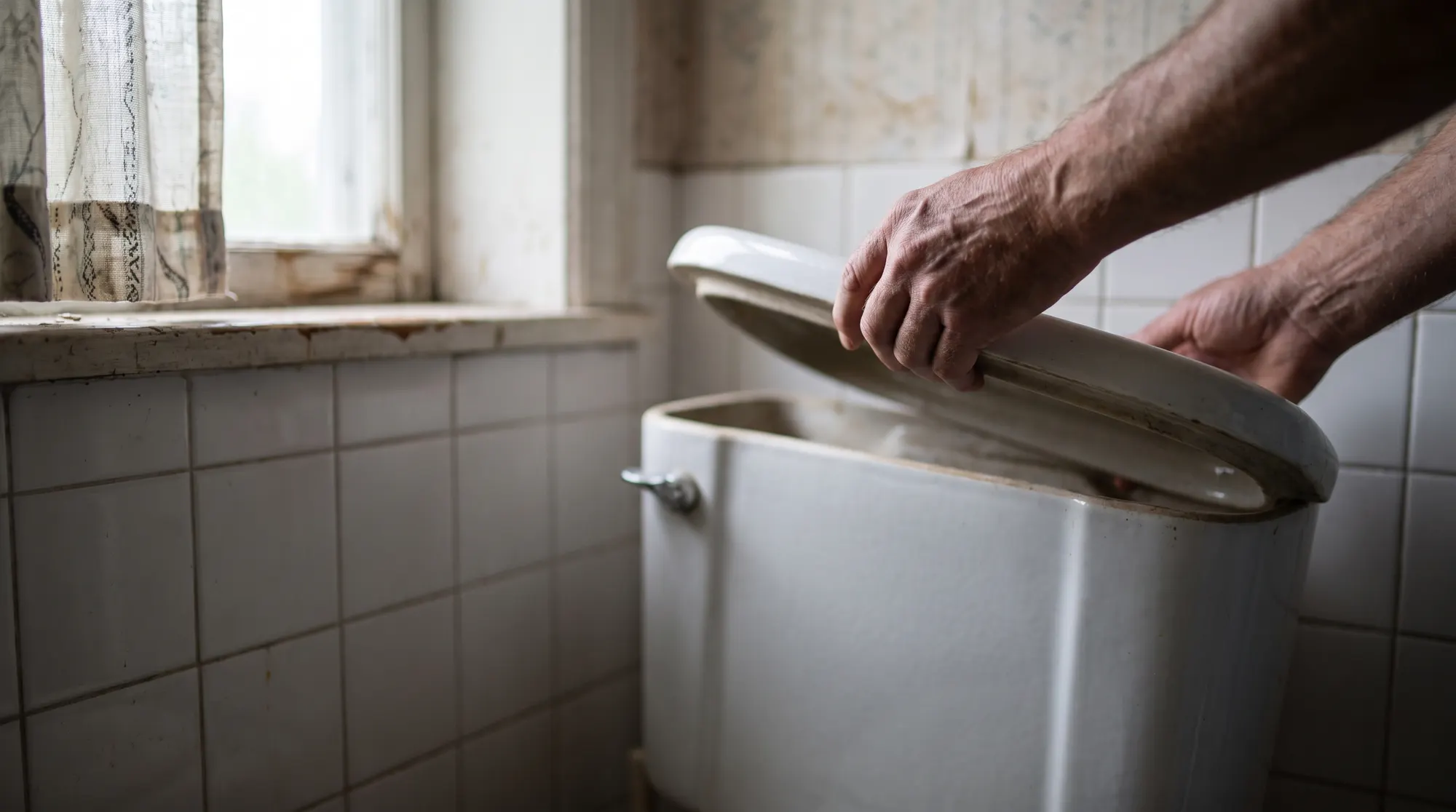 WATER PROBLEMS
Slime in the toilet tank.
The rust-colored biofilm that fouls wells and softeners: what it is and what to do about it.
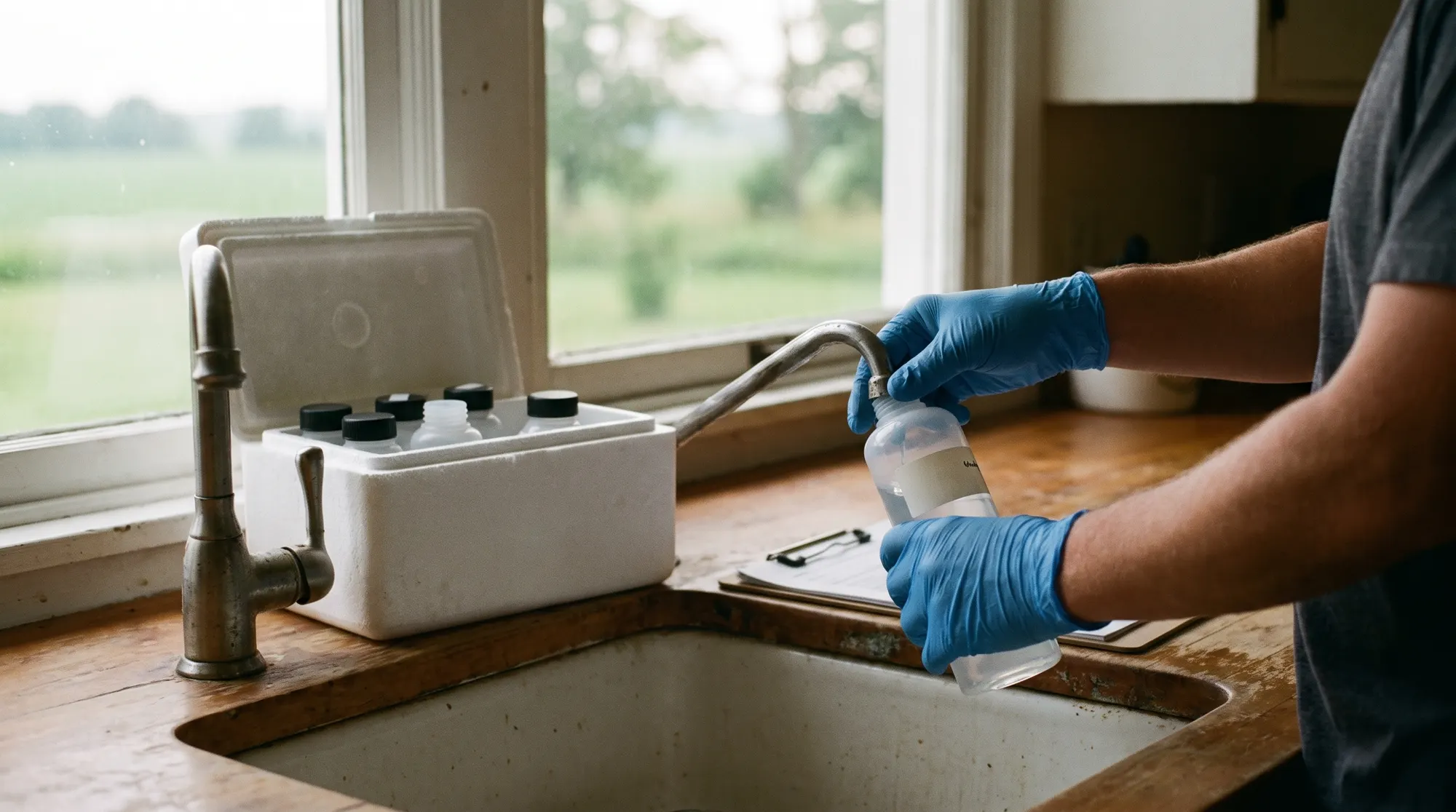 WATER TESTING
Water testing, explained.
What a test measures, what the results mean, and what happens next.
 WATER TREATMENT
Every system we install.
One system per problem, combined in the right order when your water has more than one.
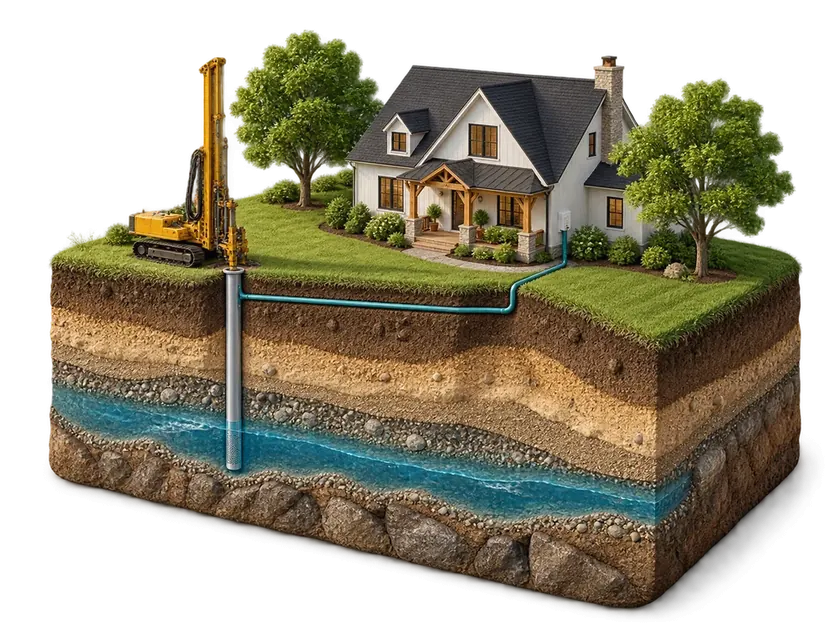
YOUR NEXT STEP
Know Your Number.
Then Stop Scrubbing.
A water test tells you how much iron is in your water, which form it takes, and what else is there. From there, the recommendation is specific to your home.