
WATER TREATMENT · 39 MIN FROM OUR CORTLAND OFFICE
Manganese stands out in Ashtabula County’s well record, with 78% of sampled wells above the 0.05 mg/L line. Both groundwater systems on the county map filter iron and manganese out; a private well gets none of that treatment.
Serving our communities since 1967
USGS sampled Ashtabula County wells between 1982 and 2016. That shows what is common here, and your own water test sets the size of the system.
Schedule a water test- Very hardMedian 18.2 gpg; 89% of 9 wells hard or very hardScale on fixtures, spotted glassware, a water heater working harder than it should. The softener is sized to your own test.The softener
- Iron56% of 9 wells above 0.3 mg/L; median 0.5 mg/LOrange staining that scrubbing never gets ahead of. The FerronX goes in at the point of entry, ahead of the softener.The iron system
- Manganese78% of 9 wells above 0.05 mg/LBlack flecks, dark marks in the dishwasher, a metallic taste. The FerronX takes it out with the iron, sized to whichever is higher.The iron system
- pHMedian pH 7.8; 8% of 48 wells below 6.5Acidic water pulls copper and lead out of the plumbing and leaves blue-green stains. A neutralizer goes ahead of everything else.Blue-green stains
- Not on recordBacteria, nitrate, PFAS, arsenicThe public record is minerals from a few dozen wells. The things that matter most to health are only in your own sample.Water testing
- 9 wellsIn the USGS record for Ashtabula County. Each well counts once, as the median of its samples.
- 60 ftMedian well depth on record; the middle half fall between 50 and 80 feet.
- 39 minFrom our Cortland office by road. Same crews, same drive, for the whole area.
- WHAT YOUR TEST ADDS
- Your well’s numbers, not the county’s
- Bacteria and nitrate, which the record never covers
- Which equipment your water needs, and in what order
WHAT WE INSTALL IN ASHTABULA COUNTY
The Equipment Ashtabula
Water Tends to Need.
Chatfield Water Systems is one line, with one system per problem. Your water test decides which ones you need and in what order; the county record shows which are likely.
- VERY HARD AT THE MEDIAN
Water softeners
89% of sampled Ashtabula County wells were hard or very hard, at a median of 18.2 grains per gallon. Your softener is sized to your own test.
EXPLORE - 56% OF WELLS ABOVE THE IRON LINE
Iron & manganese removal
56% of sampled wells were above 0.3 mg/L of iron and 78% above the manganese line. The FerronX goes in at the point of entry, ahead of the softener.
EXPLORE - BY THE CALL, NOT THE RECORD
Sulfur removal
Hydrogen sulfide isn’t in the county record; the rotten-egg smell gives it away. Injection, dosed from the test, and the CataPure carbon system take it out.
EXPLORE - AFTER THE FILTERS
UV sanitation
Bacteria aren’t in the public record either; a coliform test finds them. The Luminor UV lamp follows a sediment filter and treats every gallon entering the house.
EXPLORE - AT THE SINK
Reverse osmosis
Nitrate, arsenic, lead and PFAS are dissolved and tasteless. The membrane takes them out at the tap you drink from.
EXPLORE - FIRST, EVERY TIME
A water test
Every system above starts with a test of your well or your tap water, from our Cortland office, about 39 minutes from Ashtabula. What it finds decides which equipment you need and the order it goes in.
EXPLORE
WATER TREATMENT IN ASHTABULA COUNTY
What Ashtabula Water Says,
and What We Do About It.
Manganese first, then iron
USGS tested 9 Ashtabula County wells for the two metals, in samples from 1982 and 2016. Manganese was over the 0.05 mg/L line in 78% of them. Iron was over the 0.3 mg/L staining line in 56%, with a median of 0.5 mg/L. Iron leaves orange stains; manganese leaves brown to black ones on fixtures and laundry.
That is a small set of wells, and it can’t tell you about yours. What it does suggest is that a first test here should read manganese as closely as iron. Where a test finds either over its line, the FerronX Iron System removes both, and it goes ahead of any softener so the softener’s resin isn’t fouled.
Very hard, rarely acidic
Hardness in those 9 wells had a median of 18.2 grains per gallon, and 89% were hard or very hard. Water like that leaves scale in water heaters and spots on glass, and a LuxSoft water softener sized to your own result is the usual answer.
pH rests on a larger sample: 48 wells, with a median of 7.8 and 8% below 6.5. Acidic water is the exception on this record. When a test does find it, blue-green stains under faucets are the common sign, and a calcite neutralizer brings the pH up. Calcite adds a little hardness as it works, so a softener, if you need one, goes after it.
Greensand at Andover and Orwell
Both groundwater systems on the county map list iron and manganese removal. Andover-Camplands Water, with 3 active wells, lists greensand filtration, with chlorine added before it for disinfection and to help take out the metals. Orwell Village, serving Orwell and East Orwell from 6 active wells, lists permanganate for iron, chlorine for disinfection and greensand filtration for iron and manganese.
Homes on either system get that done before the water reaches them, and the utility’s report covers the details. A private well nearby gets none of it. At a well, the FerronX handles iron and manganese where the water enters the house, and a water test with a consultation shows whether yours needs it.
Lake Erie supplies and nine systems’ lead rounds
Aqua Ohio - Ashtabula, Conneaut and the Lake County East Water Subdistrict each take Lake Erie water through an intake, filter it through rapid sand, add fluoride and feed an orthophosphate corrosion inhibitor. All three list chlorine for disinfection, and chloramine appears nowhere in the steps listed for the systems on the county map. Roaming Shores adds chlorine to the water it buys; Geneva, Jefferson and Rock Creek list no steps of their own. A CityLux takes chlorine out for the whole house.
Every lead round on record for the nine systems was under the 0.015 mg/L action level; the highest was 0.0092 mg/L, at Jefferson, for the round ending December 2021. These are 90th-percentile figures across each system’s sampled homes, and one tap can read differently. If a lab test finds lead, reverse osmosis at the kitchen sink is the usual answer.
From our Cortland office
Jefferson is about 39 minutes and 30.6 miles by road from our Cortland office, and the rest of the county is the same crews and the same drive. From Andover and Jefferson to Ashtabula, Geneva, and Conneaut, Chatfield brings well drilling, water treatment, and pump service to homes, farms, and businesses across Ashtabula County. The service map lists 19 Ashtabula County communities:
- Andover
- Ashtabula
- Austinburg
- Conneaut
- Dorset
- East Orwell
- Geneva
- Jefferson
- Kingsville
- New Lyme
- North Kingsville
- Orwell
- Pierpont
- Roaming Shores
- Rock Creek
- Rome
- Unionville Center
- Williamsfield
- Windsor
- The Ashtabula County page
Source: Water quality: USGS National Water Information System results for Ashtabula County wells, served through the Water Quality Portal, sampled between 1982 and 2016, retrieved 2026-09-14. Each well counts once, as the median of its samples. The 0.3 mg/L iron and 0.05 mg/L manganese marks are EPA secondary standards, which are aesthetic limits, not health limits. Well depth: Ohio Department of Natural Resources well-log database, 5,480 domestic wells in Ashtabula County with a recorded depth, logged between 1936 and 2026, retrieved 2026-09-14.
A LITTLE CLARITY
Ashtabula County Questions.
Straight Answers.
What is the greensand filtration listed at Andover and Orwell?
Greensand is a filter medium coated with manganese oxide. It catches iron and manganese once they have been oxidized. Andover-Camplands lists chlorine ahead of it for that job, and Orwell lists permanganate. Both filters work on the public supply only. A private well has no such filter unless the owner adds one, and a water test shows whether it’s worth adding.
Do Geneva, Jefferson and Rock Creek treat their own water?
EPA lists no treatment steps for any of the three; each buys its water. Jefferson buys from Aqua Ohio - Ashtabula, Rock Creek from the Ashtabula County Water System, and Geneva from both. Aqua Ohio - Ashtabula’s own list includes filtration, chlorine, fluoride and an orthophosphate inhibitor. The utility’s water report and a test at your tap cover what reaches your house.
What do Orwell Village’s lead rounds show?
EPA has four 90th-percentile results for the Orwell system: 0.00311 mg/L for 2018, 0.00546 for 2021, 0.00827 for 2024 and 0.008 for 2025. All four are under the 0.015 mg/L action level, and the last two are the highest. The figures describe homes sampled across the system; a certified-lab test gives the number at your own tap.
Does the Ashtabula County record cover sulfur or bacteria?
No. The USGS figures cover hardness, iron, manganese and pH only. A rotten-egg smell points to hydrogen sulfide, which the CataPure Carbon System treats. Bacteria needs a sample sent to a certified lab, and because a private well gets no disinfection unless the owner adds it, a yearly test is standard. Say what you’re noticing when you book the water test.
Do you test water in Ashtabula County?
Yes. Chatfield’s water test and consultation cover Ashtabula County from our Cortland office, about 39 minutes away by road. The test measures what is in your water and at what level, and any equipment it points to is quoted after the results.
Which Ashtabula County communities do you serve for water treatment?
All of them, from Cortland. The service map lists 19 Ashtabula County communities, including Andover, Ashtabula, Austinburg, Conneaut, Dorset, East Orwell, and the townships between them; the county line is the boundary, not the town list.
Talk with the Chatfield team.
(724) 588-2652A LITTLE KNOWLEDGE GOES A LONG WAY
Know Your Water.
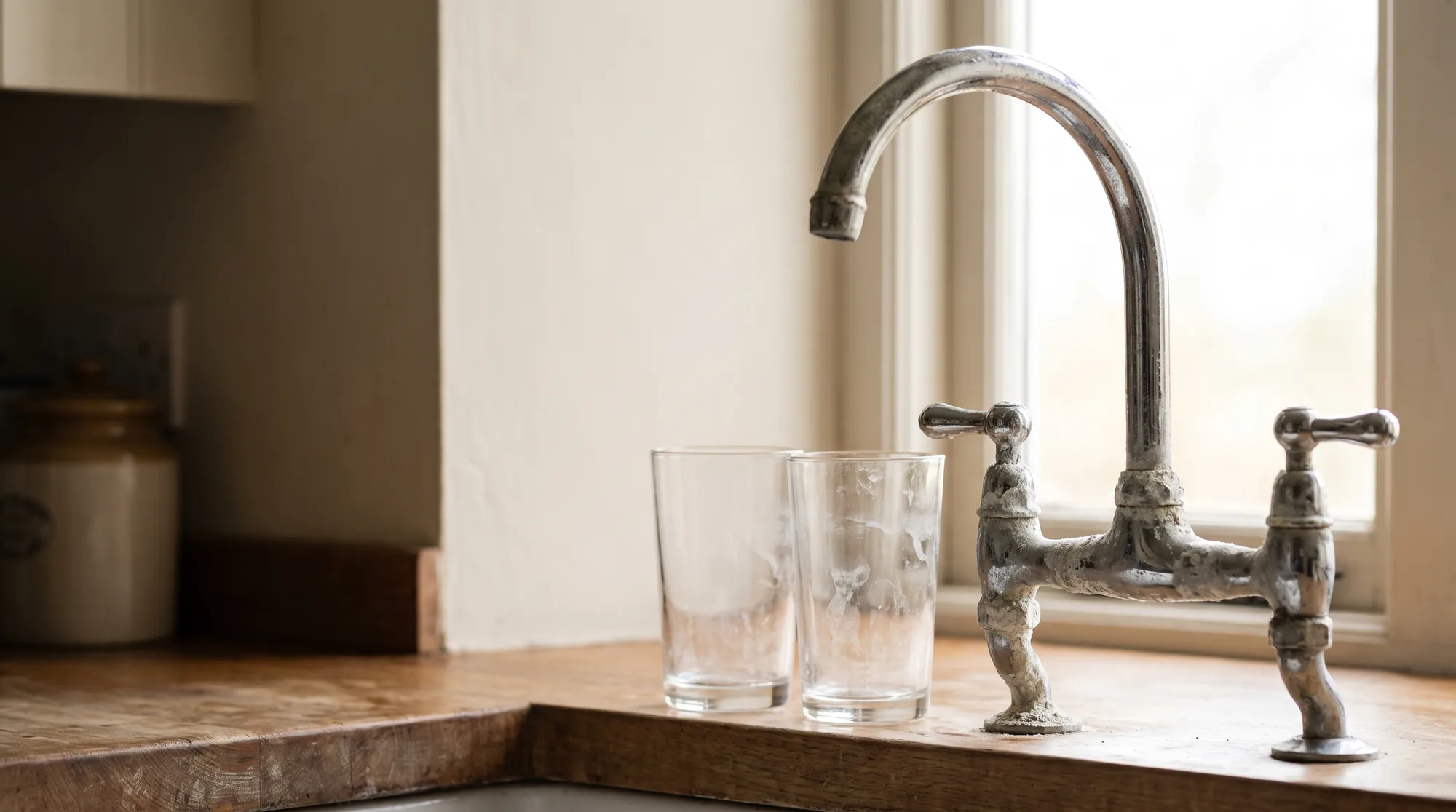 WATER PROBLEMS
Do you have hard water?
The signs, the county hardness record, and how to confirm it.
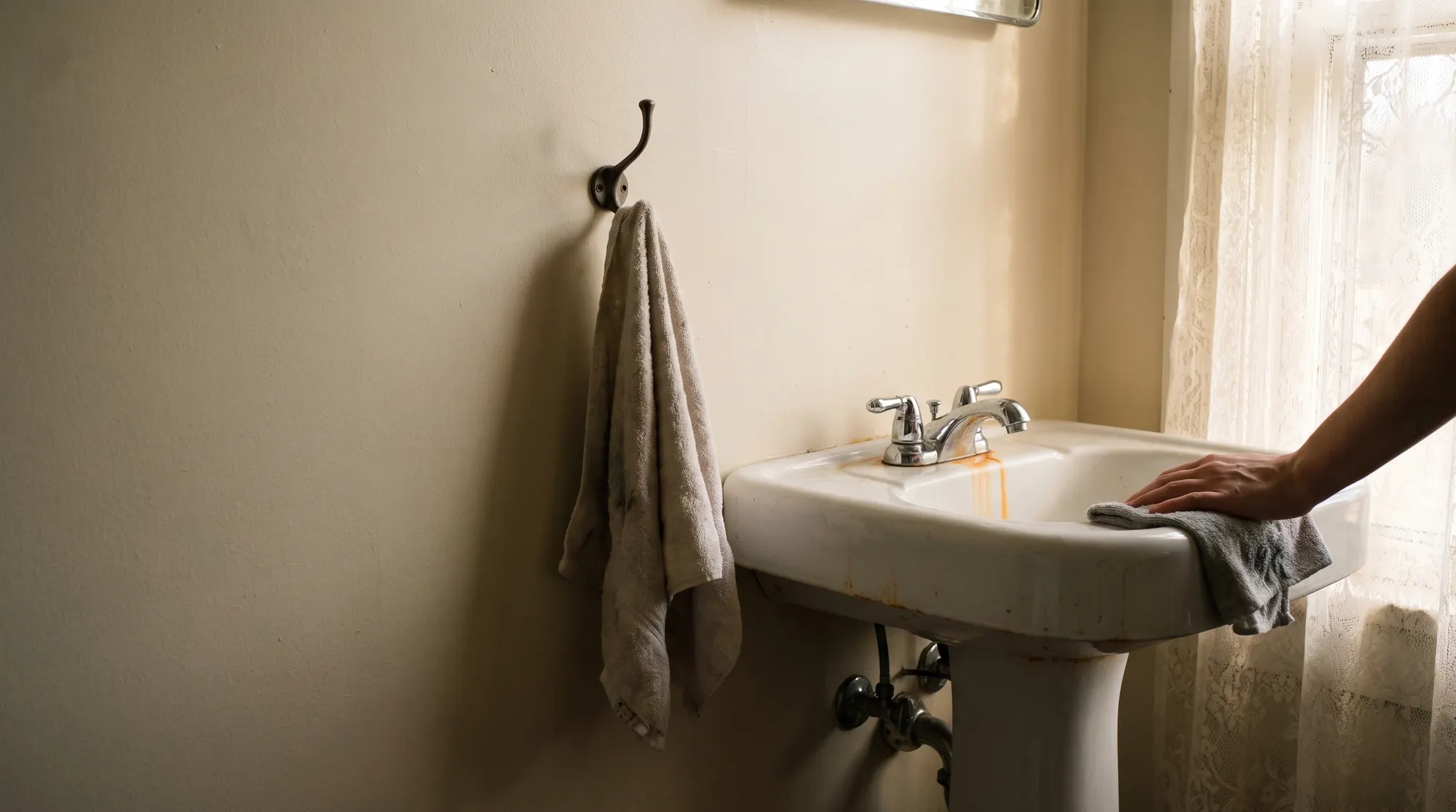 WATER PROBLEMS
Orange stains from your well water.
Read the stain, the county iron record, and what to note before you call.
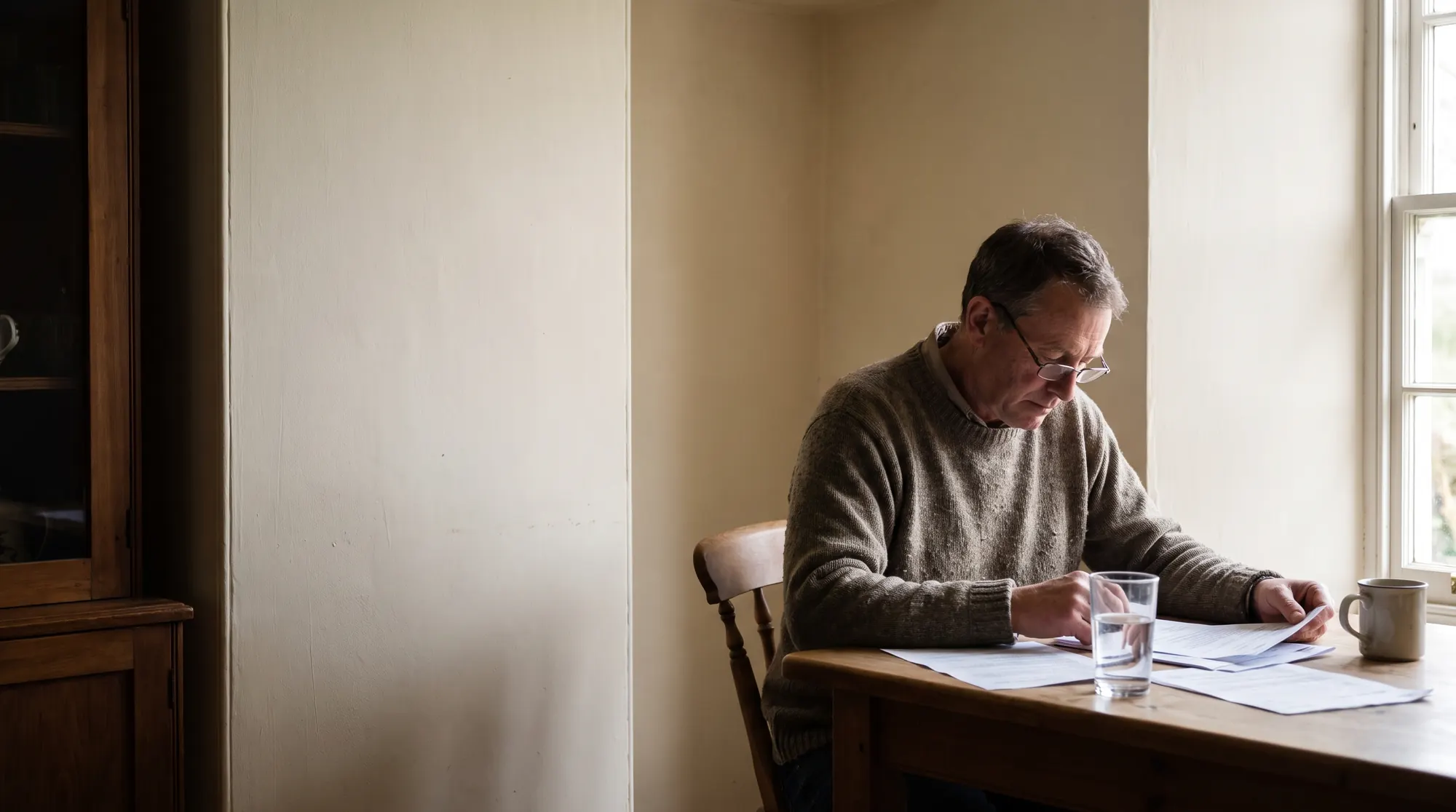 WATER PROBLEMS
Bacteria in your water.
What a coliform result means, what to do now, and which treatment follows.
YOUR NEXT STEP
Better Water in Ashtabula
Starts with a Test.
Call or fill out the form to schedule your water test. We’ll come out from Cortland, measure what is in the water, and recommend the equipment that fits.