
WATER TREATMENT · 56 MIN FROM OUR CORTLAND OFFICE
Every groundwater system on the Columbiana County map lists a step for iron or manganese, and Columbiana’s city system softens as well. A private well has none of those steps, so a water test shows which ones the house needs.
Serving our communities since 1967
USGS sampled Columbiana County wells between 1986 and 2016. That shows what is common here, and your own water test sets the size of the system.
Schedule a water test- Very hardMedian 16.7 gpg; 86% of 14 wells hard or very hardScale on fixtures, spotted glassware, a water heater working harder than it should. The softener is sized to your own test.The softener
- Iron79% of 14 wells above 0.3 mg/L; median 0.58 mg/LOrange staining that scrubbing never gets ahead of. The FerronX goes in at the point of entry, ahead of the softener.The iron system
- Manganese86% of 14 wells above 0.05 mg/LBlack flecks, dark marks in the dishwasher, a metallic taste. The FerronX takes it out with the iron, sized to whichever is higher.The iron system
- pHMedian pH 7.1; 0% of 14 wells below 6.5Acidic water pulls copper and lead out of the plumbing and leaves blue-green stains. A neutralizer goes ahead of everything else.Blue-green stains
- Not on recordBacteria, nitrate, PFAS, arsenicThe public record is minerals from a few dozen wells. The things that matter most to health are only in your own sample.Water testing
- 14 wellsIn the USGS record for Columbiana County. Each well counts once, as the median of its samples.
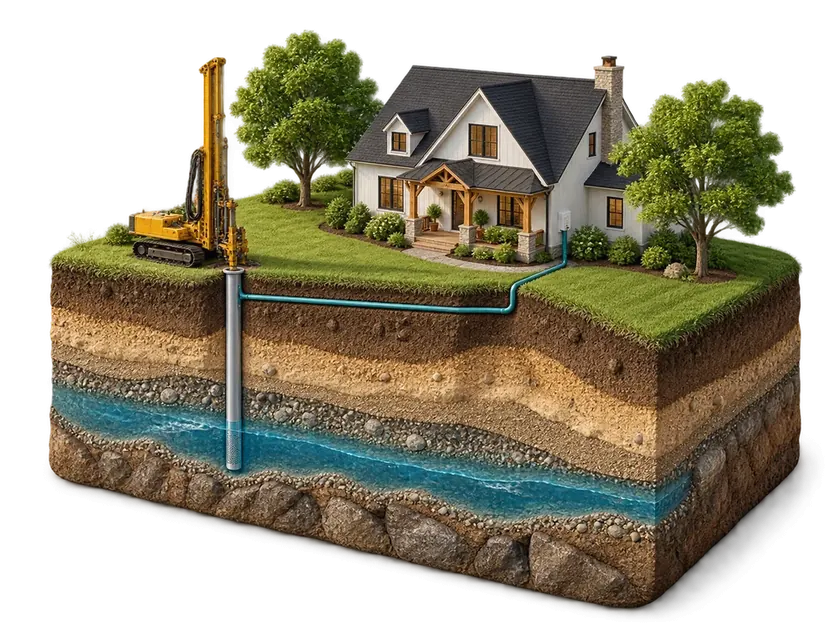
- 135 ftMedian well depth on record; the middle half fall between 95 and 200 feet.
- 56 minFrom our Cortland office by road. Same crews, same drive, for the whole area.
- WHAT YOUR TEST ADDS
- Your well’s numbers, not the county’s
- Bacteria and nitrate, which the record never covers
- Which equipment your water needs, and in what order
WHAT WE INSTALL IN COLUMBIANA COUNTY
The Equipment Columbiana
Water Tends to Need.
Chatfield Water Systems is one line, with one system per problem. Your water test decides which ones you need and in what order; the county record shows which are likely.
- VERY HARD AT THE MEDIAN
Water softeners
86% of sampled Columbiana County wells were hard or very hard, at a median of 16.7 grains per gallon. Your softener is sized to your own test.
EXPLORE - 79% OF WELLS ABOVE THE IRON LINE
Iron & manganese removal
79% of sampled wells were above 0.3 mg/L of iron and 86% above the manganese line. The FerronX goes in at the point of entry, ahead of the softener.
EXPLORE - BY THE CALL, NOT THE RECORD
Sulfur removal
Hydrogen sulfide isn’t in the county record; the rotten-egg smell gives it away. Injection, dosed from the test, and the CataPure carbon system take it out.
EXPLORE - AFTER THE FILTERS
UV sanitation
Bacteria aren’t in the public record either; a coliform test finds them. The Luminor UV lamp follows a sediment filter and treats every gallon entering the house.
EXPLORE - AT THE SINK
Reverse osmosis
Nitrate, arsenic, lead and PFAS are dissolved and tasteless. The membrane takes them out at the tap you drink from.
EXPLORE - FIRST, EVERY TIME
A water test
Every system above starts with a test of your well or your tap water, from our Cortland office, about 56 minutes from Columbiana. What it finds decides which equipment you need and the order it goes in.
EXPLORE
WATER TREATMENT IN COLUMBIANA COUNTY
What Columbiana Water Says,
and What We Do About It.
Four groundwater systems, four ways with metals
The four groundwater systems on the county map each list iron or manganese removal, by different routes. East Palestine and New Waterford use permanganate and greensand filtration. Lisbon lists cascade aeration and permanganate for manganese and pressure sand filtration for iron, along with ultrafiltration for particles and 4-log virus treatment, which removes or kills nearly all viruses. Columbiana City lists diffused aeration for iron and manganese, lime and soda ash for softening and manganese, and a polyphosphate inhibitor filed under iron removal.
At a private well, the FerronX Iron System takes on both metals where the water enters the house. The orange stains come from iron; manganese leaves darker ones, brown to black. A water test reads both, and the unit is sized to the result and to the well’s flow.
Iron out before the softener
The USGS record for Columbiana County comes from 14 wells sampled in 1986 and 2016. Iron was over the 0.3 mg/L staining line in 79% of them, at a median 0.58 mg/L, and manganese over its 0.05 mg/L line in 86%. Hardness had a median of 16.7 grains per gallon, with 86% hard or very hard.
On a well that tests like that record, the metals come out first and a LuxSoft softener follows, because taking iron out ahead of the softener protects its resin. If sand or grit shows up, an Alluvium Sediment System goes in at the very start of the line. Each piece of equipment is sized from your own test, since the county figures describe 14 wells and none of them is yours.
River, reservoir and chlorine
East Liverpool and the Buckeye Water District take Ohio River water; Salem draws on Spring Valley Reservoir, Cold Run Creek and Salem Reservoir as well as 4 wells. All three filter through rapid sand, add fluoride and adjust pH. East Liverpool also feeds an orthophosphate corrosion inhibitor, and Buckeye lists permanganate for manganese and iron. Disinfection on every list here is chlorine; chloramine appears on none of them.
Leetonia buys Salem’s water and lists chlorine of its own; Washingtonville buys from Salem and lists no steps. Only Columbiana City lists softening, so on the other supplies nothing listed lowers hardness. A CityLux takes the chlorine out for the whole house and softens hard water in the same unit; a tap test shows how hard yours is.
Leetonia’s latest lead round
EPA records Leetonia Village’s lead 90th percentile for the round ending December 2025 at 0.0164 mg/L, over the 0.015 mg/L action level. Its earlier rounds, back to 2016, were under it, the highest being 0.0124 for 2018.
Every round on record for the other eight systems on the county map was under the action level. Lisbon’s highest was also 0.0124, for 2024, and Salem’s latest, for 2025, was 0.0094. These figures come from homes sampled across each system, and the lead at one tap depends on its own service line and fixtures. A lead test through a certified lab gives your number; if it finds lead, an Atlas Filtri Oasis Sanic reverse osmosis unit at the kitchen sink is the usual answer.
From our Cortland office
Lisbon is about 56 minutes and 47 miles by road from our Cortland office, and the rest of the county is the same crews and the same drive. From Salem and Columbiana to Lisbon, East Liverpool, and Wellsville, Chatfield serves Columbiana County homes, farms, and businesses with the whole water system. The service map lists 21 Columbiana County communities:
- Calcutta
- Columbiana
- East Liverpool
- East Palestine
- East Rochester
- Elkton
- Hanoverton
- Homeworth
- Kensington
- Leetonia
- Lisbon
- Negley
- New Waterford
- North Georgetown
- Rogers
- Salem
- Salineville
- Washingtonville
- Wellsville
- West Point
- Winona
- The Columbiana County page
Source: Water quality: USGS National Water Information System results for Columbiana County wells, served through the Water Quality Portal, sampled between 1986 and 2016, retrieved 2026-09-14. Each well counts once, as the median of its samples. The 0.3 mg/L iron and 0.05 mg/L manganese marks are EPA secondary standards, which are aesthetic limits, not health limits. Well depth: Ohio Department of Natural Resources well-log database, 9,424 domestic wells in Columbiana County with a recorded depth, logged between 1925 and 2026, retrieved 2026-09-14.
A LITTLE CLARITY
Columbiana County Questions.
Straight Answers.
Does Columbiana’s city water still need a softener?
Maybe not. Columbiana City is the only system on the county map with softening on its EPA list: lime and soda ash, with coagulation, pH adjustment and sand filtration all listed for hardness removal. How hard the water is when it reaches you isn’t in our record, so a tap test is the way to know whether a LuxSoft would add anything.
Should wells near Wellsville, Calcutta or East Liverpool be tested for bacteria?
Yes, as every private well should be once a year. Logs there put a median of just 5 feet of soil and loose material over the rock, and thin cover filters less before water reaches a well. Bacteria samples go to a certified lab. A positive result is confirmed and the well disinfected first; a Luminor UV after the filters is the longer-term answer if it returns.
Is acidic water likely in a Columbiana County well?
Not on the record. None of the 14 sampled wells was below pH 6.5, and the median was 7.1. That makes a calcite neutralizer the exception here, fitted only when your own test comes in low; blue-green stains around fixtures are the usual sign. Leaving it out where it isn’t needed also avoids adding hardness to water that is often hard already.
What are the ultrafiltration and 4-log steps in Lisbon’s system?
Ultrafiltration is a fine-pore membrane that holds back particles a sand filter can pass. 4-log treatment of viruses means the supply is treated to remove or inactivate all but a tiny share of viruses before the water reaches the first customer, the level set out in EPA’s Ground Water Rule. Both happen on the village supply only; a private well near Lisbon gets neither, and a water test is where its treatment starts.
Do you test water in Columbiana County?
Yes. Chatfield’s water test and consultation cover Columbiana County from our Cortland office, about 56 minutes away by road. The test measures what is in your water and at what level, and any equipment it points to is quoted after the results.
Which Columbiana County communities do you serve for water treatment?
All of them, from Cortland. The service map lists 21 Columbiana County communities, including Calcutta, Columbiana, East Liverpool, East Palestine, East Rochester, Elkton, and the townships between them; the county line is the boundary, not the town list.
Talk with the Chatfield team.
(724) 588-2652A LITTLE KNOWLEDGE GOES A LONG WAY
Know Your Water.
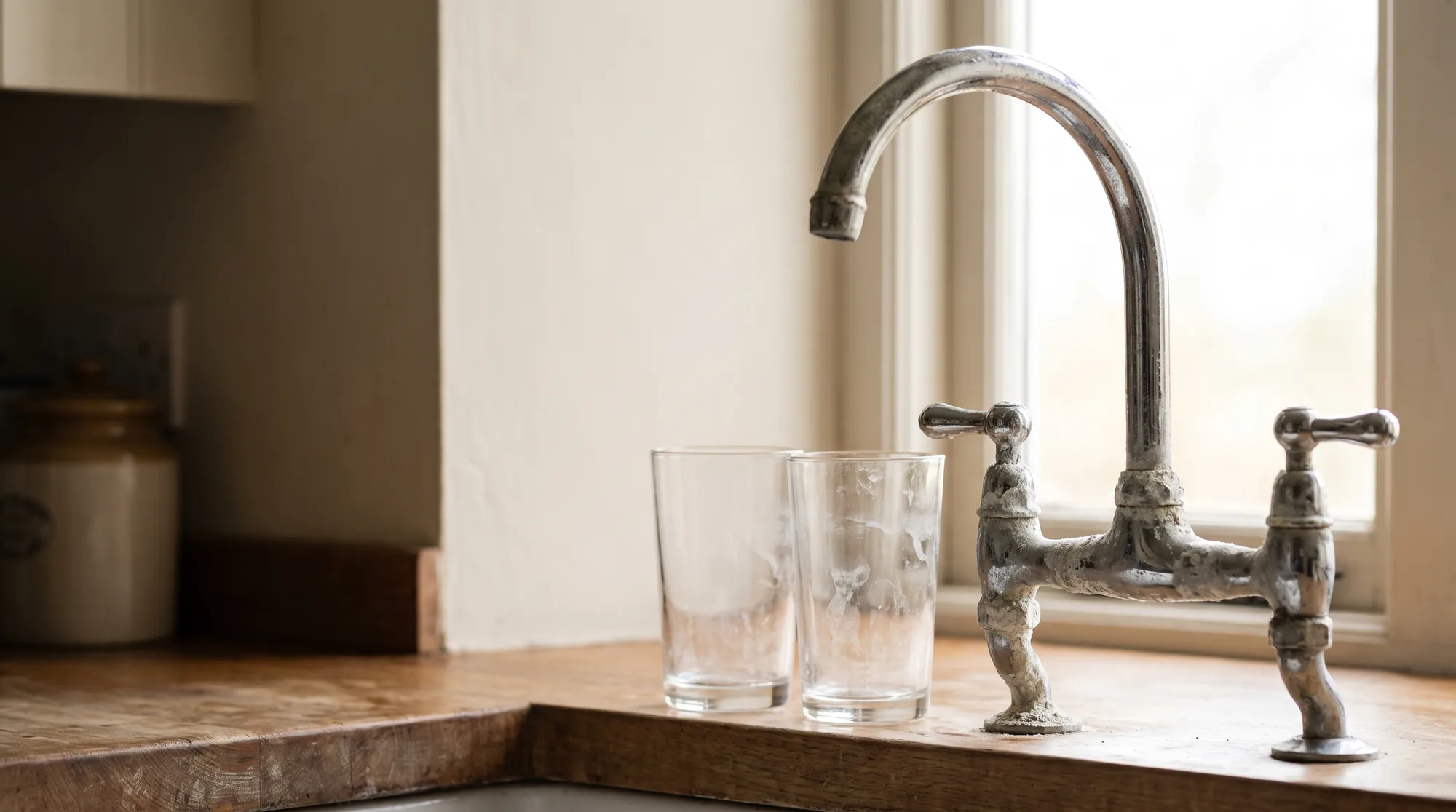 WATER PROBLEMS
Do you have hard water?
The signs, the county hardness record, and how to confirm it.
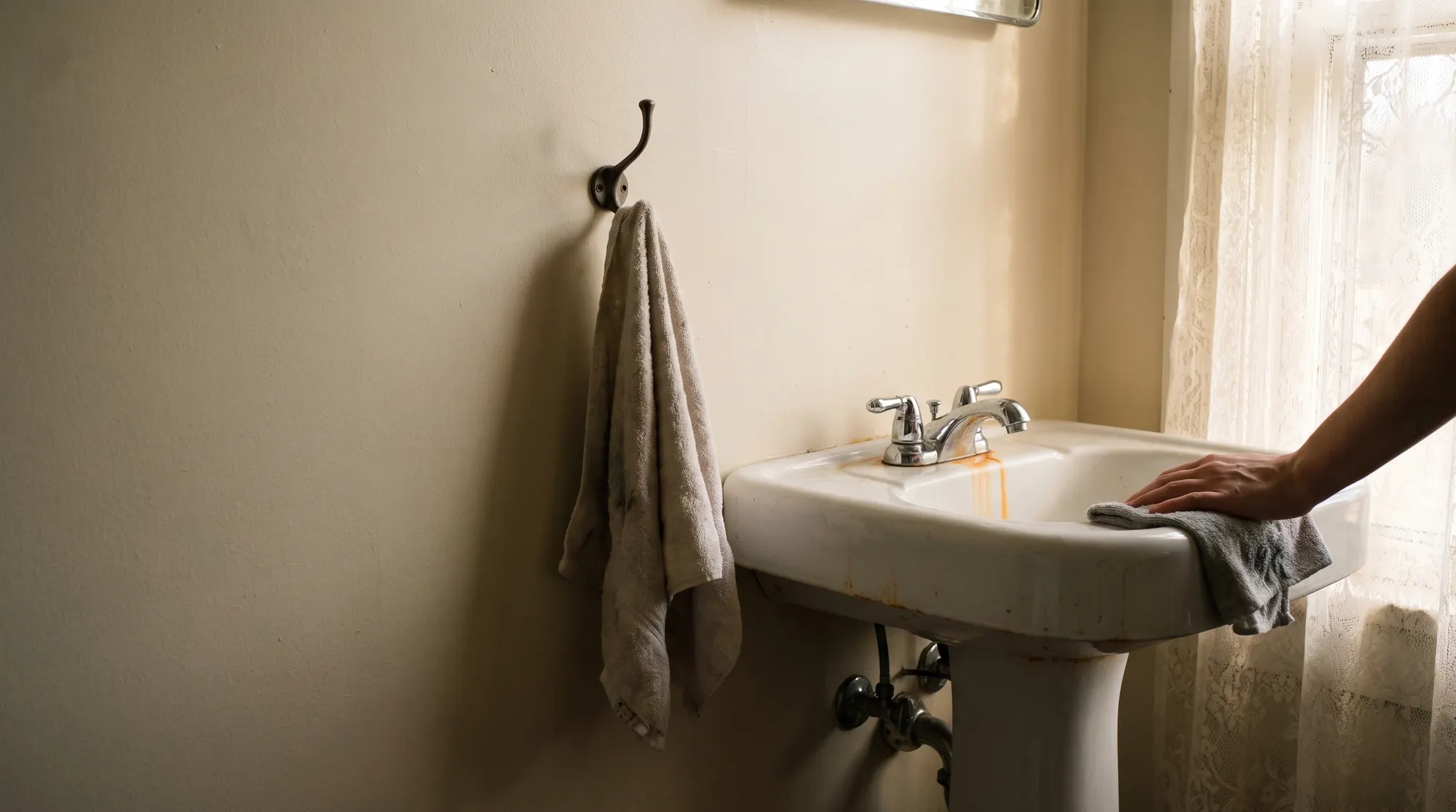 WATER PROBLEMS
Orange stains from your well water.
Read the stain, the county iron record, and what to note before you call.
 WATER PROBLEMS
Bacteria in your water.
What a coliform result means, what to do now, and which treatment follows.
YOUR NEXT STEP
Better Water in Columbiana
Starts with a Test.
Call or fill out the form to schedule your water test. We’ll come out from Cortland, measure what is in the water, and recommend the equipment that fits.