COLUMBIANA COUNTY, OHIO · 66 MIN FROM OUR CORTLAND OFFICE
Well Drilling &Water Treatmentin North Georgetown, OH.
Wells around North Georgetown land in a fairly tight range. The middle half of 1,664 local logs fell between 100 and 178 feet, a narrower band than the county’s 95 to 200, around a 130-foot median. The soil runs deep, a median 58 feet to rock, while water at rest stands a median 40 feet down.
Whether you’re on a private well or city water, the same crew handles the water source, the pressure, and what comes out of the tap.
WATER TREATMENT
Well water treatment in North Georgetown, OH
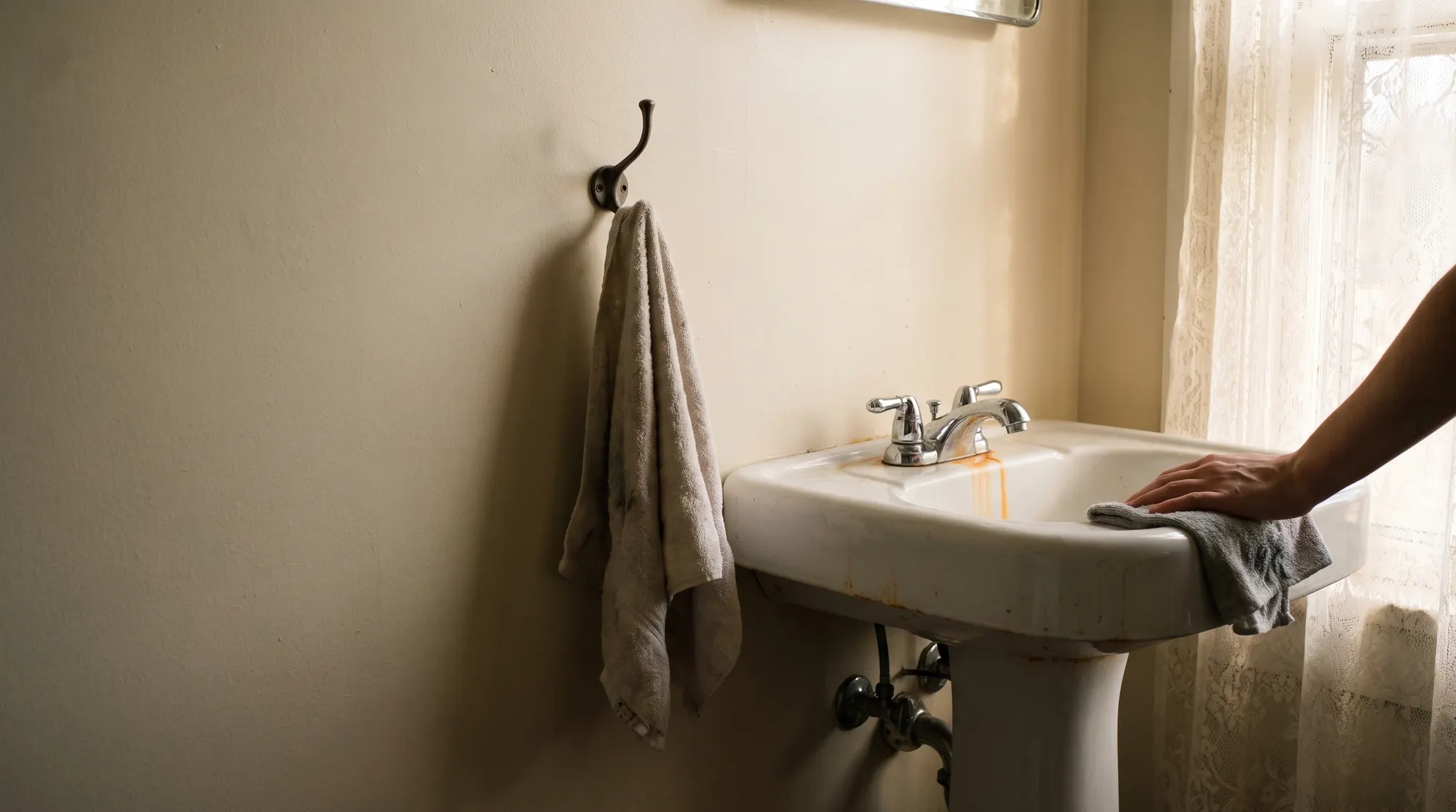
USGS found manganese above 0.05 mg/L in 86% of sampled Columbiana County wells, and it can leave dark stains and a metallic taste. A water test shows whether yours carries it, and the FerronX Iron System removes manganese along with iron.
Bedrock sits a median 58 feet down and past 94 in a quarter of logs, so casing is a sizable part of each well. The Allegheny and Pottsville Groups are mapped beneath the town, and the median well is tied for 11th of 21 county towns.
Well pump & pressure tank service in North Georgetown, OH
Half the local wells yield 15 gallons per minute or more, and a quarter 26 or more. Water at rest stands a median 40 feet down, so a submersible can sit well below it and still serve a busy household.
The 1,664 domestic wells on file within 5 miles of North Georgetown, from the state’s drilling logs: your neighbors’ wells, and the best guide to this ground.
WELL DEPTH130ftmedian of 1,664 wells
middle half 100–178 ft
YIELD15gpmmedian of 1,545 wells
middle half 10–26 gpm
DEPTH TO BEDROCK58ftmedian of 1,447 logs
middle half 34–94 ft
WATER LEVEL40ftbelow the surface, median
1,488 wells; middle half 23–60 ft
Source: ODNR well logs, domestic wells within 5 miles, retrieved 2026-09-30.
The Middle Half: 100 to 178 Feet
Of the 1,664 logs within 5 miles of North Georgetown, a quarter stopped at 100 feet or less and a quarter ran past 178, which leaves half the wells inside that window. The county’s domestic logs spread wider, from 95 to 200 feet in the middle half. With the local range that much tighter, a new well’s depth is easier to plan for, though the final figure still depends on what the drill meets.
What a new well costs follows the footage, and residential well drilling covers the job from Ohio EPA permit assistance through the final yield test. The finish depth is set on site, once the well has crossed enough water for the home.
Fifty-Eight Feet of Cover, Forty to Water
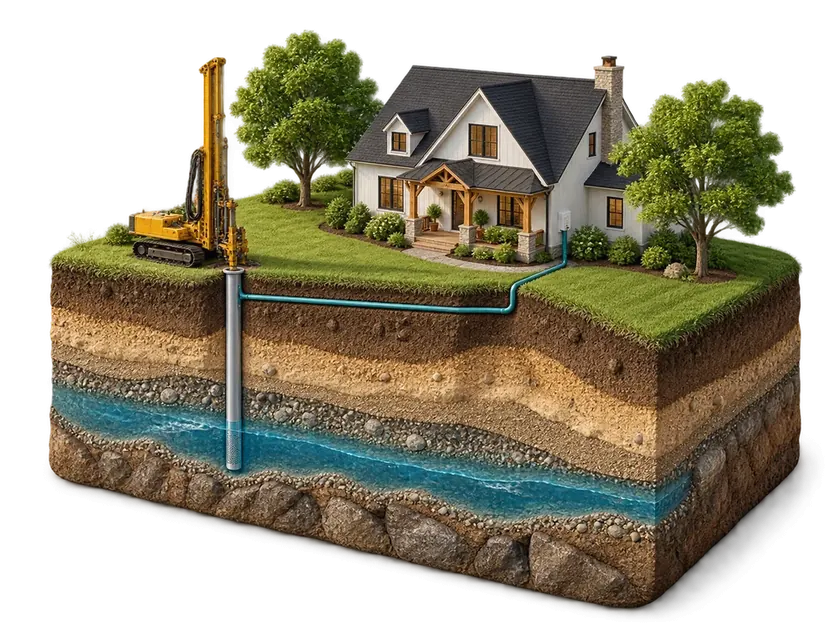
Bedrock here is buried deep: half the 1,447 logs that noted it went past 58 feet of soil, and a quarter past 94. Casing has to run all the way through that cover and seat in rock, so it takes a bigger share of the work than the total depth suggests.
The water is more forgiving. At rest it stands a median 40 feet down, within 23 feet in a quarter of wells and no deeper than 60 in three of four. That leaves plenty of room to hang a submersible pump well below the level, and yields of 15 gallons per minute at the median let it be sized to the house. A well inspection checks older systems against those figures.
WATER IN COLUMBIANA COUNTY
The Columbiana County Water Record.
In USGS samples from across Columbiana County, taken 1986–2016, 86% of wells were hard or very hard, 79% carried iron above the staining line, 86% had manganese above 0.05 mg/L. The full record, and what it means for treatment, is on the Columbiana County page; your own well gets its own test.
WHY NORTH GEORGETOWN CHOOSES CHATFIELD
Local Ground. Local Knowledge.
Rated 4.7 on Google across 104 reviews. Here is what working with us looks like, in a customer’s words.
“
FROM OUR CUSTOMERSReplacement well
“We bought a new home November 1st, 2024 and low and behold it had a collapsed well. After several quotes, we chose Chatfield drilling, and we’re glad we did! Matt & his team arrived quickly to assess the situation, and formulate a plan to get the H2O flowing again. Even through the holidays, they did not waiver. Eric their driller worked hard in the brutal NE Ohio cold to pound a well for us. We are beyond pleased, and have fantastic water!”
Google review, Chatfield customer4.7 ★ · 104 reviews
Serving Columbiana County and Northeast Ohio since 1967
DEP-compliant and fully licensed
Local knowledge of North Georgetown’s water tables and soil types
Honest pricing, expert recommendations
Friendly, family-run service with a professional touch
NEARBY
Also Serving the Communities Around North Georgetown.
We send the same crews to each of these towns. If you’re between towns, pick the closest one; the service doesn’t change.
Our Cortland office (7115 Hoagland Blackstub Rd. Unit C, Cortland, OH 44410) is about 66 minutes and 47 miles by road from North Georgetown. Service calls for North Georgetown are scheduled from there.
Which townships and boroughs around North Georgetown do you serve?+
North Georgetown and the municipalities around it: Beloit, Sebring, Hanoverton, Smith Township, Goshen Township, Washington Township, Salem, Alliance. Beyond those, the rest of the 21 Columbiana County communities on our service map, from the same office.
How deep are wells around North Georgetown?+
Ohio’s well-log database lists 1,664 domestic wells within 5 miles of North Georgetown: the median is 130 feet deep, and the middle half fall between 100 and 178 feet. The median well was logged at 15 gallons per minute. Drillers reached bedrock at a median of 58 feet. Your own well's depth depends on the ground under your lot.
What does a free water test cover for a North Georgetown well?+
It starts with what Columbiana County wells most often carry: hardness, iron and manganese, all common in the county’s USGS samples, along with pH. Testing is done on site or through a certified lab, and the consultation that follows explains what, if anything, your results call for, from a FerronX Iron System to a LuxSoft water softener.
Can a North Georgetown well keep up with a large household?+
Usually. Half the local wells yield 15 gallons per minute or more and a quarter 26 or more, so the pump can often be sized to the house. What matters more is matching the pressure switch and tank to peak use, so fixtures running at once don’t cycle the pump constantly. The yield test on your own well confirms it.