The 2,355 domestic wells on file within 5 miles of Canfield, from the state’s drilling logs: your neighbors’ wells, and the best guide to this ground.
Source: ODNR well logs, domestic wells within 5 miles, retrieved 2026-09-30.
How Much Casing a Canfield Well Takes
Before a well near Canfield reaches rock, it passes through soil and loose ground that has to be cased off. Of the 2,191 logs within five miles that record depth to rock, the middle half find it between 20 and 57 feet, and one in four has 57 feet or more of ground above it.
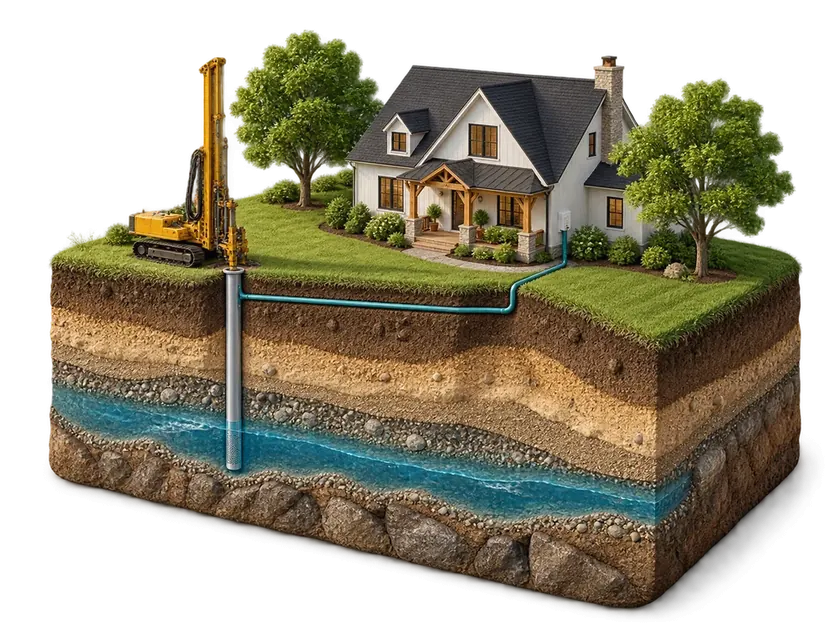
Casing is pipe usually set from the surface into the top of the rock and sealed around the outside, so water from the upper ground can't run down beside it. Below it the hole carries on in rock. Even a well at 90 feet, the cutoff for the shallowest quarter of logs, goes far past where rock begins in the deepest quarter, so most logged wells end in rock. The depth to rock on your lot is found as the hole goes down, and it moves the quote. The cost page explains how, and residential drilling covers the job.
City Mains or a Water System of Your Own
Canfield's city water system, run by local government, buys its water already filtered from the Youngstown city system. On those lines, supply and pressure are the city's job, the water report comes from the utility, and treatment is covered on the Canfield water treatment page.
A house on a private well is its own small water system, from the well to the tap. The owner looks after the wellhead, pump, switch and pressure tank, each matched to the well's depth, water level and flow. Trouble in one part can look like trouble in another, and a well inspection checks each part and measures the flow. It's worth doing when a house changes hands or when the pressure starts to act up.