The 308 domestic wells on file within 5 miles of Ashtabula, from the state’s drilling logs: your neighbors’ wells, and the best guide to this ground.
Source: ODNR well logs, domestic wells within 5 miles, retrieved 2026-09-30.
Matching the Pump to Low Ashtabula Yields
Flow is the number that shapes a well near Ashtabula. Of the 270 logs within five miles that record a yield, one in four shows 2 gallons per minute or less, and 4 is the median. Ohio Shale, a black shale of Devonian age, is the rock mapped under the city, and shale tends to give up its water slowly.
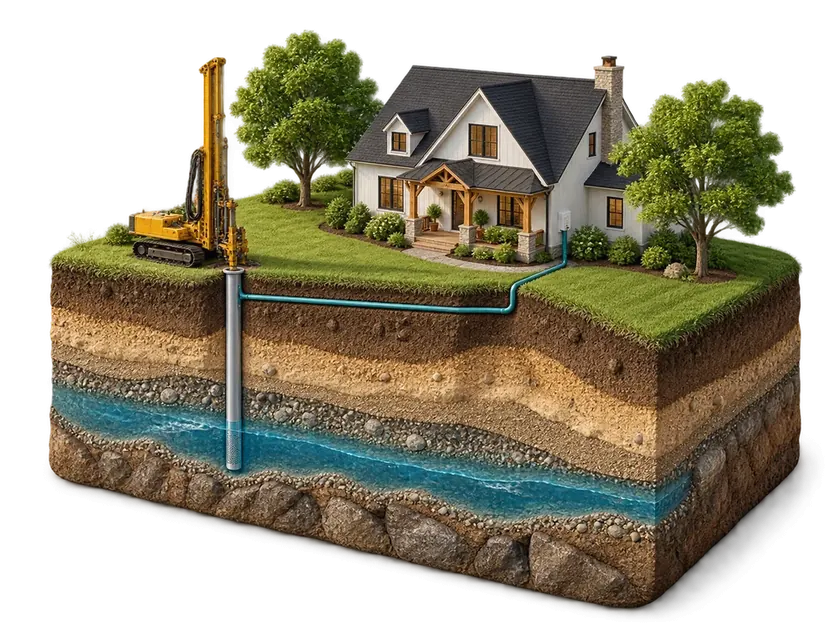
A household draws water in bursts, and on a slow well a bigger pump only empties the hole faster and risks running dry. So the pump is matched to what the well can replace, not to the house's busiest moment. Water standing in the hole above the pump is the reserve that covers a shower or a load of laundry, and a larger pressure tank adds to it. Pump system design starts from your own well's measured flow.
Where the Pump Hangs, Well by Well
Wells around the city also run a little deeper than the county's, a median logged depth of 67 feet against 60 for the county's domestic wells. That puts Ashtabula 7th of 19 county towns by median depth. The static level, where water rests with the pump off, spreads widely: one log in four shows it at 9 feet or less, and one in four at 40 feet or more.
Because of that spread, the pump setting is worked out well by well. The pump hangs below the static level with room for the drop pumping causes, and usually clear of the bottom. A setting that suited a new well may not suit it years later. A well inspection measures the flow and checks the pump against what the well produces, and the treatment page covers the water itself.