The 151 domestic wells on file within 5 miles of Corry, from the state’s drilling logs: your neighbors’ wells, and the best guide to this ground.
Source: PaGWIS (PA DCNR), domestic wells within 5 miles, retrieved 2026-09-30; older paper-record locations are approximate.
Where Rock Starts Around Corry
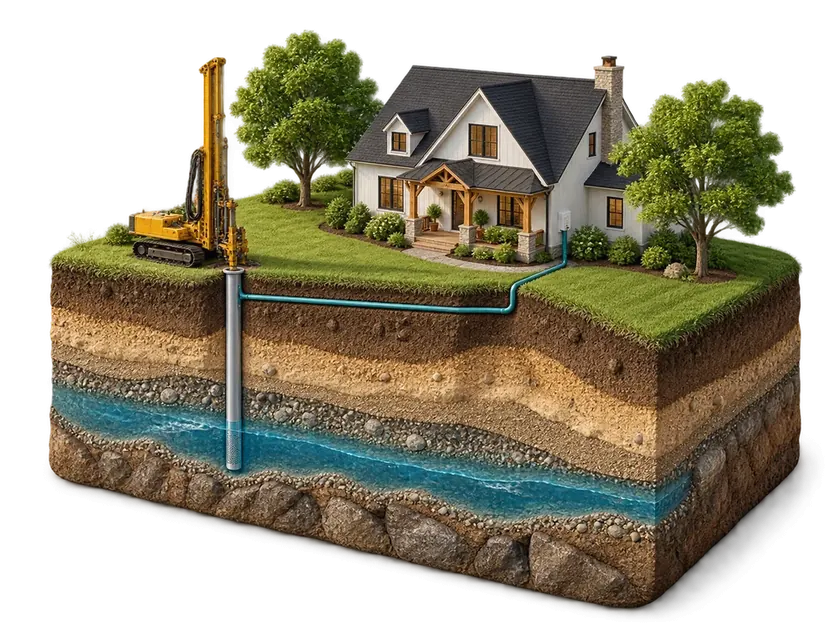
Depth to rock can move an estimate a long way here. A quarter of the 103 logs that note it hit rock by 24 feet; another quarter had to go 73 feet or more. Casing usually runs from the surface down to rock, so at the deep end of that range it becomes a large part of the job.
Total footage adds to it, since three in four wells went 65 feet or more. The logs nearest your lot give the best early guide, and the driller confirms rock as the hole goes down. The cost of drilling a new well explains how footage and casing add up, and residential well drilling covers the rest of the job, with PA DEP permit assistance.
Seven Authority Wells and Hare Creek
The authority serves 3,200 connections from seven groundwater wells, numbered 27 through 33, and lists one treatment plant, Hare Creek. EPA lists two steps: gaseous chlorination after treatment and 4-log treatment of viruses, which kills or removes all but a trace of them. Homes on the line get their water report from the authority.
EPA's lead 90th percentiles for the system were 0.00207 mg/L for the round ending 2016, 0.003 for 2019, 0.00246 for 2022 and 0.00145 for 2025, each below the 0.015 action level. Those figures come from taps sampled across town, and a single house can differ. If a home test finds lead, reverse osmosis at the kitchen sink is the usual answer. If the chlorine taste bothers you, a CityLux system handles chlorine removal for the whole house.