The 1,205 domestic wells on file within 5 miles of Newton Falls, from the state’s drilling logs: your neighbors’ wells, and the best guide to this ground.
Source: ODNR well logs, domestic wells within 5 miles, retrieved 2026-09-30.
From the East Branch Through the City Plant
EPA's record for Newton Falls City (OH7802311) shows one intake on the East Branch of the Mahoning and one treatment plant. It serves about 6,109 people through 2,619 connections, with 3 storage tanks. Of the listed steps, permanganate removes inorganics. Coagulation, rapid mixing, flocculation, settling and filtration take out particles, with powdered activated carbon added. Chlorine gas disinfects and the pH is adjusted, both after filtration. Fluoride goes in too, and an orthophosphate inhibitor works with the pH adjustment to protect pipes from corrosion.
EPA's list names chlorine gas, not chloramine, as the disinfectant, and chlorine is the step most people notice at the tap. CityLux takes it out for the whole house, and the chlorine taste page covers the signs.
Variable Rock, High Water in Local Wells
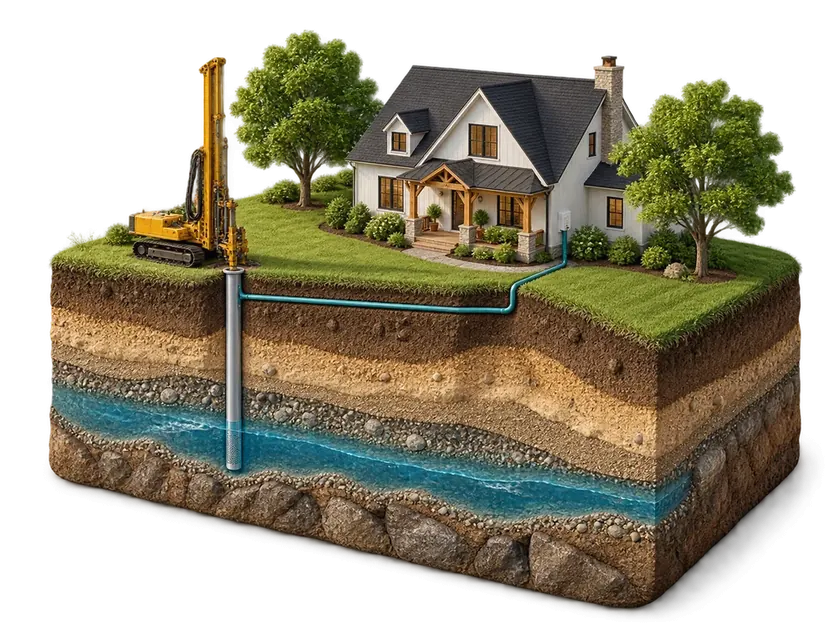
Wells around Newton Falls pair an uneven depth to rock with water that sits close to the surface. In 1,099 logs the water settles 10 to 30 feet down in the middle half, a median of 20. Rock, by contrast, turns up within 14 feet in a quarter of logs and only past 60 in another quarter, and casing, which Ohio requires to a depth of 25 feet or more, carries on to rock wherever rock lies deeper.
That mix touches both the quote and the pump. A long casing run adds to the job, which the cost guide explains, while high water opens up simpler pump options, covered in the questions below. Residential drilling walks through the rest.