The 761 domestic wells on file within 5 miles of Clark, from the state’s drilling logs: your neighbors’ wells, and the best guide to this ground.
Source: PaGWIS (PA DCNR), domestic wells within 5 miles, retrieved 2026-09-30; older paper-record locations are approximate.
Short Casing, Long Open Hole
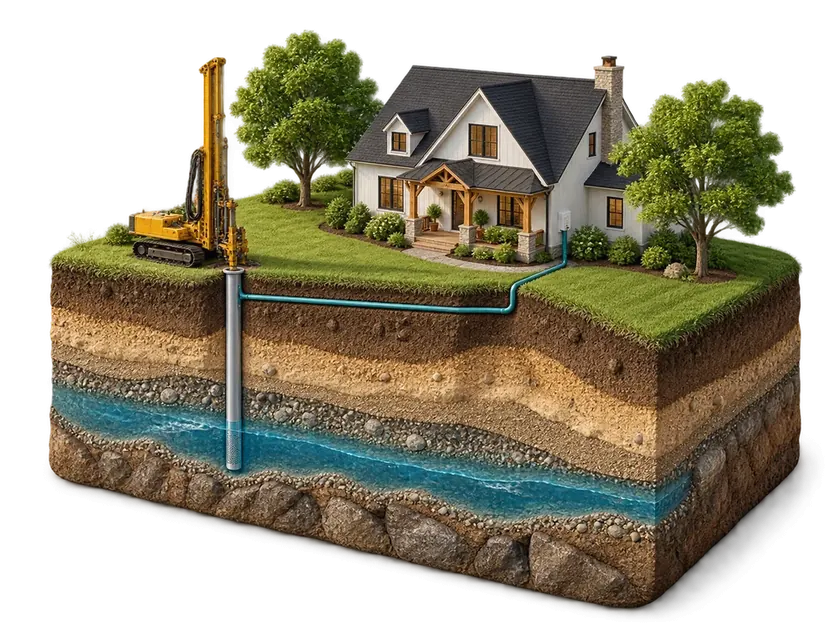
Casing usually runs from the surface down to rock, and around Clark rock comes up fast: 12 feet or less in a quarter of the logs and 33 or more in only a quarter. With the median well at 100 feet, most of a typical hole is open rock below the casing. The rock mapped at the town center is the Cuyahoga Group's siltstone, shale and sandstone.
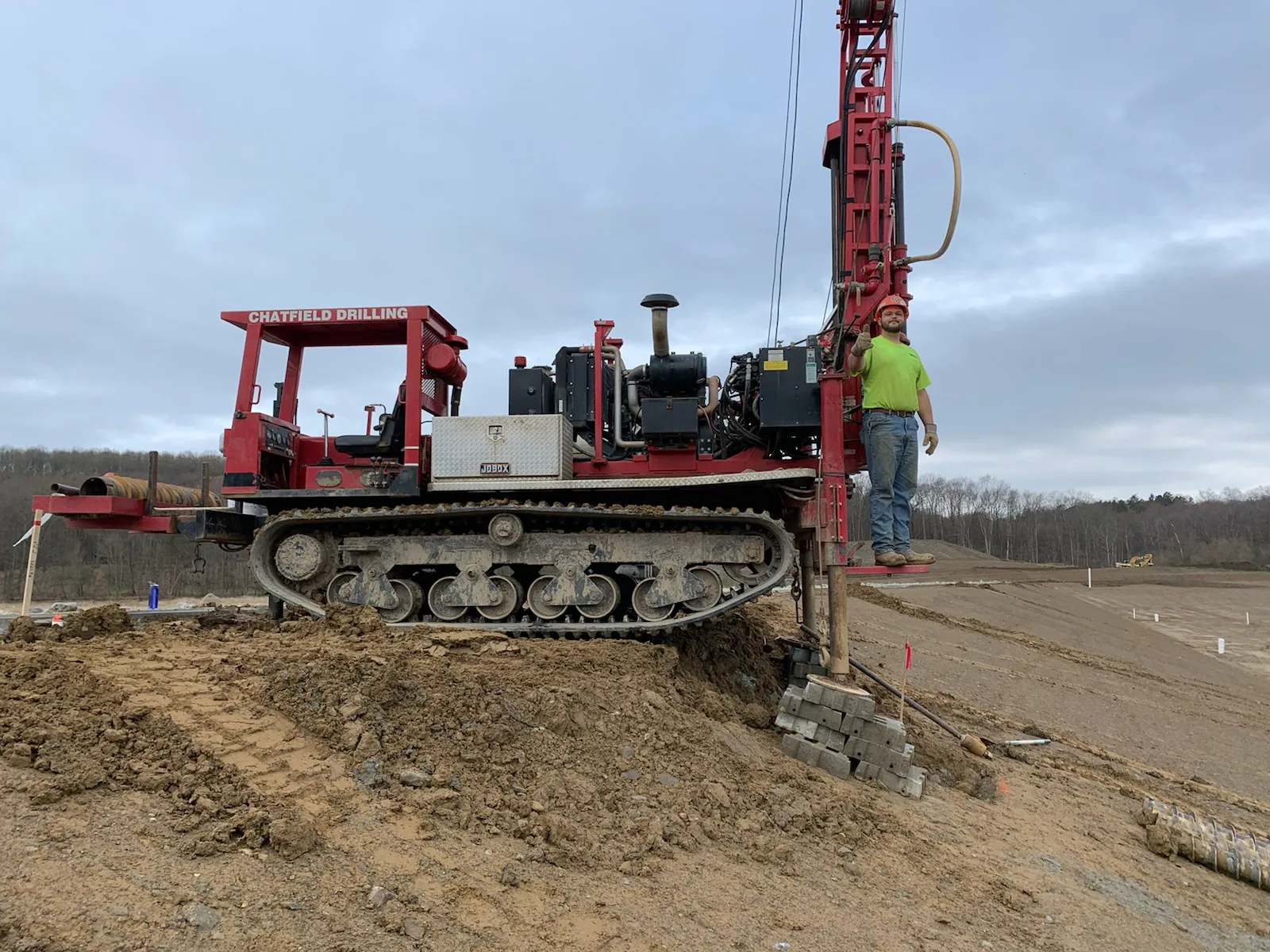
That shapes the job. A short run of steel is set and seated in rock, then the driller keeps going until the hole gives enough water. Three in four logged wells here went at least 80 feet. Residential well drilling covers the process with PA DEP permit assistance, and what a new well costs explains how footage adds up.
Room for Full-Size Pumps
Half of the 641 logs that record a yield fall between 10 and 30 gallons a minute. A well in the upper half can usually run a standard submersible pump without drawing itself down, and a constant-pressure system, which holds pressure steady as taps open and close, becomes a practical upgrade. A quarter of logs reach 30 gallons a minute or more, where the house rather than the well sets the size of the pump.
A well in the bottom quarter can still serve a house; its pump is matched to the tested flow, with a pressure tank sized to limit pump starts. When pressure drops on a strong well, the pump, switch or tank is the usual suspect, and emergency pump repair sorts out which.