The 952 domestic wells on file within 5 miles of Fairview, from the state’s drilling logs: your neighbors’ wells, and the best guide to this ground.
Source: PaGWIS (PA DCNR), domestic wells within 5 miles, retrieved 2026-09-30; older paper-record locations are approximate.
Planning a New Well Near Fairview
Three numbers shape a new well here. Total footage is no outlier: Fairview’s median depth shares 7th place among 16 Erie County towns.
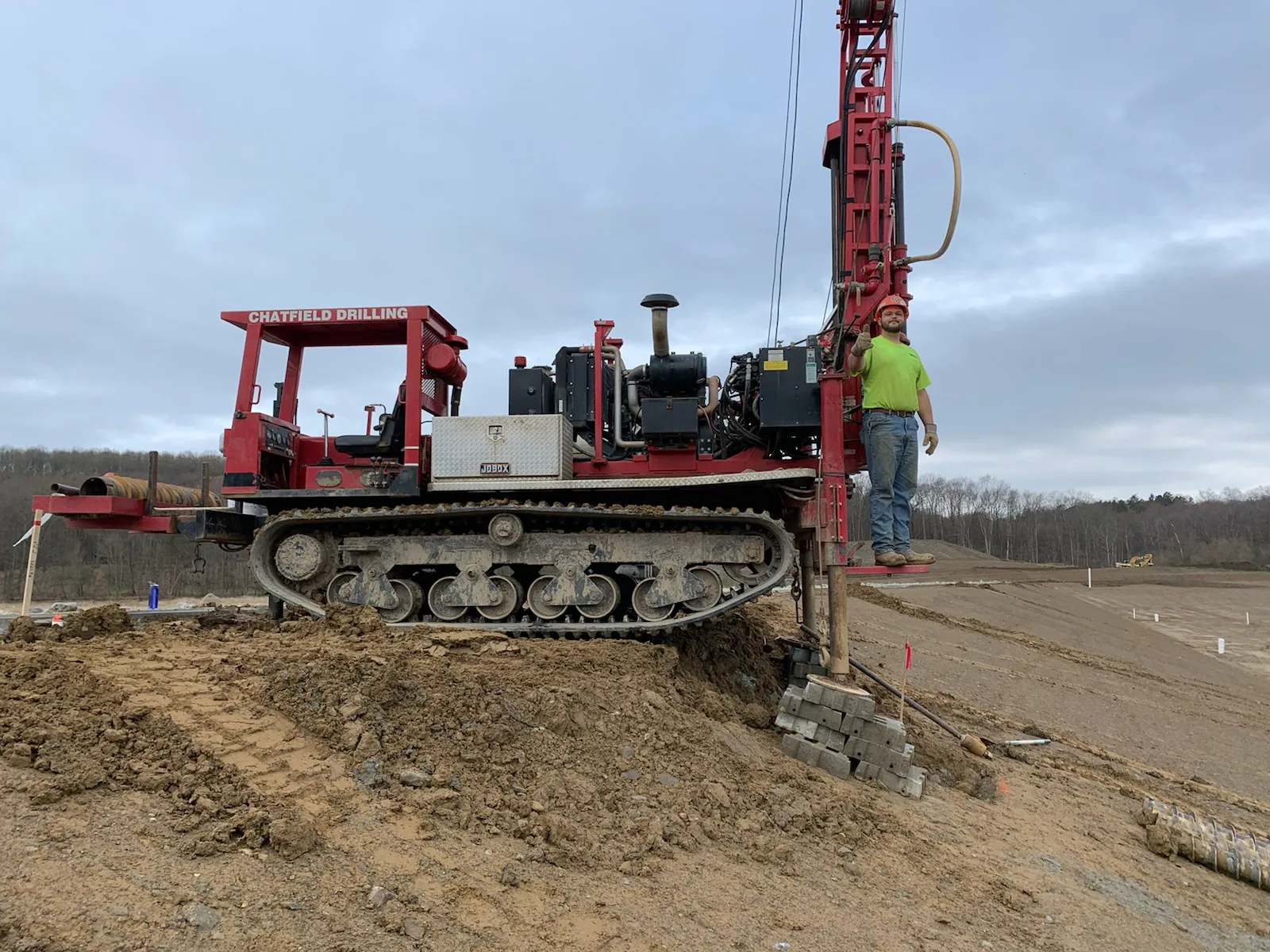
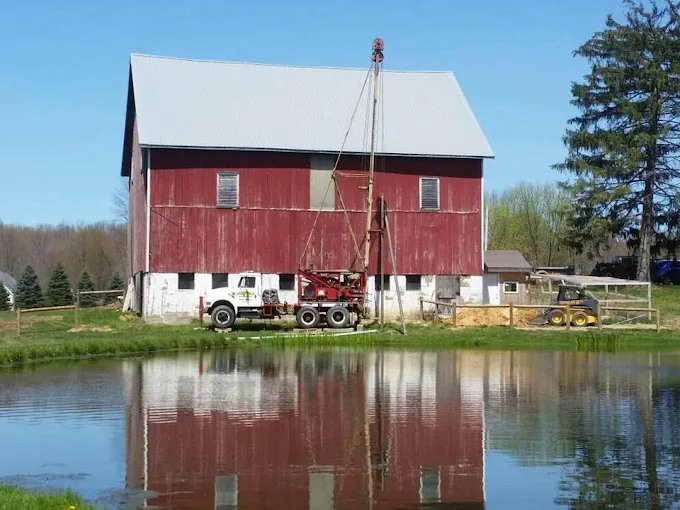
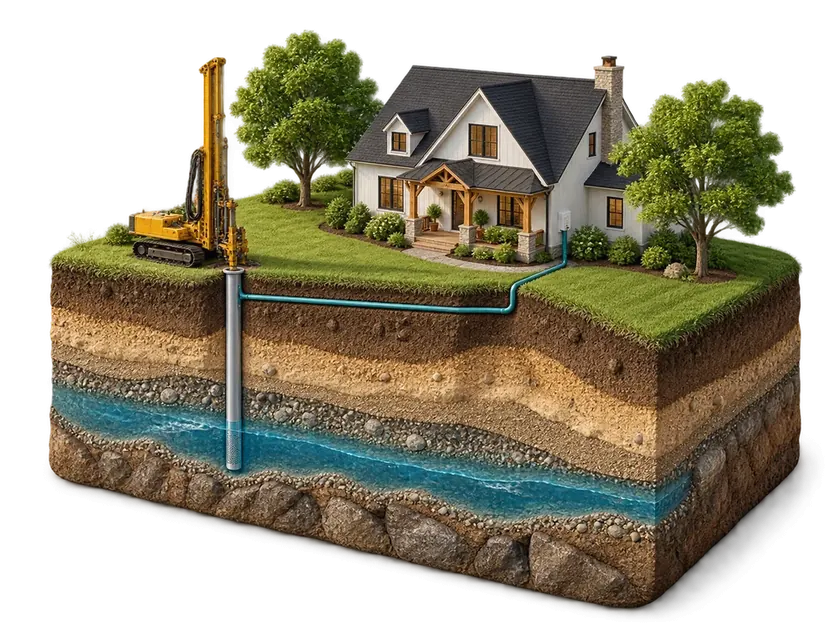
Where rock starts is the loose figure. Among the 429 logs that record bedrock, the middle half met it anywhere from 20 to 70 feet down. Casing usually goes down to rock, so its length is found in the hole itself. The map only puts the Girard Shale, siltstone and shale, at the town center. Flow comes last, and the pump is sized from a test on the finished well rather than the neighborhood figure. The four steps of residential well drilling run from site visit to well log, and the cost of a new well explains why depth sets the price and casing moves it.
Checking an Existing Well Against Its Log
Of the 952 local logs, 855 include a yield, the flow logged when the well was drilled. If your well’s log is among them, that figure is a baseline. A flow test today that comes in well under it can mean something has changed: a worn pump, buildup inside the well, or less water reaching it. A low number alone isn’t a fault; compare it with your well’s own log, not the area’s.
A well inspection measures today’s flow and checks the pump, pressure tank and wellhead that deliver it, and well cleaning is the next step when buildup turns out to be the cause. Homes on the township authority’s District 3 supply draw from its wells instead, and the Fairview water treatment page sets out how the authority treats that water.