The 535 domestic wells on file within 5 miles of Masury, from the state’s drilling logs: your neighbors’ wells, and the best guide to this ground.
Source: ODNR well logs, domestic wells within 5 miles, retrieved 2026-09-30.
Pressure Tanks for Modest Masury Yields
A well giving 8 to 12 gallons a minute can run a household. The strain comes when demand arrives all at once: showers, laundry and a dishwasher together can draw faster than a slower well refills. Storage on the pressure side helps. A larger pressure tank gives the pump longer, gentler cycles and covers short peaks.
A constant-pressure upgrade, which varies pump speed to hold pressure steady, is another option, and the pump is sized so it doesn't pull the well down faster than it recovers. Pump system design starts from the well's measured yield. The upper quarter of local logs record 20 gallons a minute or more, and those wells need less of this care.
Rock Close Under Masury, and Why Depth Helps
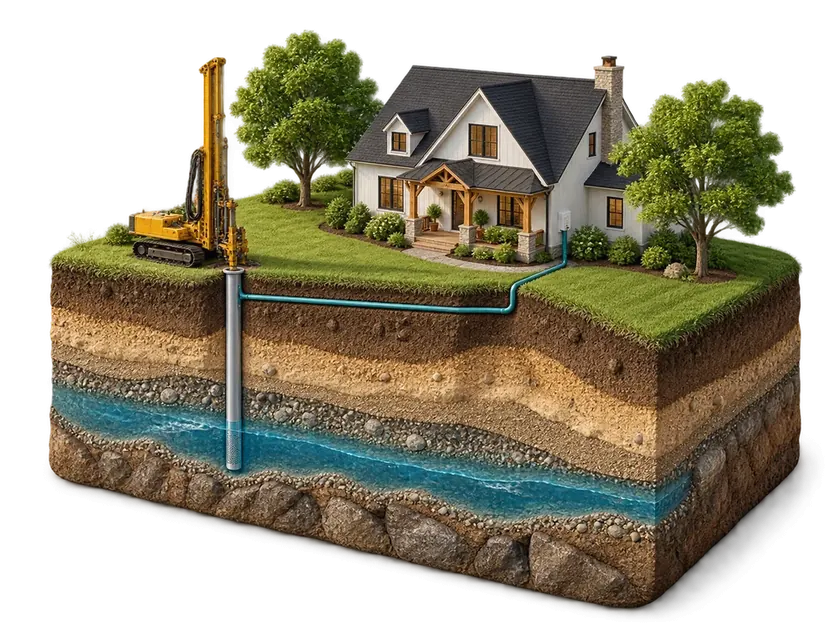
In 505 local logs, a quarter reach rock within 12 feet and three in four within 30. Casing must still reach at least 25 feet under Ohio's private-well rules, and further where rock sits deeper. With rock this shallow, the rest is typically open hole in rock.
With modest yields common, extra depth has a use beyond finding water: a deeper hole holds more standing water, a reserve the pump can draw on at peak times. Local wells stop between 80 and 135 feet in the middle half, and their median runs just past the county's 96 feet. How far to go is settled at the rig with the owner. Residential drilling covers the steps, and the cost guide explains how depth enters a quote.