The 1,012 domestic wells on file within 5 miles of Conneaut Lake, from the state’s drilling logs: your neighbors’ wells, and the best guide to this ground.
Source: PaGWIS (PA DCNR), domestic wells within 5 miles, retrieved 2026-09-30; older paper-record locations are approximate.
Rock Depth Swings Around Conneaut Lake
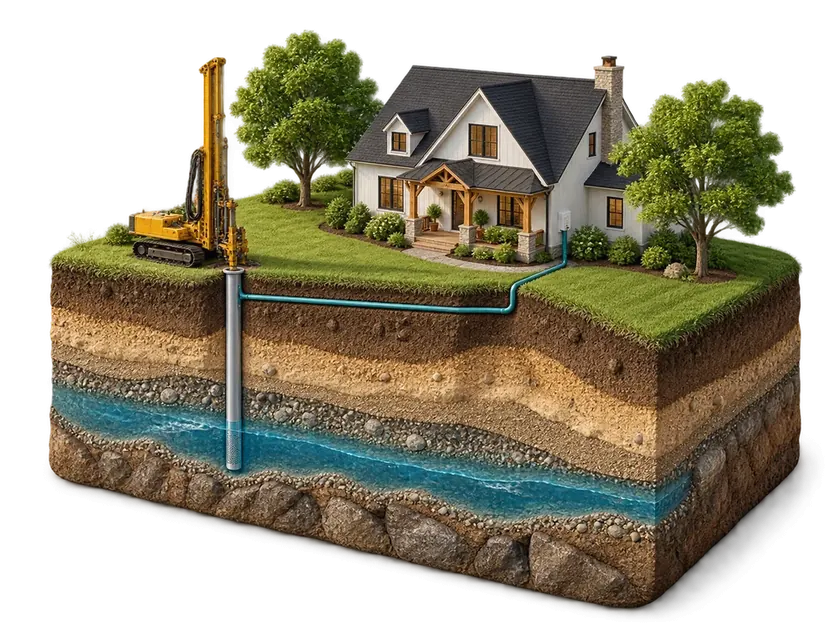
The Conneaut Lake logs agree on most things except how far down the rock is. Among the 423 that record it, the median depth to bedrock is 24 feet, yet a quarter of those wells didn’t reach rock until 49 feet or deeper. Casing usually runs from the surface to rock and is seated there, so that spread is a spread in casing too: two wells of the same depth can carry very different lengths of it.
That makes the casing line the one to read closely on a quote. Ask how deep the casing is expected to go, what it’s made of, whether it will be grouted, and how the price changes if rock comes in deeper than the nearby logs suggest. The what a new well costs page walks through those questions, and residential well drilling covers the job from permit to flow test.
Pump Sizing on Conneaut Lake’s Steady Yields
Yield is the easy part of the record here. Of 982 logs with a yield, three quarters reached 10 gallons per minute or more, and a quarter reached 20. When a well gives that much, the pump is sized from the house rather than the well: how many bathrooms there are, how far the water travels, whether the garden hose runs off the same system.
A submersible pump matched to that demand, with a pressure tank large enough that the pump isn’t starting at every tap, is the standard arrangement. Where pressure dips as fixtures open and close, a constant-pressure upgrade holds it level. The borough runs its own system with its own plant, and the Conneaut Lake treatment page covers what that plant does.