BUTLER COUNTY, PENNSYLVANIA · 39 MIN FROM OUR GREENVILLE OFFICE
Well Drilling &Water Treatmentin Harrisville, PA.
Harrisville wells are short and give water freely. By median depth the town comes last of 21 in Butler County, the shallowest on the list, and three in four logs made at least 14 gallons per minute. The catch is above the rock, where soil runs deep, so casing is likely to take a bigger share of the job than the short bores suggest.
Mercer Township · Pine Township · Marion Township · Barkeyville · Grove City · Liberty Township · Slippery Rock · Slippery Rock Township · Wolf Creek Township · Cherry Township
Whether you’re on a private well or city water, the same crew handles the water source, the pressure, and what comes out of the tap.
WATER TREATMENT
Well water treatment in Harrisville, PA
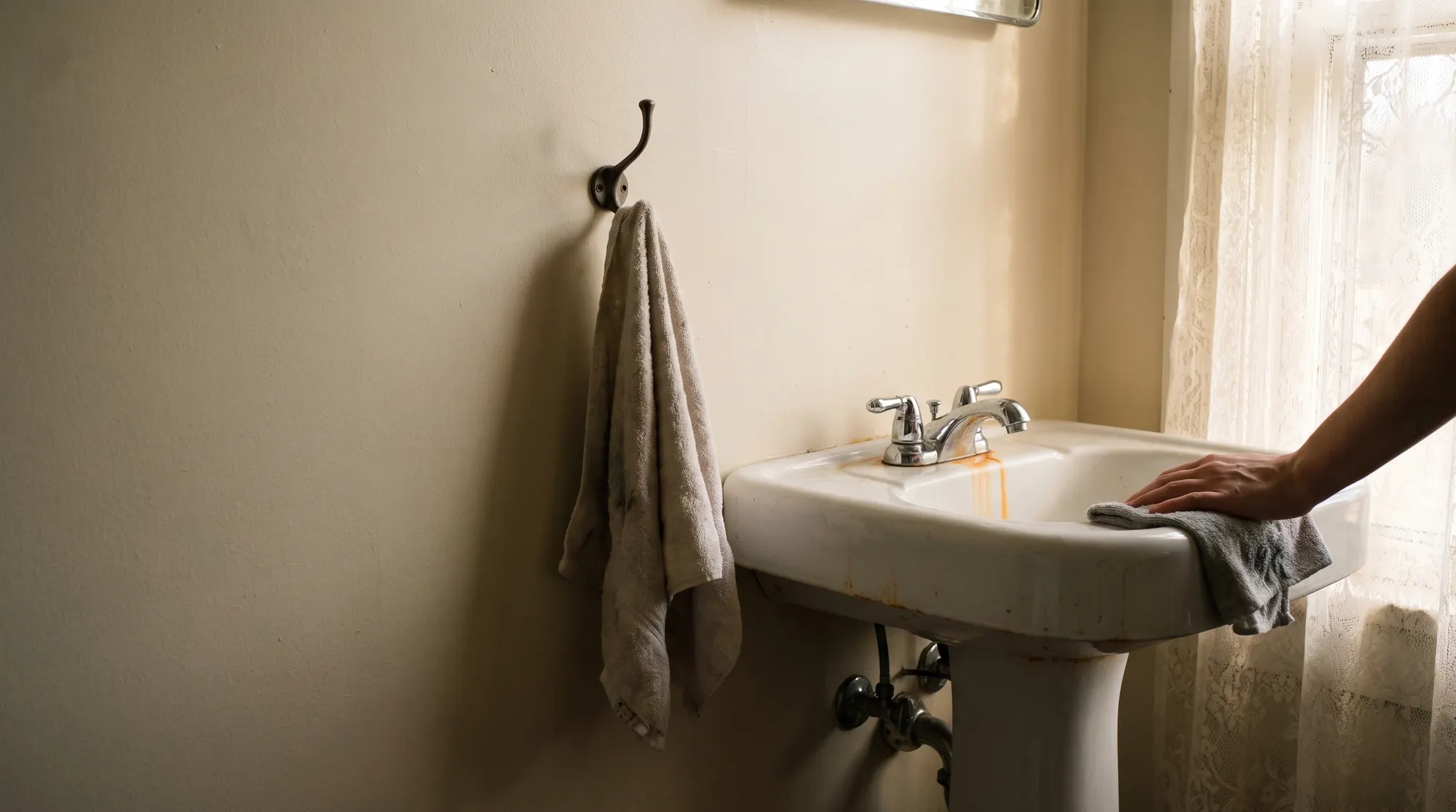
In Butler County’s USGS samples, 68% of wells were hard or very hard. Testing your own well gives its actual hardness in grains per gallon, and the LuxSoft water softener is chosen from that once any iron is dealt with.
Bores here are short: a quarter of logs stopped at 76 feet or less and three in four by 148. But drillers logged bedrock at a median 33 feet, so the casing usually runs a long way down before the bore enters rock.
Well pump & pressure tank service in Harrisville, PA
With a median yield of 20 gallons per minute and a quarter of logs at 35 or more, most wells here can keep up with a household. That makes a constant-pressure pump, which holds steady pressure as taps open and close, a practical upgrade.
The 785 domestic wells on file within 5 miles of Harrisville, from the state’s drilling logs: your neighbors’ wells, and the best guide to this ground.
WELL DEPTH105ftmedian of 785 wells
middle half 76–148 ft
YIELD20gpmmedian of 688 wells
middle half 14–35 gpm
DEPTH TO BEDROCK33ftmedian of 557 logs
middle half 17–58 ft
WELLS ON FILE785within 5 miles
PaGWIS records
Source: PaGWIS (PA DCNR), domestic wells within 5 miles, retrieved 2026-09-30; older paper-record locations are approximate.
Short Bores, Deep Soil
In the 785 depth logs within 5 miles of Harrisville, three in four bores stopped by 148 feet and a quarter by 76. A shorter bore generally means fewer feet to pay for.
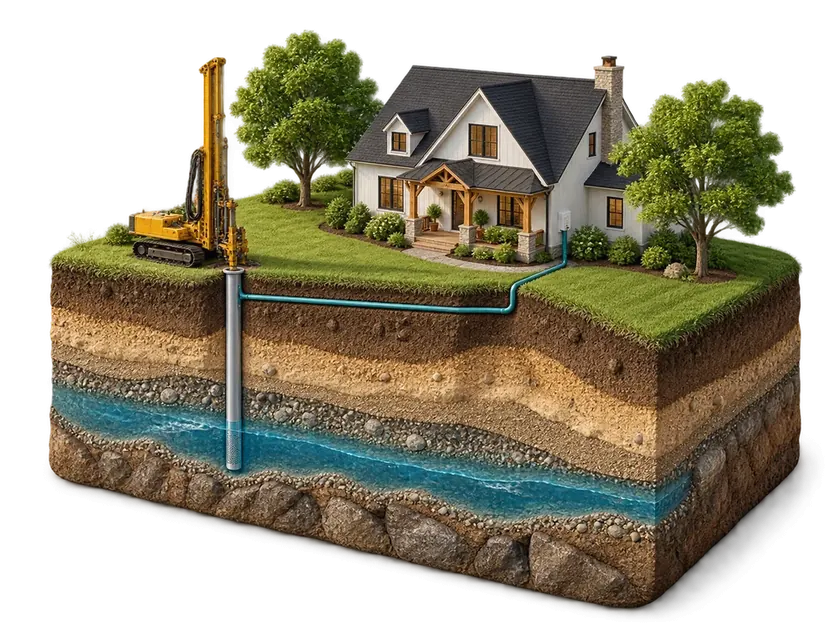
The soil takes some of that back. Drillers logged bedrock at a median 33 feet, and a quarter of logs went through 58 feet or more of soil and loose material before reaching it. Casing usually runs from the surface through that material and seats in rock, and on the deeper-soil lots it can be a large part of the well. What a new well costs explains how casing and footage add up, and residential well drilling covers the steps.
A High Floor Under Local Yields
The yield logs around Harrisville are strong from the bottom up. Of 688 that record it, three in four gave 14 gallons per minute or more, half gave 20 or more, and a quarter 35 or more. Geologic maps show the Allegheny Formation at the town center: Pennsylvanian sandstone, shale, limestone, clay and coal.
With that much water, the pump can be chosen for how the house uses water rather than rationed to the well. A submersible pump with a matched pressure tank covers most homes, and weak-well measures, like pumps throttled to the well’s recovery, are needed less often. The yield test at the end of drilling confirms which side of that line your own well falls on.
WATER IN BUTLER COUNTY
The Butler County Water Record.
In USGS samples from across Butler County, taken 1926–1997, 68% of wells were hard or very hard, 56% carried iron above the staining line, 86% had manganese above 0.05 mg/L. The full record, and what it means for treatment, is on the Butler County page; your own well gets its own test.
WHY HARRISVILLE CHOOSES CHATFIELD
Local Ground. Local Knowledge.
Rated 4.7 on Google across 104 reviews. Here is what working with us looks like, in a customer’s words.
“
FROM OUR CUSTOMERSPump replacement & well casing
“Chatfield Drilling replaced a submersible pump, extended our well casing above ground, and installed a sanitary cap at our farm house. This is our first experience with a well. Both Matt and Sam were happy to answer all of our questions, no matter how small, in a way that we could understand and enabled us to make informed decisions.”
Google review, Chatfield customer4.7 ★ · 104 reviews
Serving Butler County and Western Pennsylvania since 1967
DEP-compliant and fully licensed
Local knowledge of Harrisville’s water tables and soil types
Honest pricing, expert recommendations
Friendly, family-run service with a professional touch
NEARBY
Also Serving the Communities Around Harrisville.
We send the same crews to each of these towns. If you’re between towns, pick the closest one; the service doesn’t change.
Our Greenville office (854 Mercer Rd., Greenville, PA 16125) is about 39 minutes and 24 miles by road from Harrisville. Service calls for Harrisville are scheduled from there.
Which townships and boroughs around Harrisville do you serve?+
Harrisville and the municipalities around it: Mercer Township, Pine Township, Marion Township, Barkeyville, Grove City, Liberty Township, Slippery Rock, Slippery Rock Township, Wolf Creek Township, Cherry Township. Beyond those, the rest of the 21 Butler County communities on our service map, from the same office.
How deep are wells around Harrisville?+
Pennsylvania’s groundwater database (PaGWIS) lists 785 domestic wells within 5 miles of Harrisville: the median is 105 feet deep, and the middle half fall between 76 and 148 feet. The median well was logged at 20 gallons per minute. Drillers reached bedrock at a median of 33 feet. Your own well's depth depends on the ground under your lot.
Is a jet pump an option on Harrisville’s shallow wells?+
Possibly. A jet pump sits above ground and works best where the water stands fairly close to the surface; deeper water generally calls for a submersible pump. Wells here are shallow, with a quarter finished at 76 feet or less, but depth alone doesn’t settle it. The water level in the finished well does, and the driller measures it before the pump is chosen.
Why can a shallow Harrisville well still need a lot of casing?+
Because casing is set by the soil, not the total depth. It usually runs from the surface down to bedrock and seats in it, and the local logs put rock at a median 33 feet, with a quarter at 58 feet or more. On those lots, a sizeable share of a short well is casing. Your own driller’s log will show where rock began.