The 723 domestic wells on file within 5 miles of West Liberty, from the state’s drilling logs: your neighbors’ wells, and the best guide to this ground.
Source: PaGWIS (PA DCNR), domestic wells within 5 miles, retrieved 2026-09-30; older paper-record locations are approximate.
Strong Yields at Moderate Depth
Of 653 logs around West Liberty that record yield, three in four gave 12 gallons per minute or more, half gave 20 or more, and a quarter gave 30 or more. The bores that produced them weren’t unusually deep: three in four stopped by 192 feet.
Yields like these let the system follow the household’s habits instead of the well’s limits. A submersible pump chosen for the household, a pressure tank sized with it, and, where a barn or shop sits some distance away, a booster pump all fit. Your own well’s yield test still settles which pump goes in.
Soil Over Rock Varies Around West Liberty
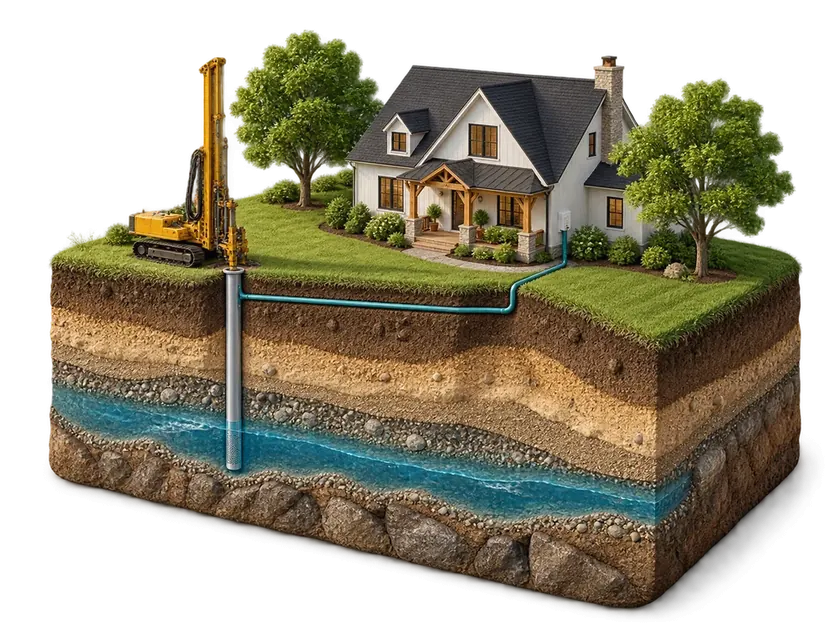
Of 464 logs in the area that note bedrock, half reached it by 25 feet. The spread is wide: a quarter hit rock within 10 feet, and a quarter went through 51 feet or more of soil and loose material first. On the geologic map, the town center sits on the Allegheny Formation, a Pennsylvanian sequence of sandstone, shale, limestone, clay and coal.
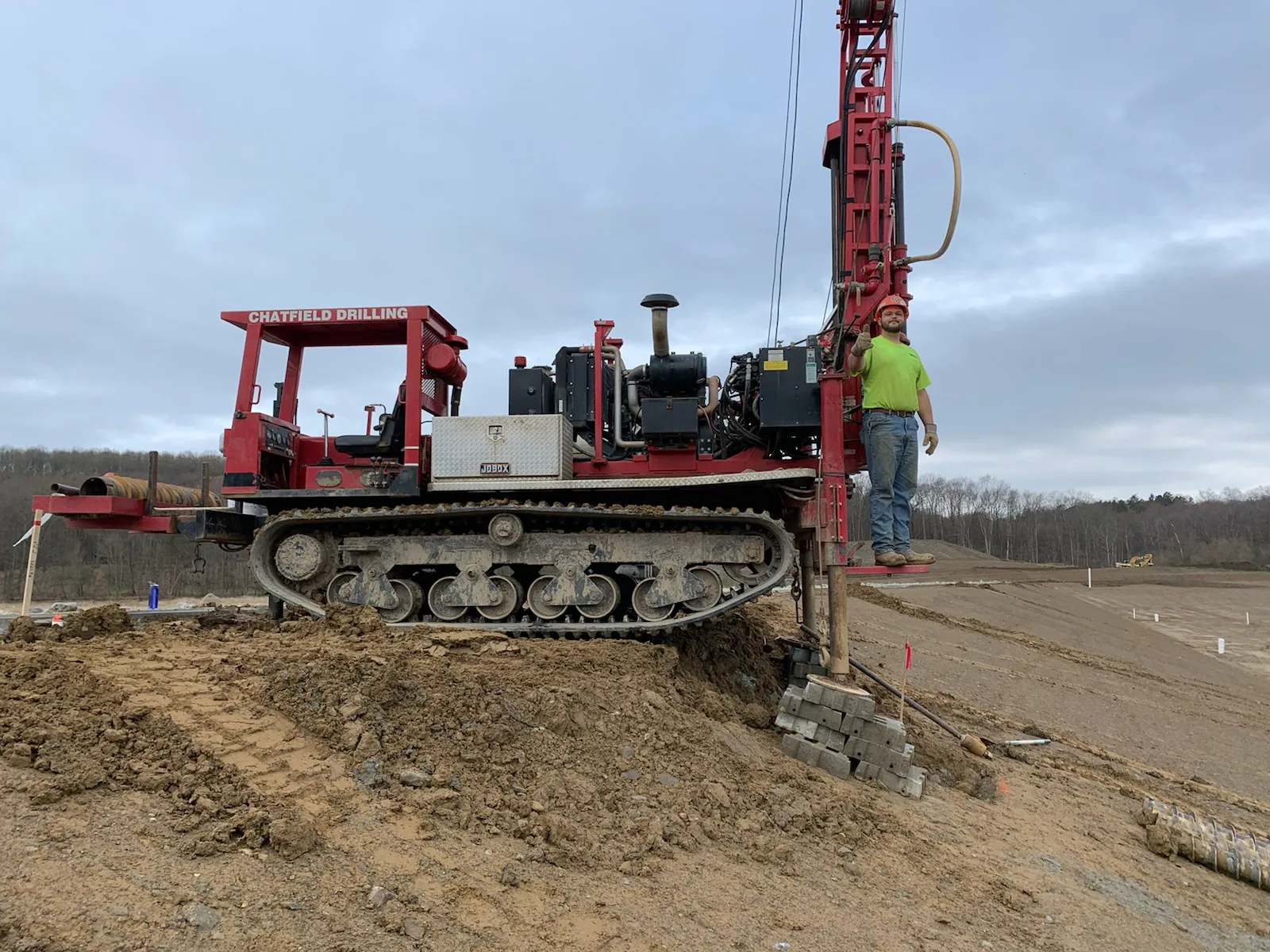
More soil usually means more casing, and a longer stretch where the seal between the casing and the ground keeps surface water out of the well. On an older well, a well inspection checks the cap and casing along with the pump. On a new one, the driller measures depth to rock as the bore goes down and sets the casing to match. Well drilling covers the process.