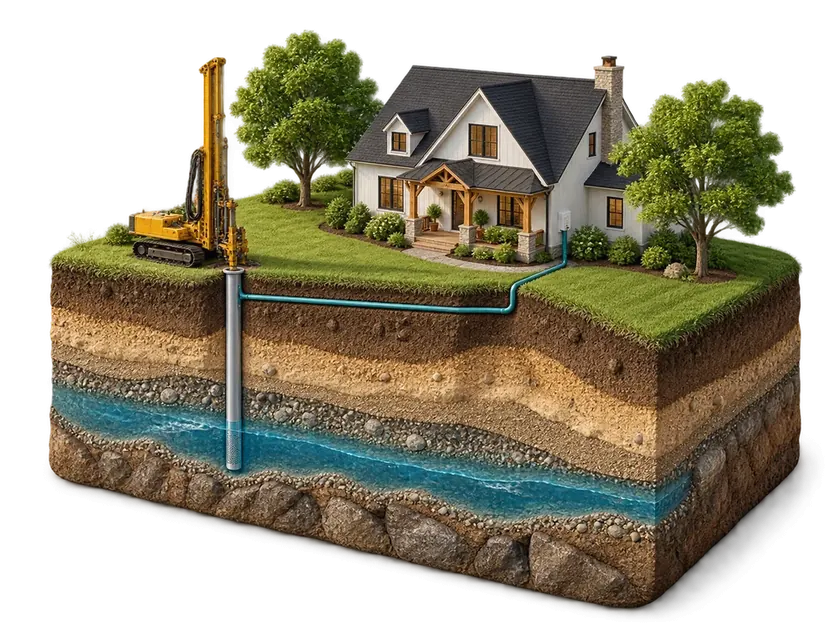
The 1,026 domestic wells on file within 5 miles of Prospect, from the state’s drilling logs: your neighbors’ wells, and the best guide to this ground.
Source: PaGWIS (PA DCNR), domestic wells within 5 miles, retrieved 2026-09-30; older paper-record locations are approximate.
More Than a Thousand Local Logs
With 1,026 depth logs and 991 yield records within 5 miles, Prospect’s figures rest on a large sample, and most of those wells go deep. Only a quarter stopped short of 120 feet, and a quarter went past 243.
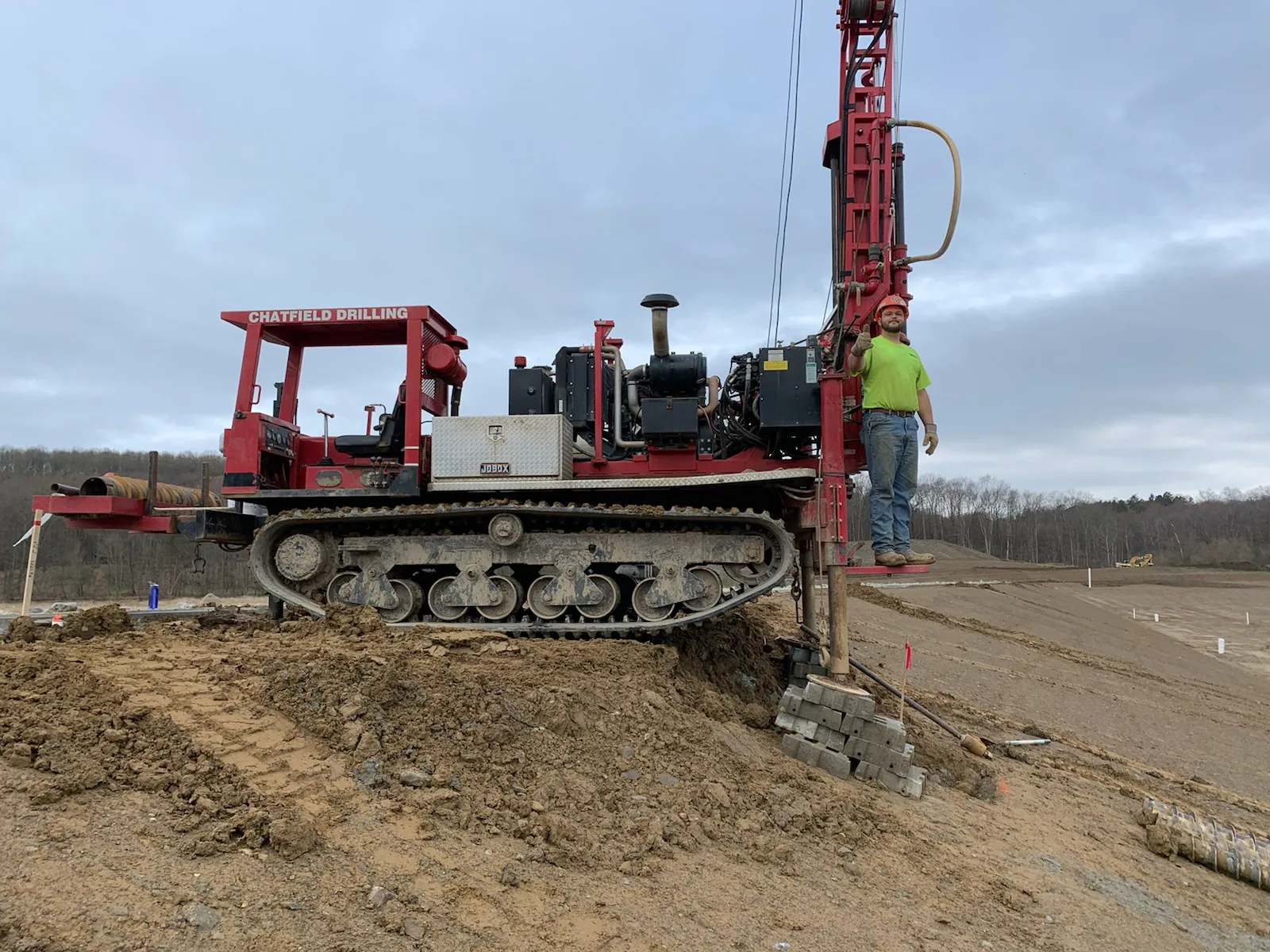
A big sample is still a neighborhood average. It narrows the likely range but can’t place water under a given lot, since each bore crosses its own cracks and layers. The logs nearest your property are the best preview, and the driller’s log from your own well replaces them. Residential well drilling explains how the bore is planned, what a new well costs shows how depth adds up, and a well inspection measures what an existing well actually gives.
Glenshaw Rock and Modest Water
At Prospect’s center, the geologic map shows the Glenshaw Formation, whose Pennsylvanian layers include shale, coal, sandstone and limestone. Bedrock came at a median 14 feet in the logs, and within 8 in a quarter of them.
Water comes modestly. Half the wells gave 13 gallons per minute or less, and a quarter gave 6 or less. That doesn’t stop a well from serving a household, but it puts the weight on how the system is set up. That means the water stored in a deep bore to cover heavy use, a submersible pump that matches the well’s recovery, and a correctly set pressure switch. Those settings come from your own well’s measured yield.