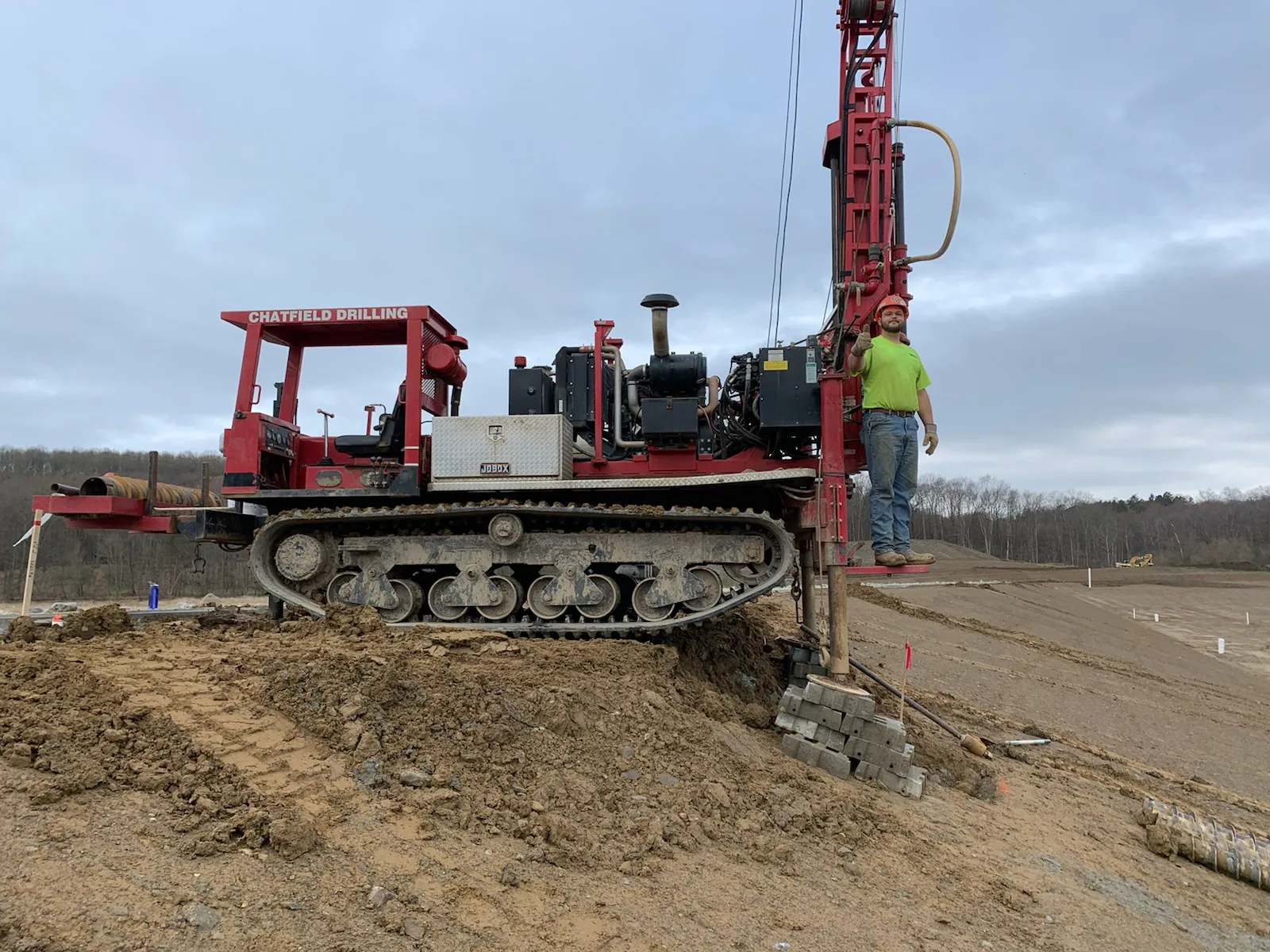
The 931 domestic wells on file within 5 miles of Harmony, from the state’s drilling logs: your neighbors’ wells, and the best guide to this ground.
Source: PaGWIS (PA DCNR), domestic wells within 5 miles, retrieved 2026-09-30; older paper-record locations are approximate.
Inside the Harmony Plant
EPA’s record for the Harmony Borough Water Authority shows surface water from a single intake, treated at its plant and delivered through 661 service connections. The treatment list is long. Powdered activated carbon handles taste and odor, permanganate takes on iron and manganese, and chlorine gas goes in before treatment. The plant also uses coagulation, rapid mixing, flocculation, settling and rapid sand filtration, then adjusts pH for corrosion control and adds chlorine again at the end.
At the tap, that means water with its iron and manganese taken out at the plant and chlorine carried through the pipes. Where the chlorine taste is unwelcome, a CityLux system takes the chlorine out. Customers get their water report from the authority; homes on private wells start with a water test.
Protecting Pumps on Slow Wells
The 887 yield logs within 5 miles set the scene: a median of 6 gallons per minute, 3 or less in a quarter of them, and 14 or more in only a quarter. That is low for a household, and it shifts the focus from finding a big pump to protecting the one you have.
A pump that can deliver more than the well recovers can pull the water down to its intake and run dry, which wears it out. The fix is matching: a submersible pump sized to the well’s sustained yield, a pressure tank large enough to cover short bursts of use, and controls that shut the pump off before it runs dry. The yield test at the end of drilling gives the number all of it is built around.