The 877 domestic wells on file within 5 miles of Callery, from the state’s drilling logs: your neighbors’ wells, and the best guide to this ground.
Source: PaGWIS (PA DCNR), domestic wells within 5 miles, retrieved 2026-09-30; older paper-record locations are approximate.
Deep Bores, Modest Flow
Of the 834 logs near Callery that record yield, half gave 10 gallons per minute or less and a quarter gave 5 or less. A household can run on numbers like that, but the well sets the pace rather than the fixtures.
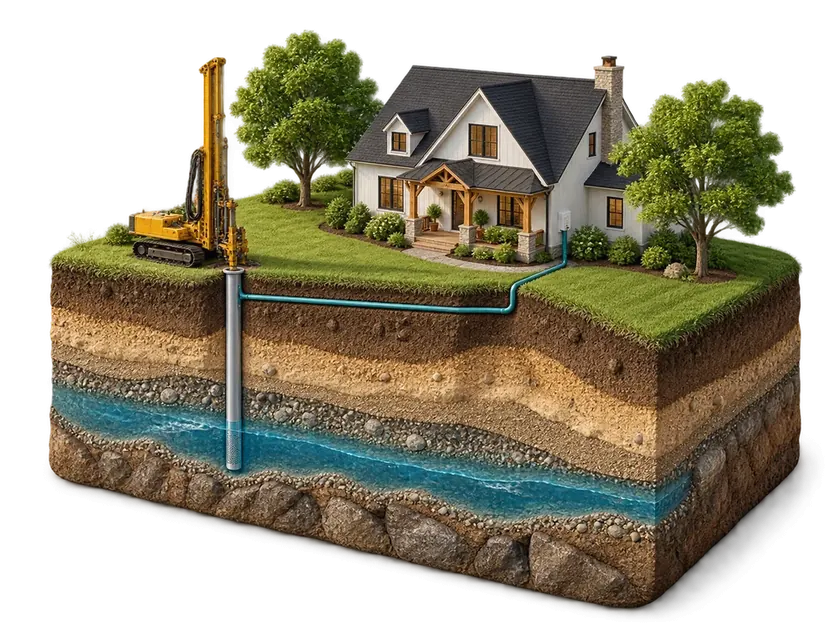
Depth helps. In a long bore, a column of water stands above the pump, and it carries the house through heavy use while the rock catches up. Agree with the driller in advance how far to keep going if a new well comes in light, because every foot adds to the cost of a new well. Pump system design covers matching pump and tank to the well.
Glenshaw Rock at the Town Center
Geologic maps place the Glenshaw Formation at Callery’s center: Pennsylvanian shale, coal, sandstone, limestone and other clastic rock. Soil over it is shallow. Among the 609 logs that note bedrock, the median depth to rock is 17 feet, a quarter reached it within 10, and three in four within 25.
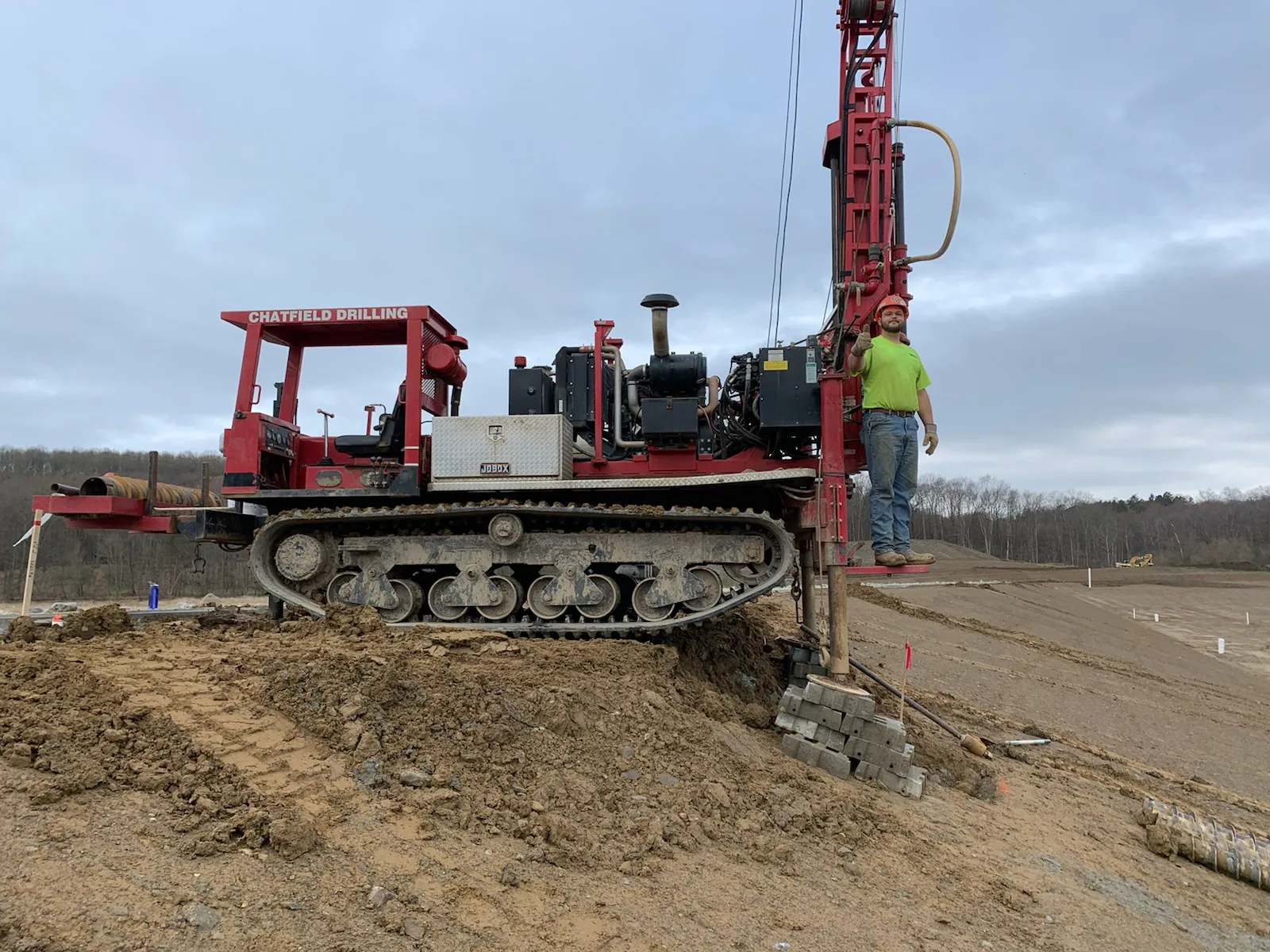
Casing usually runs from the surface down to rock, so it’s a small part of most wells here. The bigger unknown is how far into the rock the bore goes before it crosses enough water, and the driller’s log records each layer and each water-bearing zone on the way down. Residential well drilling explains how that’s handled, and on an existing well a well inspection measures what the bore delivers.