The 680 domestic wells on file within 5 miles of Butler, from the state’s drilling logs: your neighbors’ wells, and the best guide to this ground.
Source: PaGWIS (PA DCNR), domestic wells within 5 miles, retrieved 2026-09-30; older paper-record locations are approximate.
Shallow Rock, Layered Ground Around Butler
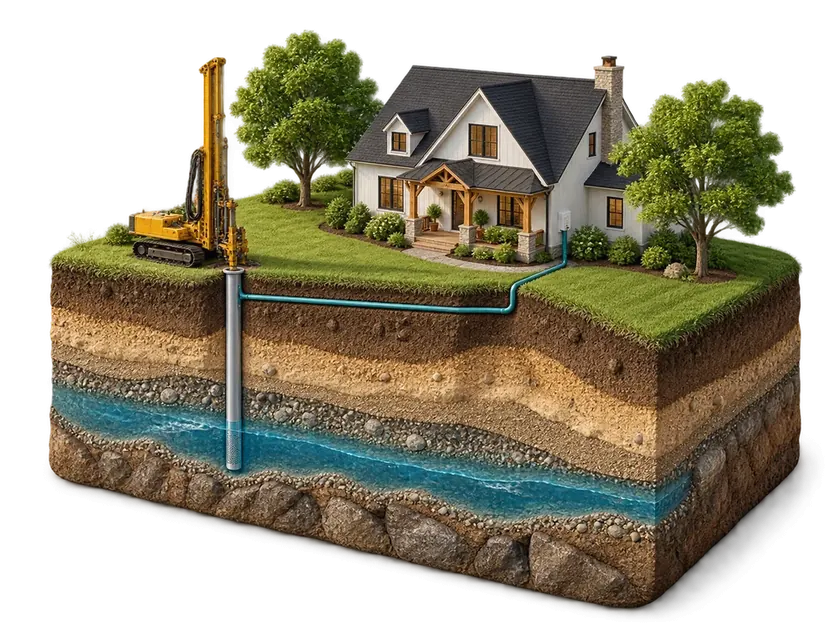
Soil is thin over the rock here. Half the logs that note it put bedrock between 6 and 22 feet down, so the casing, which usually runs from the surface through the soil and seats in solid rock, makes up a small part of most wells. Nearly all the footage is drilled in rock.
Geologic maps put the Allegheny Formation at the town center: Pennsylvanian layers of sandstone, shale, limestone, clay and coal. A bore can cross several of them before it finds enough water, and the driller’s log notes each change. Butler sits near the middle of the county list, tenth of 21 towns by median depth. Depth drives much of what a new well costs, and residential well drilling walks through the process.
Butler’s Water Mains and Private Wells
Pennsylvania American Water serves the City of Butler and the surrounding area, about 19,500 customers by the company’s count, from reservoirs and the Allegheny River. Homes on its mains get their water report from the utility. Homes off them run on their own well, pump and pressure tank.
For a private well, yield is the number to size around. Half the local logs record 15 gallons per minute or more, but a quarter record 8 or less. A pump that pulls harder than the well can supply draws it down and cycles, so the pump is matched to the well first and the house second, and a pressure tank sized to the household spaces out its starts. Pump system design covers that match. Iron, manganese and chloramine are covered on the Butler water treatment page.