The 668 domestic wells on file within 5 miles of East Butler, from the state’s drilling logs: your neighbors’ wells, and the best guide to this ground.
Source: PaGWIS (PA DCNR), domestic wells within 5 miles, retrieved 2026-09-30; older paper-record locations are approximate.
Chloramine From the Butler Plant
EPA’s record for Pennsylvania American Water’s Butler system lists a long treatment chain for its reservoir and river water: permanganate for iron and manganese, powdered carbon for taste and odor, coagulation, settling and sand filtration, ion exchange softening, and chlorine. It also lists chloramines, under disinfection by-products control, so water reaching an East Butler tap carries chloramine.
Chloramine lasts longer in the pipes than chlorine, and some people notice its taste or smell. A CityLux system removes chlorine and chloramine for the whole house. If a chlorine taste is the complaint, that’s the place to start. Your water report comes from the utility, which counts about 19,500 customers in the City of Butler and the surrounding area.
Shallow Rock Under the Private Wells
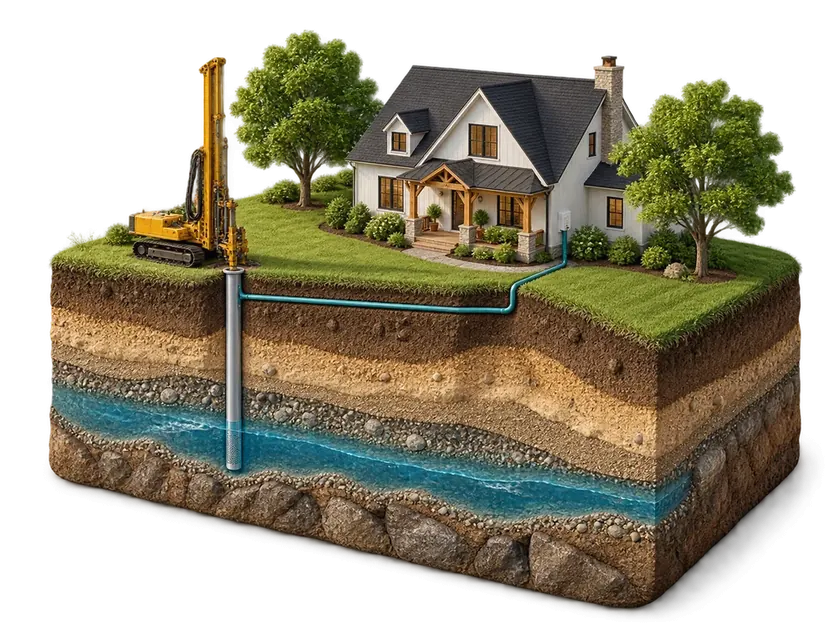
For homes on private wells, the logs describe the ground they tap. Of the 417 logs around East Butler that note bedrock, half hit it within 12 feet and a quarter within 6. The Allegheny Formation is mapped at the town center: Pennsylvanian sandstone, shale, limestone, clay and coal.
Thin soil means the casing, which usually runs down to rock, is short, and most of each bore is open hole. It also puts weight on the top of the well: a sound cap and a tight seal where the casing meets rock keep surface water out. A well inspection looks over the wellhead and cap, along with the pump and tank, and well cleaning can bring back flow a bore has lost.