The 689 domestic wells on file within 5 miles of Enon Valley, from the state’s drilling logs: your neighbors’ wells, and the best guide to this ground.
Source: PaGWIS (PA DCNR), domestic wells within 5 miles, retrieved 2026-09-30; older paper-record locations are approximate.
Layered Allegheny Rock, Uneven Yields
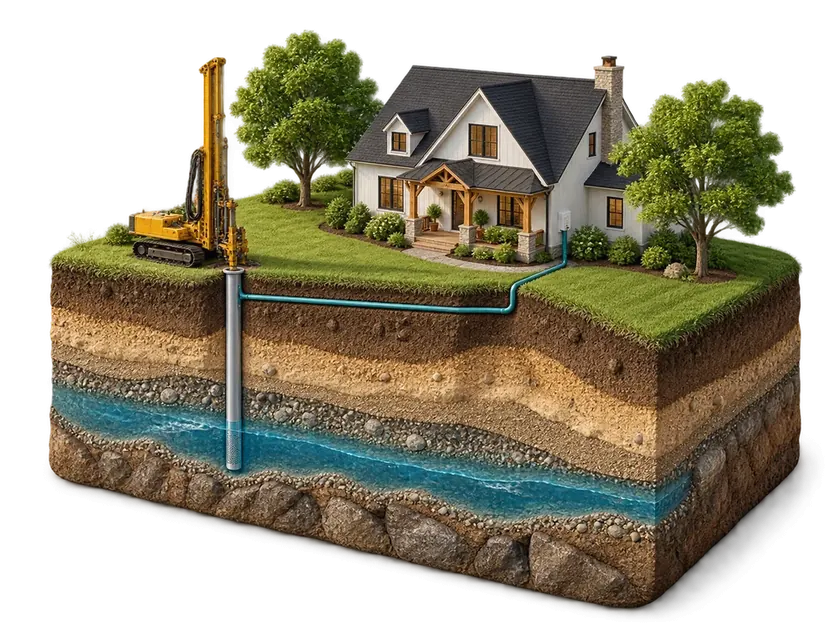
The Allegheny Formation is mapped at the town center: Pennsylvanian beds of sandstone, shale, limestone, clay and coal. Layered rock like this rarely yields evenly. Water comes from the fractures and more open beds a bore happens to cross, and the local logs show a wide range: a quarter of the 658 yield records are 8 gallons a minute or less, and a quarter 20 or more.
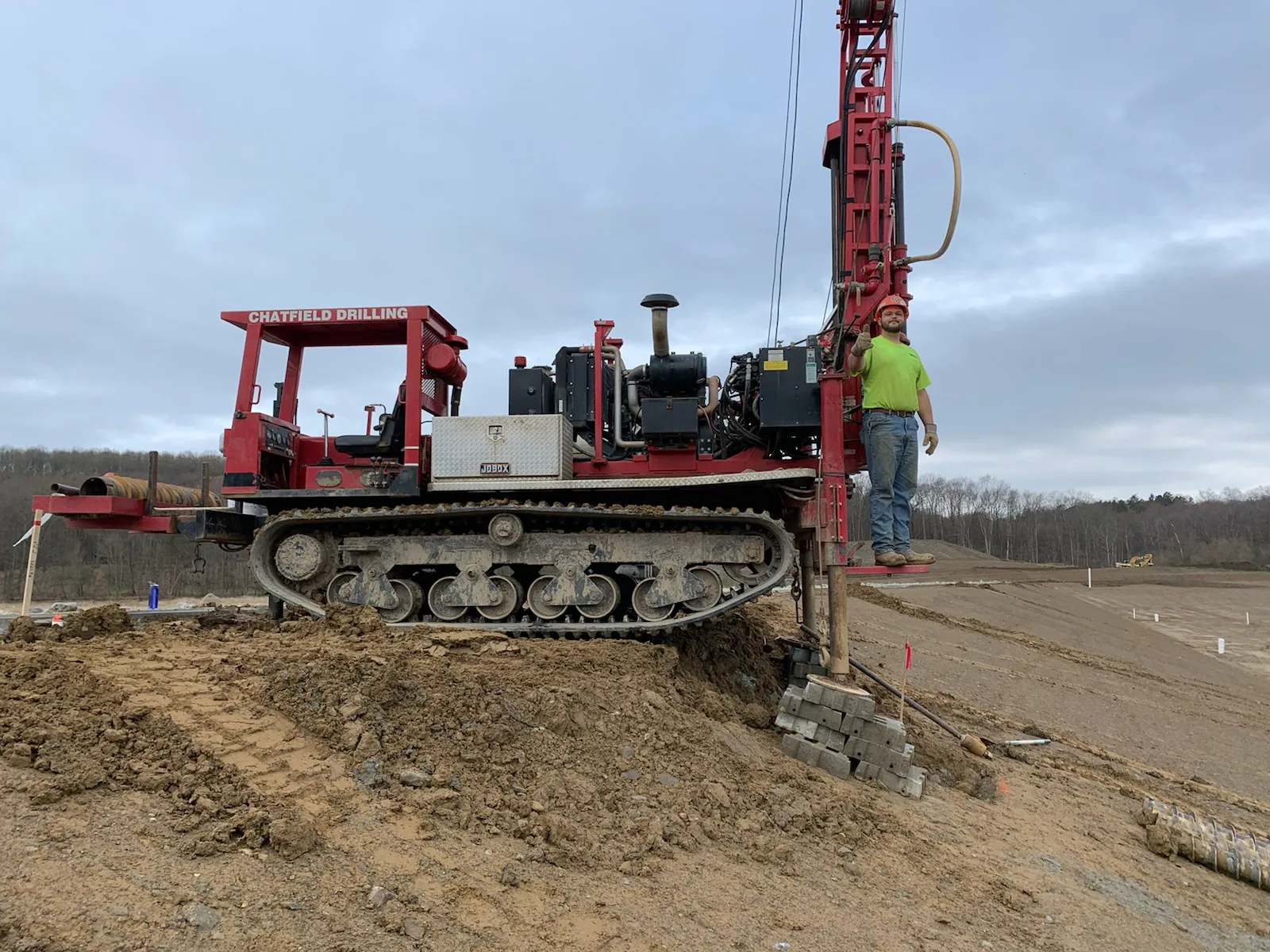
Depth has a similar spread. A quarter of the 689 depth logs finished by 77 feet and a quarter went past 184. That range, more than the median, is the one to budget around, and the cost page shows what depth and casing do to the price. Residential well drilling covers the air rotary and cable tool work.
The County’s Hardness Record and Your Well
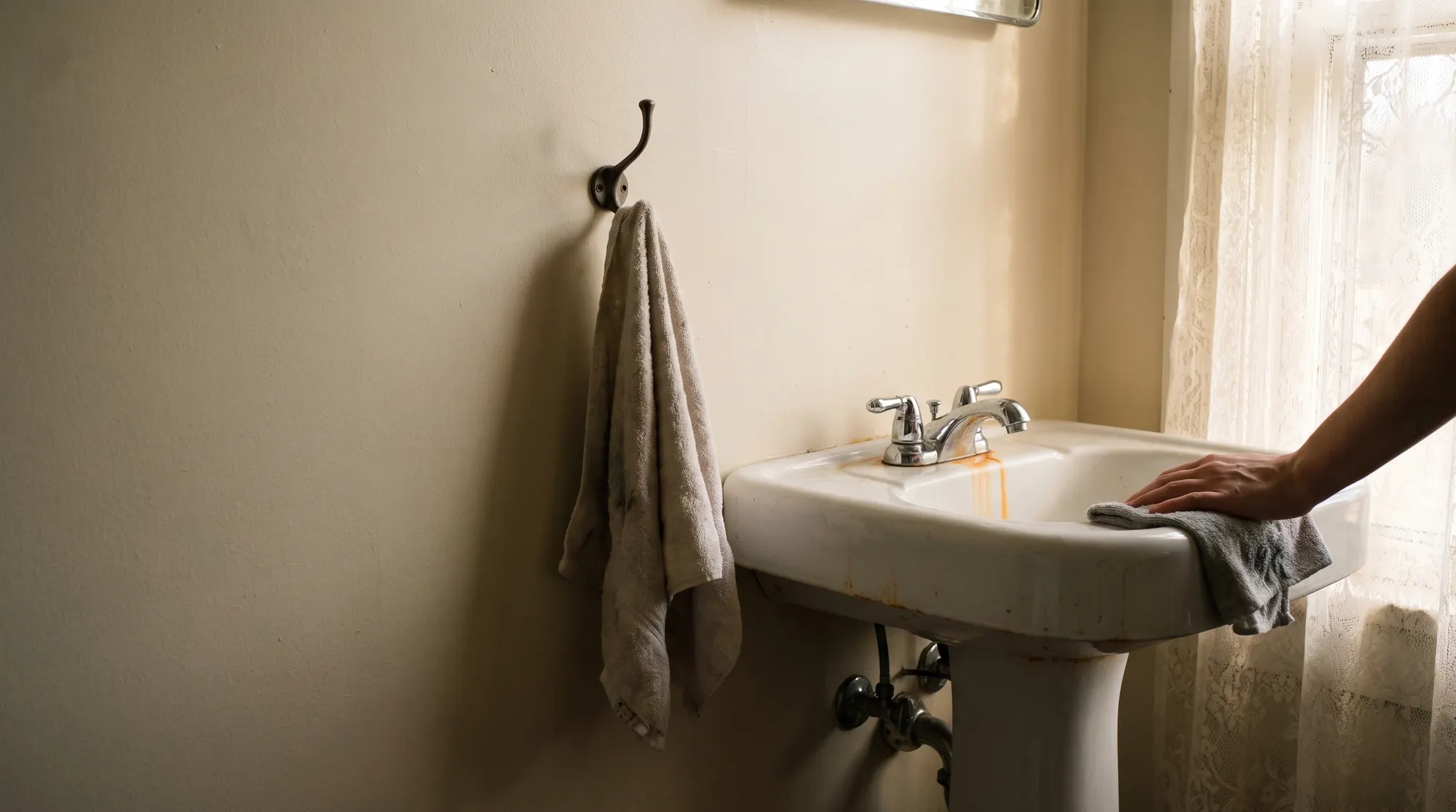
The county’s USGS samples, 29 wells for hardness, put the median at 12.3 grains per gallon, and 86% were hard or very hard. That is a county figure that can’t speak for any one well, yet it puts hardness high on the list to check. Scale on fixtures, spotty dishes and a water heater that loses efficiency are the usual signs of hard water.
A water test, on site or through a certified lab, gives your well’s own hardness and iron. The same samples put iron above the 0.3 mg/L line in 79% of wells. If both are high, iron removal usually goes ahead of the softener to protect it, and the LuxSoft water softener is matched to the hardness your test shows.