The 1,682 domestic wells on file within 5 miles of Petersburg, from the state’s drilling logs: your neighbors’ wells, and the best guide to this ground.
Source: ODNR well logs, domestic wells within 5 miles, retrieved 2026-09-30.
Sizing the Pump to Petersburg's Flow
The number to plan a Petersburg pump around is yield. Of the 1,539 logs within five miles that record one, the middle half give between 8 and 20 gallons per minute, and one in four gives 8 or less.
A pump shouldn't move water faster than the well can replace it, or it draws the level down to its own intake and can run dry. So the pump's capacity is matched to the well first and the house second, using the yield measured when the well is test-pumped, with some room for the seasonal dip some wells show in late summer. A pressure tank sized to that pump lets it run in longer, steadier cycles, which is easier on the pump. The well pumps page covers the options. Water quality is a separate test, covered on the treatment page.
Water Levels Past a Jet Pump's Reach
Water also stands well below the surface in many Petersburg-area wells. The middle half of static levels runs from 20 to 50 feet, and one log in four has water 50 feet down or more.
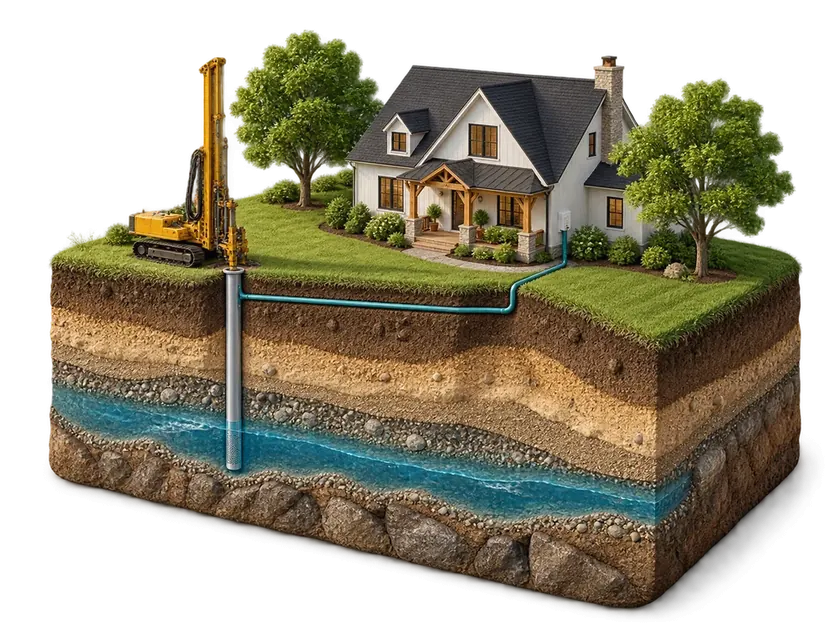
That puts most wells here beyond a shallow-well jet pump, which sits at the surface and lifts by suction, a method that only works while the water is close to the top. A submersible hung below the water line does the lifting instead, pushing water up from its setting to the pressure tank. In those deepest wells the pump hangs lower still. The deeper the water, the further it has to push before the house sees any pressure, so a pump's size is chosen from that lift and the pressure the house runs at together.